

Here, the aim is to help you find your bearings, without any magic promises: understand what “falls out” (skin, gland, nipple position), what the operation requires in the operating room (anesthesia, incision, dressing), what the usual after-effects are (convalescence over several weeks) and what to watch out for (scar, infection, complication, implant rupture). In short: clear answers before choosing breast surgery.
Surgery
Scars after breast reduction
Summary
- WHAT ARE BREAST REDUCTION SCARS LIKE?
- WHAT ARE THE DIFFERENT TYPES OF BREAST REDUCTION SCARS?
- IS THERE A PROCEDURE FOR REMOVING BREAST REDUCTION SCARS?
- HOW CAN I REDUCE THE APPEARANCE OF BREAST REDUCTION SCARS?
- HOW DO I KNOW WHAT TYPE OF BREAST REDUCTION SCARS I WILL HAVE?
- DO BREAST REDUCTION SCARS LOOK DIFFERENT OR EVOLVE OVER TIME?
- WHAT ARE THE COMPLICATIONS OF BREAST REDUCTION SCARS?
- HOW DO I TAKE CARE OF MY BREAST REDUCTION SCARS?
- WHAT ARE THE RISKS AND COMPLICATIONS OF BREAST REDUCTION SCAR TREATMENT?
- Scars vary depending on the technique (vertical or inverted-T) and the skin type.
- They are gradually becoming clearer about about a year after the operation.
- Dr Djian can use the Urgotouch laser to reduce visibility.
- Key treatments : gentle cleansing, moisturizing, silicone creams, medical bra.
- Avoid Sun, tobacco and scar handling for better healing.
Having scars following breast reduction surgery is perfectly normal. If you're unhappy with the appearance of your breast reduction scars, there are solutions.
Dr Djian, a plastic surgeon specializing in breast reduction surgery, explains all you need to know about breast reduction scars.
WHAT ARE BREAST REDUCTION SCARS LIKE?
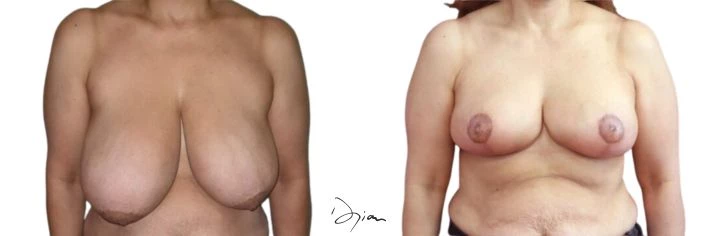
Breast reduction scars vary in shape and size. They generally resemble a line of a lighter or darker shade than the skin's natural tone.
Scars can be pink, red, purple, gray or dark brown. Some people are more likely to develop raised scars. Scars may be itchy or tender after surgery.
The final result of a scar can be appreciated at least 1 year after surgery.
WHAT ARE THE DIFFERENT TYPES OF BREAST REDUCTION SCARS?
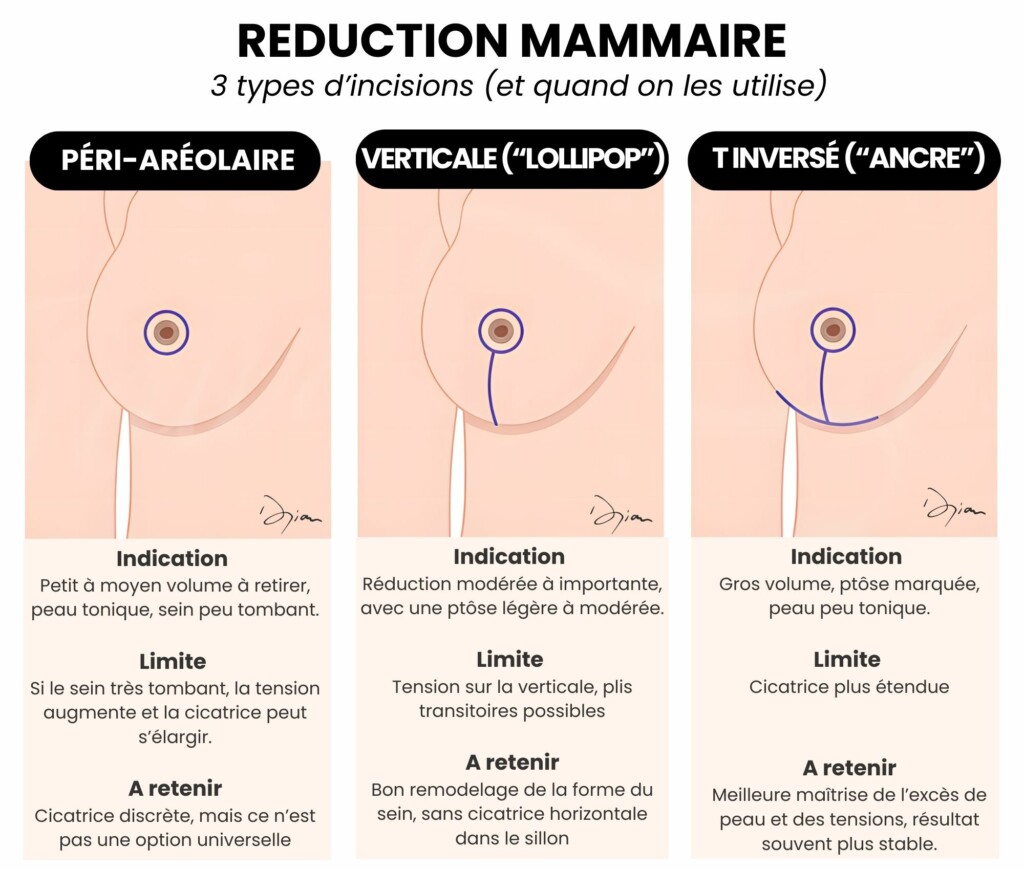
The type of breast reduction varies according to the type of incision used. There are two main types of incision:
- Vertical scars The surgeon makes an incision around the areola of the nipple and another vertical incision from the base of the areola to the fold of the lower part of the breast.
- Inverted-T scars / marine anchor: the surgeon makes three incisions, one around the edge of the areola, one from the bottom of the areola to the top of the areola, and one from the top to the bottom of the areola. sub mammary fold and one along the same fold. This is the most classic scar and helps restore the breast's shape.
Your surgeon will do his or her utmost to minimize the appearance of scars, but it is impossible to make a scarless breast reduction.
During his interventions, Doctor Djian can use the URGOTOUCH Laser at the patient's request, to minimize the appearance of scars as much as possible, whether for a vertical scar or a horizontal scar in the fold under the breast.
IS THERE A PROCEDURE FOR REMOVING BREAST REDUCTION SCARS?
If you're not happy with your scars after surgery, talk to your doctor. Several surgical procedures can reduce the appearance of a scar.
Remember that, whatever the type of operation, breast reduction scars never disappear completely.
HOW CAN I REDUCE THE APPEARANCE OF BREAST REDUCTION SCARS?
The best way to reduce breast reduction scars is to follow the post-operative instructions from your doctor. Afterwards, you may have to wait until the scars have completely healed before carrying out certain treatments.
Possible treatments are :
- Creams or ointments A silicone-containing ointment can make a scar less visible. Consult your doctor before using any cream, ointment or oil.
- Injections If you develop keloid scars following your operation, corticosteroid injections can reduce their size.
- Laser treatment Ask your surgeon about laser skin resurfacing. It can make scars less visible by removing layers of skin.
- Massage Massaging scars can promote healing and reduce itching. Your surgeon can show you how to massage the scar with a lotion or cream. Don't start massaging scars until your surgeon tells you it's safe (usually a few weeks after the operation).
HOW DO I KNOW WHAT TYPE OF BREAST REDUCTION SCARS I WILL HAVE?
The size and shape of your scars depend on the technique used by your plastic surgeon. He or she will recommend the technique that's best for you, based on :
- The intervention
- Breast size and anatomy
- Breast shape and symmetry
- The expected end result.
DO BREAST REDUCTION SCARS LOOK DIFFERENT OR EVOLVE OVER TIME?
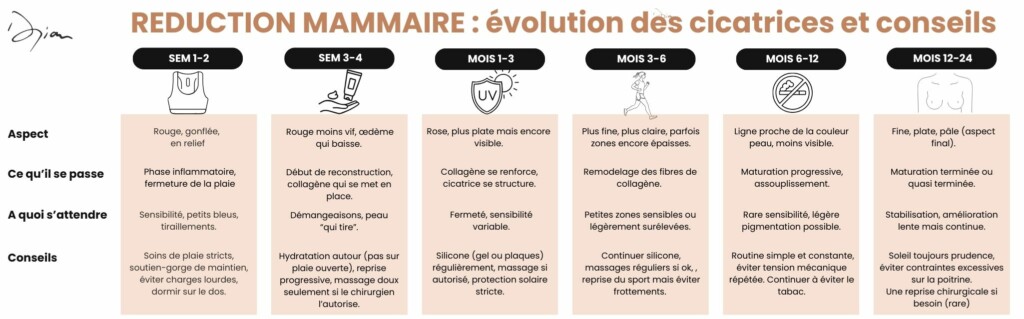
Yes, breast reduction scars change over time. They generally fade over time. Generally speaking, there are three scar phases:
- After six weeks You'll probably wear a bandage for the first few weeks. When you remove your bandages, your scars may be red to purple in color and slightly raised above the surrounding skin.
- After six months The scar tissue is still new and the scar is still visible, but it will have begun to fade. Your scar may still be raised above the incision site.
- After one year The scar begins to blend in with your natural skin tone. It may appear lighter or darker than your natural skin tone, but its hue is close to it.
WHAT ARE THE COMPLICATIONS OF BREAST REDUCTION SCARS?
There are two types of complications that can lead to raised scars after surgery plastic surgery breast reduction :
- Keloid scars They develop slowly and do not fade over time. These scars are more common in people with darker skin tones.
- Hypertrophic scars keloid scars: raised scars that appear one to two months after the operation. Unlike keloid scars, they do not extend beyond the incision site and fade over time.
HOW DO I TAKE CARE OF MY BREAST REDUCTION SCARS?
The care of breast reduction scars begins with the care you give them after your operation. After the operation, follow your doctor's instructions carefully.
You must wear a bra or bandages and keep the area clean. Inform your surgeon immediately if you notice any problems such as pain or swelling. Take care to avoid :
- To scratch Scars: healing can be itchy. Scratching or rubbing can interfere with the healing process and make scars more visible.
- Smoking Smoking: discuss with your doctor the possibility of quitting smoking before the operation. Smoking interferes with healing process.
- Sun exposure Always wear sunscreen with a protection factor of 50 or more, or cover your scars with clothing. They can darken with repeated exposure to the sun, which also increases the risk of developing skin cancer.
WHAT ARE THE RISKS AND COMPLICATIONS OF BREAST REDUCTION SCAR TREATMENT?
Every type of breast reduction scar treatment carries potential risks. Among the most common complications of treatments to reduce the appearance of breast reduction scars are:
- Skin discoloration
- Itching
- Peeling skin
- Pain at injection site
What did you think of this article?
Rate it !
Average Rating 4.5 / 5. Number of Votes 12
No votes yet, be the first to rate this article.
IN THESE SECTIONS
Here, the aim is to help you find your bearings, without any magic promises: understand what “falls out” (skin, gland, nipple position), what the operation requires in the operating room (anesthesia, incision, dressing), what the usual after-effects are (convalescence over several weeks) and what to watch out for (scar, infection, complication, implant rupture). In short: clear answers before choosing breast surgery.
But what about Social Security coverage for breast reduction? Can you get financial help to feel more comfortable with your body? Most of the time, the answer is yes!

TO DR. DJIAN