The Different Breast Reconstruction Techniques in Paris
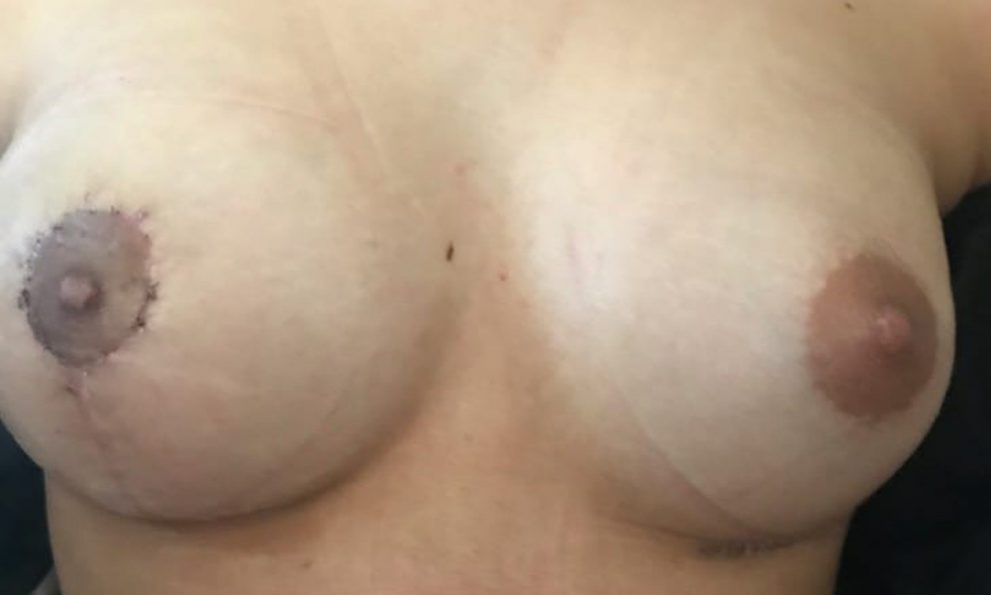
Breast reconstruction in Paris is intended for all women who wish to restore satisfactory breast volume, symmetry, or shape, regardless of the cause. In the vast majority of cases treated by Dr. Djian, the need for reconstruction stems from marked breast asymmetry, severe breast ptosis that cannot be corrected by a simple lift, or a congenital malformation such as breast agenesis or Poland syndrome. Reconstruction may also be performed for patients who have undergone a mastectomy due to breast cancer.
The Dr. Djian, plastic surgeon specializing in reconstructive surgery in Paris, tailors the technique to each patient’s body type, tissue quality, and personal goals. He performs all standard procedures: breast implant reconstruction, autologous reconstruction using the DIEP flap, PAP flap reconstruction, as well as related procedures such as the’breast augmentation, the breast reduction and the breast lipofilling.
Breast Reconstruction for Breast Asymmetry or Severe Ptosis
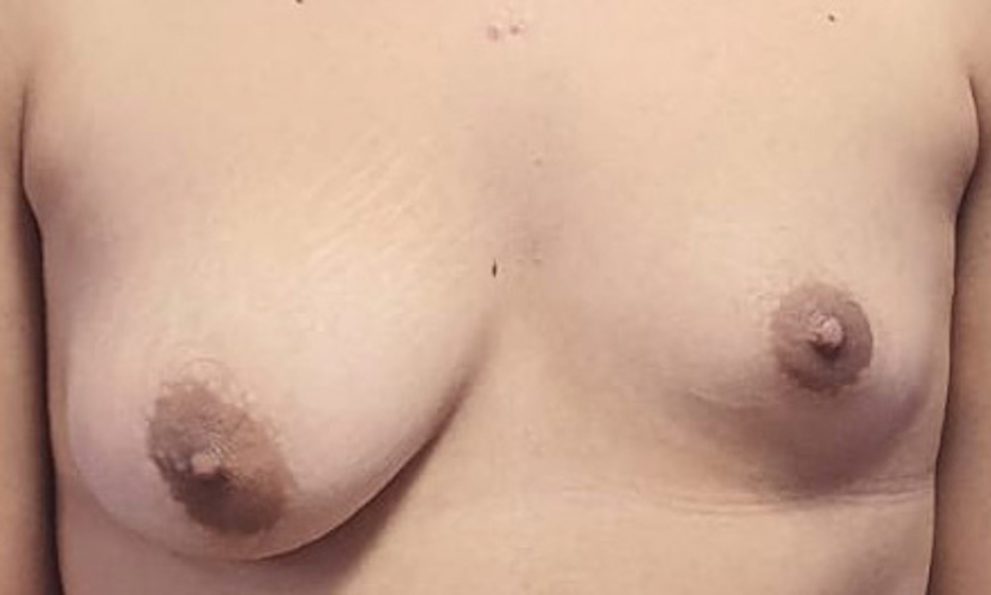
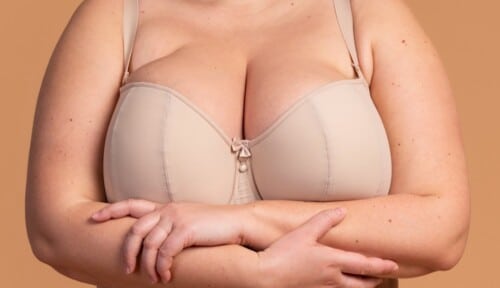
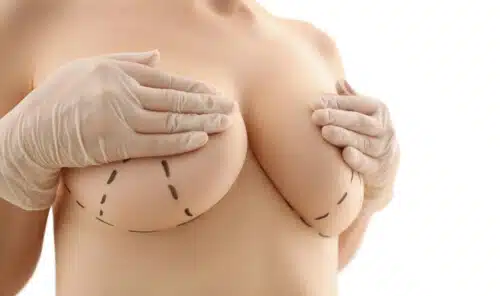
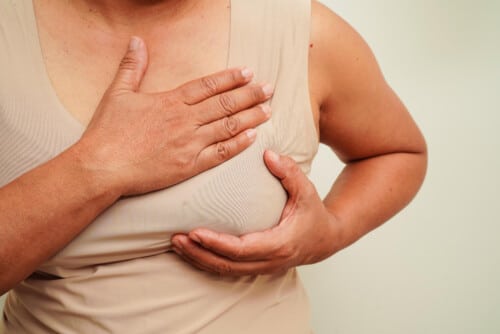
Significant breast asymmetry or severe breast ptosis can have significant psychological and physical repercussions: back pain, difficulty getting dressed, and discomfort in daily life. These situations often require true reconstructive surgery rather than a simple cosmetic procedure, particularly when breast volume or glandular tissue is absent or severely reduced in one or both breasts. Dr. Djian assesses the functional aspect of the patient’s request during the initial consultation, which determines eligibility for coverage by Medicare, as detailed below. Two dedicated pages provide further information on these situations: the’breast hypertrophy and the breast ptosis.
The tuberous breasts Another common indication for reconstructive surgery is this congenital malformation, which results in a narrow breast base and an irregular distribution of breast tissue.
Breast Reconstruction with Implant in Paris
The breast prosthesis reconstruction remains the most commonly used technique. It involves restoring breast volume using a silicone implant, which is placed either under the pectoralis major muscle or in a prepectoral plane, depending on the quality of the available tissue. This approach is particularly suitable for patients with good skin quality who wish to minimize scarring away from the chest area. The procedure is most often performed on an outpatient basis or with a short hospital stay, allowing for a relatively quick return to normal activities.
DIEP Flap Breast Reconstruction in Paris
The breast reconstruction with DIEP is an autologous reconstruction technique: the breast is reconstructed using the patient’s own tissue, without the use of an implant. The flap, harvested from the abdomen, is transferred and microanastomosed in the chest area to restore a breast volume that feels natural to the touch and remains so over time. This technique also offers the secondary benefit of a tummy tuck-like effect in the donor area. It requires expertise in microsurgery and a longer operating time than reconstruction using a prosthesis.
PAP Flap Breast Reconstruction in Paris
The PAP flap breast reconstruction is an autologous alternative particularly well-suited for slender patients, whose abdominal volume is insufficient for a DIEP procedure. Tissue is harvested from the back of the thigh and transferred using the same microsurgical technique. This technique produces a long-lasting, natural-looking result while minimizing the impact on the abdominal contour.
Why seek medical advice outside the context of cancer?
Breast reconstruction is not limited to cases following breast cancer. Many patients consult Dr. Djian for asymmetry that has been present since adolescence, severe breast ptosis that developed after pregnancy or significant weight loss, or a partial absence of breast tissue due to a congenital condition.
In these situations, the goal remains the same: to restore the volume, shape, and symmetry that correspond to the patient’s desired anatomy. The functional impact of these deformities—whether it involves neck pain, difficulty getting dressed, or a sense of discomfort that has persisted for several years—justifies surgical treatment just as much as reconstruction following a mastectomy. It is precisely this functional aspect that, in many cases, qualifies a patient for a covered by the French Assurance Maladie.
The Breast Reconstruction Process
The course always begins with a in-depth consultation at Dr. Djian’s office in Paris’s 16th arrondissement. This appointment allows for an evaluation of the chest morphology, the quality and quantity of available tissue, as well as the patient’s medical and surgical history. The surgeon then explains the possible techniques (implant, DIEP, or PAP), their respective advantages, and their limitations in terms of scarring and postoperative recovery.
A second date is generally offered to refine the project, answer additional questions, and, if necessary, begin the Request for prior authorization from the Health Insurance Program. The final decision regarding the procedure rests with the patient, based on Dr. Djian's medical recommendations.
The procedure itself takes place under general anaesthetic, to the Princes Clinic in Boulogne-Billancourt, a facility certified in breast surgery in Paris.
The length of hospital stay ranges from a few hours for prosthetic reconstruction at several days for an autologous flap reconstruction, as this type of surgery requires close postoperative monitoring of the flap's blood supply.
Postoperative Care and Return to Normal Activities
The recovery process following breast reconstruction varies depending on the technique chosen. Reconstruction using an implant generally allows patients to resume their daily activities within two to three weeks, whereas autologous reconstruction using the DIEP or PAP flap requires a longer recovery period due to the associated tissue harvest from the abdomen or thigh.
In any case, a post-operative follow-up Dr. Djian conducts regular follow-up visits to monitor healing and adjust the fit of a properly fitting bra and to monitor the patient until the result has fully stabilized, which generally occurs between 12 and 18 months after the operation.
Cost and Insurance Coverage for Breast Reconstruction in Paris
The cost of breast reconstruction depends on the technique chosen, the complexity of the procedure, and each patient’s individual circumstances.
When the procedure is covered under a reason recognized by the Health Insurance program (breast asymmetry important, congenital malformation, breast agenesis, complications following a mastectomy), it may be covered under a request for prior approval.
The surgeon compiles this file, which is then reviewed by a medical consultant which determines eligibility for reimbursement. Additional charges for surgical or anesthesia fees may nevertheless apply depending on the technique used; these are specified in the estimate provided during your consultation and may be covered in part or in full by your supplemental health insurance.
Fees Charged by Dr. Djian
| Breast reconstruction after mastectomy |
Reconstructive Surgery (TTC*)starting at 2,500 euros |
The final cost, including surgical fees, anesthesia, and clinic fees, is provided in detail and tailored to your specific needs following the initial consultation, once the surgical technique and treatment plan have been determined with Dr. Djian.
Schedule an appointment for breast reconstruction in Paris
Whether your case involves breast asymmetry, severe ptosis, a congenital malformation, or the aftermath of a mastectomy, only a one-on-one consultation can determine the reconstruction technique best suited to your body type and your expectations. The Dr. Djian sees her patients in Paris's 16th arrondissement and supports you every step of the way, from the initial assessment through to the final result, including the preparation of the case file for coverage, when applicable.
*Prices for reconstructive surgery are provided for informational purposes only and are not binding.
The first cosmetic surgery consultation at the practice in 16ᵉ Paris is priced at 100 euros.





TO DR. DJIAN