

Your Questions
FREQUENTLY ASKED QUESTIONS ABOUT BREAST IMPLANTS
DO IMPLANTS BEHIND THE MUSCLE HURT MORE AFTER SURGERY?
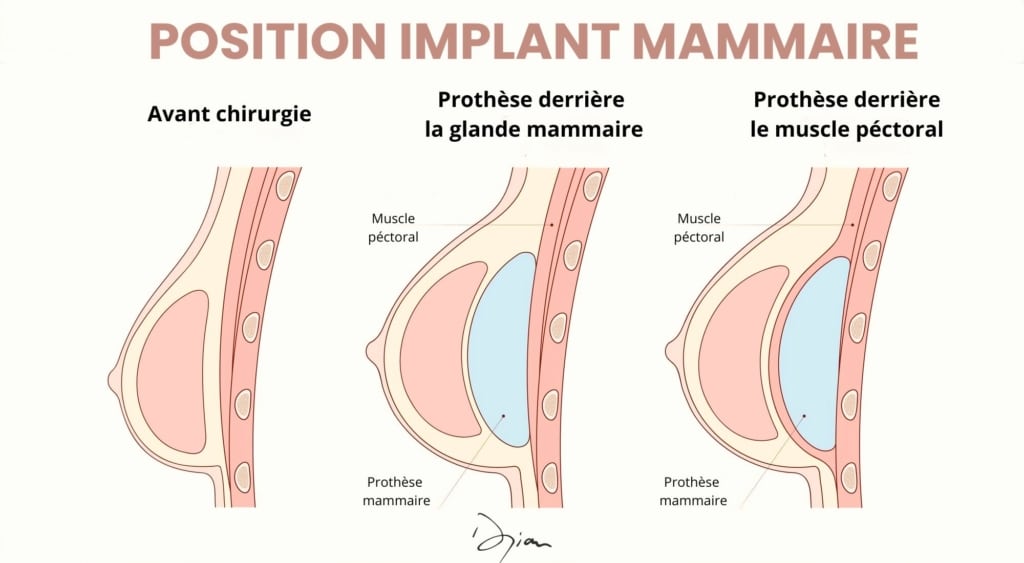
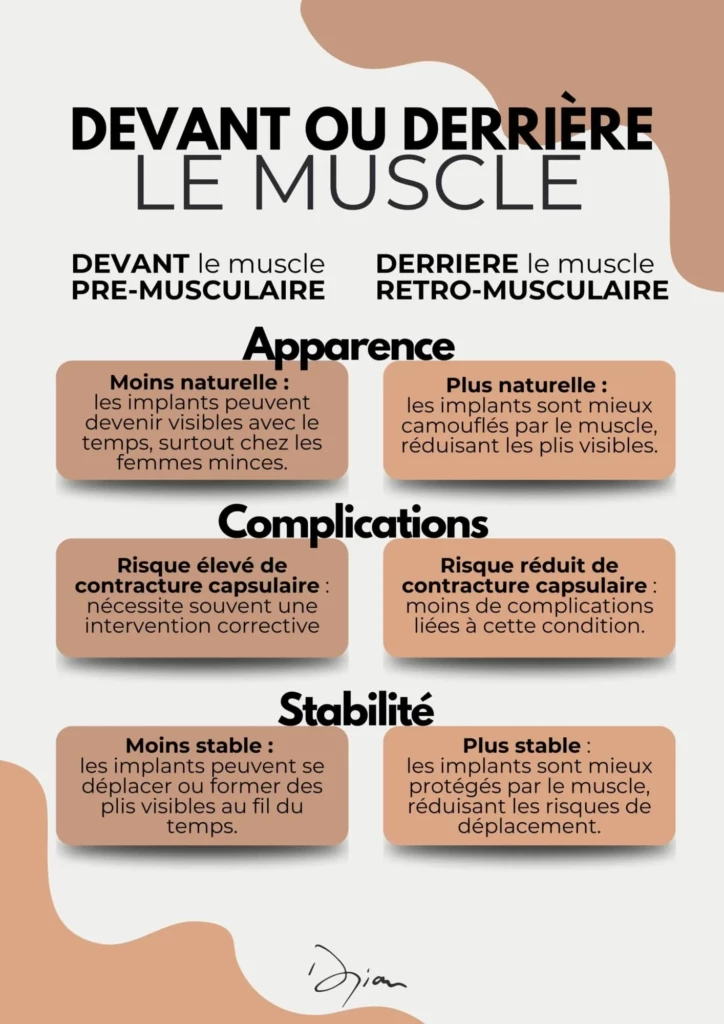
Yes, retro-muscular positioning often leads to more post-operative pain because the muscle is lifted to place the prosthesis. This discomfort is temporary and well controlled by painkillers. On the other hand, this technique offers more natural results in slim patients, with a reduced risk of blistering.
CAN THE POSITIONING OF AN EXISTING PROSTHESIS BE CHANGED?
Yes, when changing implants, it is possible to modify their positioning according to the evolution of the skin., The technique can be adapted to the patient's specific needs, desired volume or discomfort. Dr. Djian reassesses each case in consultation to adapt the technique to the current anatomy and avoid complications.
IS THERE A VISUAL DIFFERENCE BETWEEN THE TWO TECHNIQUES?
Yes, visual rendering is often more natural when the prosthesis is placed behind the muscle, especially if the patient has little breast tissue. In front of the muscle, the result may appear rounder or tighter, particularly when lying down or when the pectoral muscle is contracted.
WHAT POSITIONING IS RECOMMENDED AFTER MAJOR WEIGHT LOSS?
After weight loss, the skin is often slackened and the breast tissue depleted: positioning is essential. behind the muscle or technical dual plan is then preferred for avoid visible creases and ensure better wear over time. Dr. Djian adapts the strategy to each individual case.
DOES POSITIONING INFLUENCE LONG-TERM STABILITY?
Yes, prostheses placed in front of the muscle are sometimes more prone to descent over time, especially in cases of thin skin or sagging. Retro-muscular placement often offers better support and limits the effects of gravity over several years.
IN THESE SECTIONS
TO DR. DJIAN