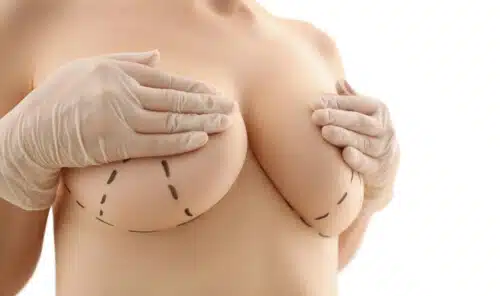


fb Gigantomastia: Symptoms, Causes, Diagnosis, and Treatments
Dr Jérémy Djian, 5 Square Thiers , 75016
Surgery

Gigantomastia: Understanding, Diagnosing, and Treating This Rare Condition

Published and scientifically verified by Dr Djian on 17/07/2026
Gigantomastie : comprendre, diagnostiquer et traiter cette pathologie rare
Summary
  • What is gigantomastia?
  • What are the symptoms of gigantomastia?
  • What causes gigantomastia?
  • How is gigantomastia diagnosed?
  • What are the risks and complications of gigantomastia?
  • How is gigantomastia treated?
  • Gigantomastia: Cost, Reimbursement, and Coverage by Social Security
  • After Breast Reduction Surgery: Results, Benefits, and Follow-Up Care
In short
  • The gigantomastia is a condition rare characterized by excessive enlargement of the mammary gland.
  • It is often associated with a hormonal imbalance, pregnancy, or puberty.
  • Common Symptoms : back pain, posture problems, and everyday physical discomfort.
  • The surgical breast reduction remains the standard of care for providing the patient with long-term relief.

A weight on the shoulders, pain that sets in, clothes that no longer fit: gigantomastia disrupts the daily lives of many women—and sometimes men—who experience an excessive and rapid increase in breast size. Often linked to a hormonal imbalance, pregnancy, or puberty, this rare condition requires an accurate clinical diagnosis and appropriate medical care. Here you’ll find a comprehensive overview of the causes, symptoms, and surgical and non-surgical solutions, including breast reduction in Paris, as well as practical advice for relieving pain and regaining a better quality of life. Let’s first take a look at the definition of this still little-known condition.


What is gigantomastia?


Gigantomastia refers to the most severe form of’breast hypertrophy, an excessive and disabling enlargement of the breasts caused by overgrowth of the mammary glands. It is a rare condition that primarily affects women.


Medical Definition and Origin of the Term «Gigantomastia»


From a medical standpoint, there is no single, definitive consensus. Various thresholds are used, depending on the authors: breast volume greater than 1,500 cm³, a mass of glandular tissue protruding 800 grams per breast for some surgeons, or even up to 2 kg according to other publications. There is, however, a consensus that the volume is extreme and pathological, far exceeding the usual range of 200 to 350 cm³ per breast.


WHAT YOU NEED TO KNOW
The word «gigantomastia» comes from Greek, where it combines the concept of gigantism with that of the mammary gland, referred to by the term «mastos.».


Hypertrophy, macromastia, gigantomastia: Where Is the Line?


The distinction between these three terms is based primarily on the degree of severity.

Simple breast hypertrophy

  • Moderate glandular hyperplasia, most often requiring resection of < 300–500 g per breast
  • Variable functional impact, often more cosmetic than medical
  • Resection weight to body surface area ratio is usually < 500 g/m²

Macromastia

  • A term often used as a synonym for significant breast hypertrophy
  • Some authors reserve this technique for resections ranging from 500 to 1,000–1,500 g per breast.
  • Net functional impact: neck and back pain, submammary grooves, limited activity.

Gigantomastia

  • Most commonly cited threshold: resection > 1,500 g per breast, or a ratio of resection weight to body surface area greater than 1,500–2,000 g/m²
  • Other historical definitions refer to breasts weighing more than 3 % of total body weight, or requiring the nipple to be lowered by more than 20–25 cm
  • Significant functional impairment, sometimes including cervical root compression, trophic skin disorders, maceration, and significant psychological and social impact.

The exact threshold varies among medical teams, but the determining factor remains the functional impact: pain, discomfort, and the inability to find a properly fitting bra in stores.


Gigantomastia, a rare condition


There are three main forms:

  • Gigantomastia During Pregnancy It affects between 1 in 28,000 and 1 in 100,000 pregnancies, according to published data. It most often begins in the first trimester and, if left untreated, continues to worsen until delivery. After birth, a spontaneous reduction in breast volume may occur, but it is rarely complete. In such cases, surgical breast reduction may be considered to correct the remaining volume.
  • The juvenile form (or virginal hypertrophy), which appears during puberty, is even rarer. It is caused by massive and rapid breast growth in adolescent girls, often just before or at the onset of their first menstrual period, with uncontrolled growth occurring over a period of a few months.
  • The idiopathic form, for which no hormonal, drug-related, or genetic cause has been identified.


What are the symptoms of gigantomastia?


The symptoms affect both the patient's body and her daily life.


Physical Symptoms and Changes in Volume


An increase in breast size may occur gradually or, in some cases, very rapidly over the course of a few months. It is generally accompanied by back pain, cervical and at shoulder level, related to constantly carrying excess weight.

The skin may show signs of stretch marks marked, some irritation under the breasts and, in the most severe cases, skin circulation disorders.

A change in posture is common, with a dorsal kyphosis : The body leans forward to compensate for the weight of the chest.


The Impact of Gigantomastia on Daily Life


Beyond the physical pain, gigantomastia affects all aspects of daily life.

  • Difficulty finding clothing and properly fitting bras
  • Limitation of the’physical activity and sports
  • Sleep Disordersthose related to postural discomfort
  • Impact on the professional life and social


Warning Signs and When to Seek Medical Attention


Certain signs require a prompt consultation with a plastic surgeon or a doctor: a very rapid increase in breast size, and acute pain, and skin irritations (maceration under the breast), sometimes a cutaneous necrosis or recurrent infections.

An early clinical evaluation allows for an assessment of the severity of the condition and helps determine the most appropriate course of action before the physical and psychological impact worsens.


What causes gigantomastia?


Several mechanisms have been identified, though no single cause explains all cases.


Hormonal imbalance and hypersensitivity of breast receptors


The mechanism most often cited is a hypersensitivity of breast receptors to sex hormones, particularly estrogen and progesterone. The glandular tissue then responds disproportionately to hormone levels that are otherwise normal, which explains why patients’ hormone tests often show no abnormalities.


Juvenile gigantomastia (during puberty)


This condition appears suddenly at the onset of a young adolescent’s first menstrual period, with no identifiable hormonal cause in the majority of cases. It requires close medical monitoring due to its rapid progression and significant psychological impact at this age.


Pregnancy-related gigantomastia (pregnancy)


Pregnancy-related breast enlargement occurs during pregnancy, a time when estrogen and progesterone levels naturally rise significantly. Breast tissue, which is particularly sensitive to these hormonal changes, can then grow excessively within a few weeks.


Drug-induced causes and idiopathic forms


In rare cases, certain medications may be associated with excessive breast tissue growth. When no hormonal, medication-related, or genetic cause is identified after a comprehensive evaluation, the condition is referred to as idiopathic gigantomastia. This is actually the most common scenario, which makes the clinical diagnosis all the more essential.


How is gigantomastia diagnosed?

First consultationReason: pain, daily discomfort.
Clinical examination Volume measurement, estimated weight.
Additional TestsImaging, hormone testing.
Differential DiagnosisConfirmation; ruling out other causes.

Clinical Examination and Measurement of Breast Volume in Cases of Gigantomastia


The first step is a consultation with a plastic surgeon in Paris who specializes in breast surgery and assesses breast volume, the sternum-to-nipple distance, and the estimated weight of tissue to be removed. This physical examination also helps to objectively evaluate the impact on posture and the skin.


Additional tests to diagnose gigantomastia (imaging, hormone panel)


Depending on the patient's age and clinical context, a hormone test, a breast ultrasound and, in women over 35, a mammography may be ordered. These tests help rule out other conditions and confirm that the hypertrophy is benign.


Differential Diagnosis of Gigantomastia


It is essential to rule out other conditions that may mimic gigantomastia, including breast tumor or a hypertrophy caused by significant weight gain without hormonal hypersensitivity.

This differential diagnosis determines the course of further medical treatment.


What are the risks and complications of gigantomastia?


Untreated gigantomastia increases the risk of cumulative physical and psychological complications.


Physical risks (pain, skin necrosis, infections)


Chronic back and neck pain, kyphosis, and painful indentations under the shoulder straps: postural problems develop gradually. Added to these are skin maceration, submammary skin infections, vascular compression that can lead to necrosis, and sometimes difficulty breathing while lying down, due to a lack of appropriate care.


The Psychological Impact of Gigantomastia and Self-Image


The psychological impact is often as significant as the physical burden. Anxiety, difficulty getting dressed, social isolation, and body image issues are frequently reported by patients of all ages, causing lasting damage to their self-esteem.


Risk of recurrence after breast reduction surgery


A partial recurrence of breast volume is still possible after a reduction, particularly in the event of another pregnancy, of weight gain significant, or when the procedure is performed at a young age, before breast development is complete.

A skin laxityAssociated symptoms may also develop over time; if they are not accompanied by a return to normal volume, then they are more likely to be a Correction of Sagging Breasts or a mastopexy rather than another reduction.

This risk should be discussed with the surgeon.


How is gigantomastia treated?


The breast surgery remains, to date, the only effective treatment for confirmed gigantomastia.


Medical and Hormonal Approaches to Gigantomastia: Limitations and Indicationss


A hormone treatment, particularly those made from tamoxifen, may be recommended after surgery to reduce the risk of recurrence, particularly in the juvenile form.

However, these treatments are based on limited clinical data and are not a substitute for surgery, which remains the standard of care for an already established mass.


Surgical breast reduction: the standard treatment for gigantomastia


Breast reduction is a surgical procedure that involves remove excess gland tissue, of grease and skin, while repositioning the areola. Depending on the volume to be treated, different pedicle techniques are used, and the procedure is performed under general anaesthetic and generally requiring several days in the hospital in the most severe forms.

In cases of extreme gigantomastia, when the size of the breast compromises normal blood flow to the areola, a technique involving areola graft may be necessary to ensure the safety and quality of the result. These situations are rare and are evaluated on a case-by-case basis.


Gigantomastia: Cost, Reimbursement, and Coverage by Social Security


Fees Charged by Dr. Djian
Breast reduction Reconstructive surgery incl. VATstarting at 4,500 euros

*Plastic surgery prices are given as an indication and are non-contractual.
The first cosmetic surgery consultation at the practice in 16ᵉ Paris is priced at 100 euros.

Treatment depends directly on the amount of tissue removed during the procedure.

In France, a Breast Reduction Covered by Insurance by the Health Insurance program requires the withdrawal of’at least 300 grams of mammary gland per breast. This threshold, codified in the act QEMA013, does not require prior approval from the CPAM’s medical advisor. If the procedure is less extensive than this, it is reclassified as cosmetic surgery and is not eligible for reimbursement.

The additional fees charged by the surgeon and anesthesiologist—which vary by practitioner—may then be covered in full or in part by the patient’s supplemental health insurance, depending on the terms of her policy.

A consultation will allow us to accurately assess your eligibility for this coverage and provide you with a detailed estimate.


After Breast Reduction Surgery: Results, Benefits, and Follow-Up Care


The final result gradually stabilizes as the tissues and scars heal.


Expected Benefits of Breast Reduction (Functional and Aesthetic)


Patients generally report a relief quick relief from back and neck pain, a improved posture and a positive impact on the quality of daily life. Aesthetically, the breasts regain a shape and contour that are more proportionate to the rest of the body.


Postoperative Care and Follow-up After Breast Reduction for Gigantomastia


Regular follow-up helps support the healing process, particularly through solutions such as the Urgotouch laser, which promotes a better quality of Scar after breast reduction surgery.

The final result is generally evaluated between 6 and 12 months after the procedure. Subsequent weight loss may also slightly affect the final volume, a topic discussed in more detail in our article on the Weight loss after breast reduction surgery.

If you recognize these symptoms in yourself, please feel free to contact the practice directly to discuss your situation.


Sources: https://pubmed.ncbi.nlm.nih.gov/18054304/

Your Questions

FREQUENTLY ASKED QUESTIONS ABOUT GIGANTOMASTIA

What is the minimum weight of breast tissue that must be removed to qualify for reimbursement?

more less

In France, Social Security covers breast reduction surgery for gigantomastia if the surgeon removes at least 300 grams of breast tissue per breast. This is the official technical criterion (procedure code QEMA013). Gigantomastia, which often involves the removal of much more (sometimes more than one kilogram per breast), is therefore almost always covered.

Additional fees charged by the surgeon and anesthesiologist may be covered by your supplemental health insurance

What is the "ideal" weight for undergoing surgery for gigantomastia?

more less

There is no «ideal» weight, but it is strongly recommended to have a stable weight and close to their Body Mass Index (BMI) normal before the procedure. Significant weight loss or gain after The procedure could affect the aesthetic outcome. The key is to maintain a stable weight to ensure long-lasting results.

Quel est le volume maximal de sein qu'on peut retirer ?

more less

Il n’y a pas de limite stricte au volume de tissu mammaire à retirer. Dans les cas de gigantomastia extrême, le chirurgien peut retirer plusieurs kilogrammes de tissu. Si le volume est tel qu’il compromet la vascularisation normale de l’aréole, une mastectomie avec greffe d’aréole peut être nécessaire pour assurer la sécurité et la qualité du résultat. Ces situations restent exceptionnelles.

Y a-t-il des cicatrices après une opération de gigantomastie ?

more less

Compte tenu du volume important à retirer, l’intervention pour corriger une gigantomastia nécessite presque toujours une technique en « T inversé » (ou cicatrice « en ancre de marine »). Les cicatrices se situent autour de l’aréole, à la verticale sous l’aréole, et dans le sillon sous-mammaire. Avec un suivi rigoureux et les technologies modernes de cicatrisation, elles s’atténuent considérablement au fil du temps (12 à 18 mois).

Le docteur Djian utilise des techniques de pointe et des lasers comme Urgotouch pour minimiser leur visibilité.

La gigantomastie a-t-elle un lien avec les seins tombants ?

more less

Une poitrine très volumineuse peut, avec le temps, entraîner un relâchement cutané associé, appelé ptôse mammaire. Lorsque cette ptôse est associée à l’hypertrophie, une Correction of Sagging Breasts peut être réalisée dans le même temps opératoire que la réduction, voire par une mastopexy seule si le volume mammaire est normal mais la peau relâchée.

La gigantomastie peut-elle survenir chez les hommes ?

more less

Chez l’homme, on ne parle pas de gigantomastie mais de gynecomastia, un développement anormal de la glande mammaire lié à un déséquilibre entre œstrogènes et testostérone. Les causes peuvent être hormonales, médicamenteuses ou idiopathiques, et le traitement, lorsqu’il est nécessaire, repose principalement sur la chirurgie.

What did you think of this article?

Rate it !

Average Rating 5 / 5. Number of Votes 1

No votes yet, be the first to rate this article.

Dr. Jérémy Djian
Dr. Jérémy Djian

Dr Jérémy Djian is a plastic surgeon based at 5 square Thiers, near the Victor Hugo roundabout, in the 16th arrondissement of Paris.

He trained in Paris and worked on the team of Professor Laurent Lantieri, a leading authority on face transplant surgery.


Going further
THESE ITEMS CAN
IN THESE SECTIONS
Your Questions
ASK YOUR QUESTIONS
TO DR. DJIAN