


GYNÉCOMASTIE À PARIS 16ᵉ
Breast hypertrophy, A feeling of discomfort in the chest, social discomfort: gynecomastia is excess breast volume in men, often linked to excessive development of the mammary gland, which does not always disappear with sport or weight loss. When this excess becomes a source of suffering, a cosmetic surgery This targeted surgical procedure helps to restore a more masculine torso. This guide details the causes, assessment, surgical procedure, after-effects, results and price to help you decide with peace of mind.
- The gynecomastia touches man, with a glandular development and fatty breast, often psychologically unpleasant.
- In-office consultation a complete examination, identify hormonal causes, medication or pathological and propose a treatment.
- Depending on the grade of gynecomastia, surgery combines liposuction, gland removal and possible skin tightening.
- The operation takes place in ambulatory in most cases, under general anesthesia, with discreet scars around the areola.
- Cost, recovery time and eventual reimbursement vary according to the volume removed.
GYNECOMASTIA: CLINICAL DEFINITION AND INITIAL DIAGNOSIS
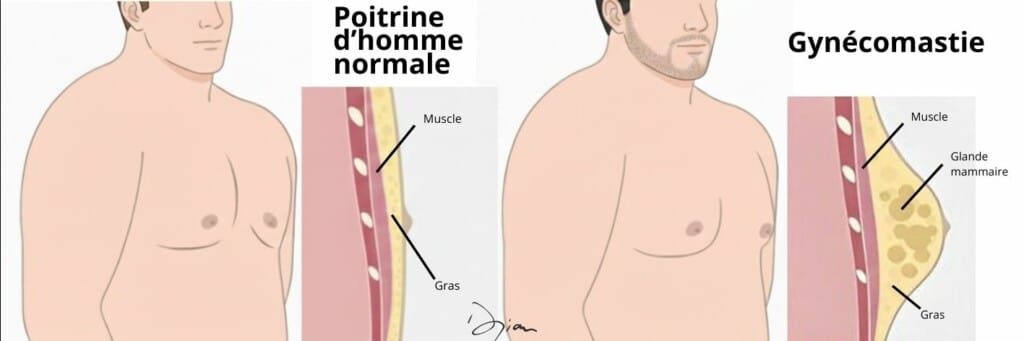
The term gynecomastia comes from the Greek « gyne »and « mastos » which means « female breasts ». It is the most common breast condition in men.".
Gynecomastia is a breast enlargement linked to the excessive presence of glandular tissue in the male breast.
This firm core, located in the center beneath the areola, is distinct from the more diffuse fatty tissue. It may be unilateral or bilateral, whether discreet or highly visible.
The surgeon's role is to objectively assess this glandular development and distinguish it from a simple adipomastie and assess the aesthetic, functional and psychological impact on the man concerned.
Schedule an appointment with Dr. Jérémy DJIAN
Appointment in Paris's 16th arrondissement
DIFFERENCES BETWEEN GYNECOMASTIA AND ADIPOMASTIA
True gynecomastia is characterized by a firm glandular core behind the areola, which is often sensitive to pressure.
Adipomastia, on the other hand, essentially corresponds to excess fat in the chest area, with no real mammary gland developed. Palpation can provide a good orientation: elastic central mass for gynecomastia, soft, diffuse filling for adipomastia.
TYPES OF GYNECOMASTIA (SIMON CLASSIFICATION) AND IMPACT ON SURGERY
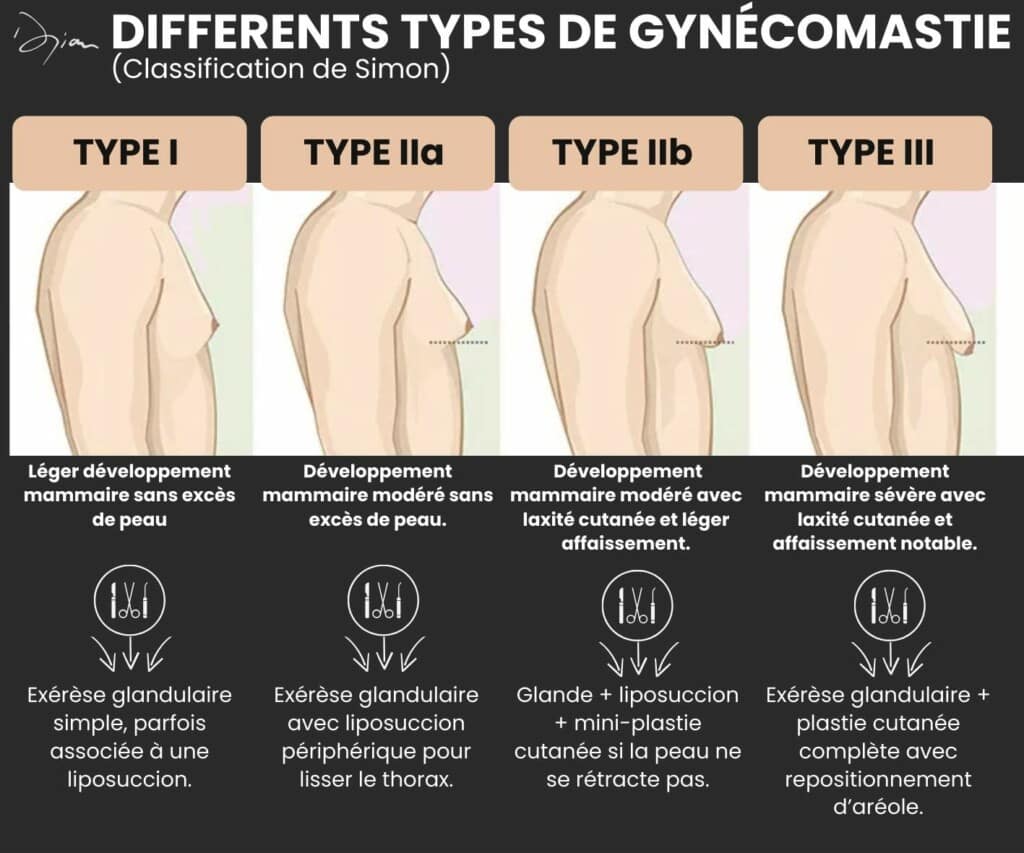
Simon's classification describes four grades of gynecomastia according to breast volume and skin excess.
- type I : a moderate increase without excess skin;
- type IIa : greater volume, still without excess skin;
- type IIb : enlargement with the onset of excess skin;
- type III : a very well-developed chest, with a significant amount of excess skin resembling a woman's breast.
This classification guides the type of surgery required. For forms I and IIa, glandular excision via a peri-areolar incision, combined with liposuction of the thorax, is usually sufficient.
For types IIb and III, the procedure becomes more complex: skin may need to be removed and the areola repositioned to obtain a flatter thorax.
The surgeon adapts the technique according to the grade, the quality of the skin and the desired aesthetic objective.
CAUSES OF GYNECOMASTIA AND WHEN SURGICAL TREATMENT BECOMES NECESSARY

There are many causes of gynecomastia. They may be :
- physiological (puberty, hormonal aging),
- related to medications or substances,
- linked to diseases rarer.
In a significant number of cases, no precise cause is not present: this is referred to as gynecomastia idiopathic. This context is important to analyze before deciding on treatment.
Surgical treatment becomes relevant when breast volume persists despite the passage of time, once the gland has stabilized, the main correctable causes have been addressed, and physical or social discomfort remains significant.
The aim is to Correcting breast issues while maintaining overall health the patient and his or her life plans, without neglecting the psychological aspect.
PHYSIOLOGICAL CAUSES: PUBERTY, ANDROPAUSE, HORMONAL VARIATIONS
During puberty, the vast majority of adolescents experience temporary changes in their breasts: the mammary gland reacts to hormonal variations, This creates a discreet relief behind the areola. In most cases, this development regresses spontaneously within one to two years. Before the end of this period, surgery is only envisaged in exceptional cases.
Later, adulthood or andropause, the gradual decline in testosterone and changes in metabolism can lead to the development of from breast tissue. When this phenomenon is associated with a excess weight or due to other factors, gynecomastia becomes more noticeable. The hormone test This makes it possible to assess the extent of this imbalance and identify any endocrine cause to be treated before any surgery.
DRUG AND SUBSTANCE CAUSES
Certain medications promote gland development anti-androgens, prostate treatments, molecules used in cardiology, anti-depressants and anti-ulcer drugs, among others. Many substances also increase the risk: excessive alcohol, cannabis, anabolics, bodybuilding supplements containing hormonal derivatives.
When gynecomastia appears after the introduction of a treatment or product, the first reflex is to report the problem to the prescribing physician. Adapting or changing the medication may lead to partial improvement. If, despite these measures, the gland remains enlarged and troublesome, surgery will be the second choice, once the medicinal situation has stabilized.
RARE PATHOLOGICAL CAUSES
Less commonly, gynecomastia is the result of a pathology :
- testicular tumor,
- thyroid disease,
- liver damage,
- complex endocrine disorder
- or genetic syndrome.
In this context, the priority is to diagnose and treat the underlying condition causing the hormonal imbalance.
The assessment may include a endocrine workup complete, a testicular ultrasound, a liver function tests or exams in’imaging more advanced.
The gynecomastia treatment is performed only afterward, once the medical condition has been treated and excess breast tissue remains. This step-by-step process ensures a rigorous, safe, and medically sound approach.
Make an appointment with Dr. Djian for an accurate diagnosis.
DIAGNOSIS: HOW DO YOU CONFIRM GYNECOMASTIA?
Initial consultation with the surgeon
The first consultation aims to distinguish a excess fat in the chest (adipomastia) caused by breast glandular hypertrophy. The patient describes how long the swelling has been present, how it has progressed, possible triggering factors (puberty, medication, weight gain), and its impact on daily life.
The surgeon examines the breasts, palpates the gland, assesses any asymmetry, classifies the form of gynecomastia and presents the options: observation, medical treatment or surgery.
Expectations are clarified, as well as post-operative constraints, anesthesia and recovery time.
Pre-operative medical check-up
When surgery is being considered, a medical evaluation confirms that it is indicated. Breast Ultrasound allows for visualization of the gland and its distribution; hormone tests are ordered if an imbalance is suspected; a blood test and an anesthesia consultation ensures the procedure is safe.
The Preoperative Instructions The following factors are taken into account: smoking cessation, adjustments to certain treatments, hospitalization conditions, and the time leading up to the procedure. The goal is to provide a framework for the surgical plan and ensure the procedure is performed safely.
AVAILABLE TREATMENTS
Observation and non-surgical treatments
In recent forms, particularly pubertal or drug-related, the first step is observation The doctor monitors progress over several months, explains the nature of the phenomenon and checks for spontaneous regression.
Discontinuation of a triggering substance or management of a hormonal imbalancel can reduce glandular volume.
In selected cases, drug treatment is discussed with an endocrinologist The aim is to rebalance the hormonal context, not to remove old, fibrous tissue. When these solutions fail to produce tangible changes in discomfort or the appearance of the thorax, surgery becomes the most consistent option for achieving a lasting result.
Surgical treatment of breast excess in men
Surgery aims to remove excess mammary gland and, if necessary, to associate a liposuction local fat or a skin gesture when the skin has lost its elasticity. The combination of techniques—glandular excision, liposuction, and skin grafting—depends on the type of gynecomastia and its aesthetic or functional impact.
This treatment is offered only after a comprehensive assessment (clinical findings, imaging, hormonal factors) and a frank discussion about realistic outcomes.
GYNECOMASTIA SURGERY: STEP-BY-STEP PROCEDURE
PREPARATION FOR SURGERY
In the weeks prior to surgery, it is recommended to’quit smoking or nicotine, of stabilize your weight and’avoid medications increase the risk of bleeding, in agreement with the attending physician. It is advisable to limit alcohol intake and maintain a healthy lifestyle to promote healing.
The day before, prepare your documents, your chest compression garment, and your belongings for the clinic. We’ll remind you of the fasting instructions and the time you need to arrive at the operating room.
This simple, yet structured preparation means that the operation can be approached within a clear framework, without last-minute improvisation.
ANESTHESIA AND INCISION ZONES
The majority of gynecomastia operations are performed under general anaesthetic, to ensure comfort and immobility. In special cases, very localized shapes can be produced under reinforced local anaesthetic, However, this is not the most frequent situation for a complete intervention.
The incisions are placed at the junction between the skin and the areola, in the lower part. They provide access to the mammary gland to be removed. Small additional incisions of approx. 4 mm, The liposuction cannulas are concealed in the natural folds of the skin.
In cases requiring skin resection, the surgical margins are more extensive and are discussed in detail during the preoperative consultation.
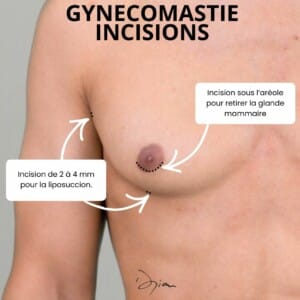
Position of incisions for gynecomastia treatment
SURGICAL TECHNIQUES ACCORDING TO THE TYPE OF GYNECOMASTIA (1 TO 4)
For gynecomastia type I and IIa, the standard technique combines peripheral liposuction and removal of the glandular core through a periareolar incision. This approach corrects both central relief and lateral fat deposits, while minimizing scarring.
For types IIb and III, Excess skin sometimes warrants a more elaborate plasty: removal of skin, repositioning of the areola, sometimes reduction of its diameter. The aim is to eliminate the pendulous breast shape and restore a flatter torso, even if this means more visible scars.
The exact choice of technique is individualized, taking into account age, skin quality, glandular volume and aesthetic expectations.
DURATION OF OPERATION AND HOSPITALIZATION CONDITIONS
A gynecomastia operation lasts on average between one and two hours, depending on the complexity of the procedure and the extent of the liposuction. At the end of the procedure, a compression bandage is applied and the compression garment is fitted to the torso.
Care is most often provided by on an outpatient basis (You will go home the same day), with someone accompanying you, after a few hours of observation. An overnight hospital stay may be recommended for more severe cases or for patients coming from far away.
POSTOPERATIVE CARE AND RECOVERY
Pain, swelling and tissue evolution
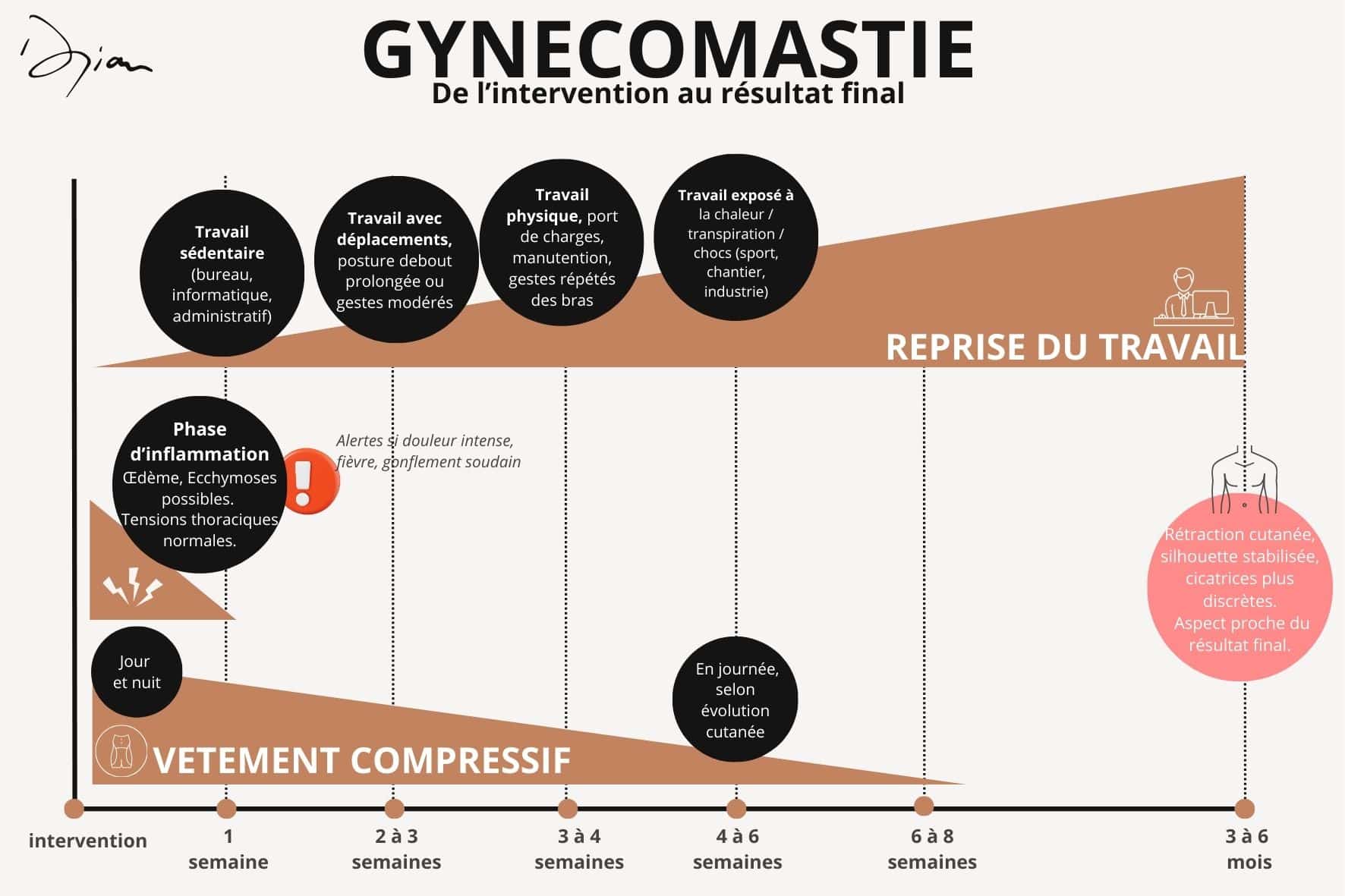
Postoperative discomfort is generally moderate These include chest tension, a feeling of aching or tightness around the areola. In most cases, simple painkillers prescribed on discharge are sufficient.
Edema peaked during the First 3 to 7 days then gradually regresses, while bruising may migrate to the abdomen after associated liposuction.
The thorax may present hard or irregular areas to the touch, corresponding to the internal healing. They soften over the weeks, sometimes with massages authorized by the surgeon.
Wearing chest compression
Compression garments is part of the treatment. Maintains tissues, limits edema and promotes the adhesion of the skin to the muscles.
It is worn continuously for several weeks, then gradually reduced depending on how the condition progresses.
Even though it may seem restrictive, a vest adapted to the body shape clearly improves the quality of the result and everyday comfort under clothing.
The surgeon's follow-up determines the exact duration, as it varies depending on the amount of glandular tissue removed and the elasticity of the skin.
Back to business
Resumption of sedentary work is generally possible between 7 and 10 days, when mobility improves and pain subsides.
Activities that involve carrying loads or repetitive arm movements require a longer period of time, often 3 to 4 weeks.
Sport is reintroduced in phases, starting with walking or exercise cycling, followed by lower-body exercises. Movements targeting the pectoral muscles are only resumed after medical validation, when internal healing and skin retraction are sufficiently advanced.
RESULTS AFTER GYNECOMASTIA SURGERY: WHAT TO EXPECT
The result evolves over several months. The first changes appear as the swelling subsides. Skin retraction and stabilization of the thorax take time.
Around the third month, breast volume is corrected and the silhouette is generally close to the expected result.
Between 3 and 6 months, The skin gradually tightens, irregularities diminish and the torso takes on a more natural shape.
A reduced sensitivity of the areola or thorax is frequent. It improves with nerve recovery.
Scars follow a simple cycle:
- red and a little thickened at first,
- then paler and thinner as the weeks go by.
Compression, sun protection, and silicone dressings improve healing and the quality of the results.
A touch-up is only discussed after complete stabilization, i.e. after 6 months, when the appearance of the torso and skin quality are considered definitive.
PRICE OF GYNECOMASTIA SURGERY AND HEALTH INSURANCE COVERAGE
The cost of gynecomastia surgery depends on technical complexity and operating time. A simple glandular excision combined with liposuction on an outpatient basis is not priced the same as surgery involving skin resection and areolar repositioning, which requires more team and OR time.
The surgeon's fees and the anaesthetist, clinic fees, compression garments, and postoperative follow-up visits are added to the overall budget. The detailed quotation, is essential to understand what the amount covers and to compare items objectively.
In some cases, when the gynecomastia is clearly glandular, significant and a source of functional discomfort, the’procedure can be coded as reconstructive surgery Social security covers part of the cost, and mutual insurance companies can top it up depending on the contract.
If the volume is judged to be essentially aesthetic (adipomastia, moderate shape, no medical justification), the whole procedure remains at the patient's expense.
The remainder to pay corresponds to what the Social Security and the mutual insurance do not cover:
- overcharging,
- anesthesia,
- clinic fees,
- restraint
- or consultations.
Price of gynecomastia with Dr. Djian in Paris
| Gynecomastia | Cosmetic Surgery (All Taxes Included*)from 6,000 euros | Reconstructive Surgery (TTC*)4,000 euros |
*Plastic surgery prices are given as an indication and are non-contractual.
The first cosmetic surgery consultation at the practice in 16ᵉ Paris is priced at 100 euros.
RISKS AND COMPLICATIONS OF GYNECOMASTIA SURGERY
No operation, even one that is well managed, is completely risk-free.
Treatment for gynecomastia may cause general complications (related to anesthesia) or local (hematoma, infection, scarring issues, or unsatisfactory results).
Talking about it openly is part of ensuring safety: the patient knows what to watch for and how to respond if something seems wrong.
IMMEDIATE COMPLICATIONS
Immediate complications are mainly hematoma Importantly, the occurrence of a infection early, a bleeding abnormal or, in rare cases, a skin problem located.
A hematoma presents as a painful, asymmetrical swelling; it may require prompt reoperation in the operating room to drain it.
A infection translates to fever, pain increasing, redness and suspicious discharge from a breast.
It is treated by antibiotics, sometimes combined with a drainage procedure.
Fortunately, these situations are rare. when the operation is carried out under rigorous conditions and postoperative instructions are respected.
LATE COMPLICATIONS
Over time, complications mainly affect the cosmetic outcome: residual asymmetry, a small localized indentation, an irregularity in the skin’s surface, or an enlarged or pigmented scar. Some heal well; others may require corrective treatment after several months.
A true recurrence, linked to a new glandular development, remains rare if the gland has been correctly removed, but it can occur in the event of significant weight gain or of resumption of hormonal substances.
Regular follow-ups make it possible to identify these developments and discuss solutions calmly, without rushing.
HOW TO CHOOSE A PLASTIC SURGEON FOR GYNECOMASTIA SURGERY
Choosing a gynecomastia surgeon involves evaluating the following objective, verifiable criteria.
It must be qualified in plastic, reconstructive and aesthetic surgery, listed on the Medical Council, and work in a structure with a accredited operating room.
Specific experience matters: the number of procedures performed annually, the diversity of cases treated, and a portfolio of anonymized results showing before-and-after images of male breasts. A professional familiar with issues related to the male chest understands the impact of the gland, how to manage the associated fat volume, and the implications for scarring around the areola. Transparency is key:
- precise description of the technique used (excision, liposuction, skin plasty)
- real risks,possible complications, aesthetic limitations
- durations surgery, healing, return to work
- full quote : surgeon's/anesthesiologist's fees, clinic fees, compression garments.
Informed Consent is not an administrative formality but a discussion: what you can get, what you can’t expect, and at what cost.
A good surgeon encourages questions about the price, just long enough to’work stoppage, the impact on one's personal life or athletic activities.
Finally, post-operative follow-up must be structured : scheduled follow-up visits, adjustment of compression garments, monitoring of bruising, management of asymmetries, and support for returning to normal activities.
A reliable surgeon is one who stays available after the act, able to intervene in the event of a problem and anticipate touch-ups if necessary.
Structured support, such as the one proposed by Dr. Djian in Paris, allows you to go through each step with a single point of contact who is available to tailor the solutions to your specific situation and lifestyle.
GYNECOMASTIA AND WEIGHT TRAINING: WHY EXERCISE IS NO SUBSTITUTE FOR SURGERY
Impact of fat volume and mass gain
Weight training reduces excess fat, improves posture and strengthens the chest. In adipomastia, this loss of fatty tissue can refine the chest and improve the appearance under clothing. But training does not remove the mammary gland : Glandular hypertrophy remains present, visible behind the areola, and is sometimes even more pronounced when the pectoral muscles are well-defined. When the discomfort persists despite diet and regular exercise, surgery is the only way to remove the gland and smooth out the area.
Risks of anabolics and boosters
Steroids and hormone boosters increase muscle mass, but disrupt the estrogen/testosterone balance and promote hypertrophy breast. Induced gynecomastia can become irreversible once the product is discontinued, and does not regress without surgery.
Uncontrolled supplements or “home-made” protocols expose you to lasting endocrine complications. It's better to stick to progressive training and a correct diet, and to consult a specialist if a sudden change in the thorax appears.
ADOLESCENT GYNECOMASTIA: SHOULD SURGERY BE PERFORMED?
Gynecomastia of the teenager is common and often temporary.
It appears within a few months, causing concern for parents and the adolescent, and then subsides in many cases as puberty progresses.
The question of the operation arises above all when the volume is large, that he persists for several years now, and that he significantly disrupts social life.
WHEN TO WAIT AND WHEN TO ACT
When gynecomastia is recent, moderate and clearly linked to a growth phase, the priority is to observe the evolution, by explaining the situation. Regular monitoring provides reassurance and helps identify cases that resolve spontaneously. Surgery is not indicated at this early stage.
On the other hand, breast hypertrophy that is marked, painful or responsible for strong social isolation, especially if it persists beyond two years, may warrant treatment for older adolescents or young adults.
The decision takes into account psychological maturity, physical maturity, and the impact on school and daily life.
SURGERY VERSUS OBSERVATION
Rather than opposing “operation” and “waiting” head-on, it's useful to talk in terms of information, psychological support if needed, body image support, then surgical decision when criteria met. Working with a trusted psychologist or doctor can help to distinguish deep-seated suffering from more minor discomfort, which may improve over time.
In this context, surgery is a response to a stabilized and clearly disabling situation, not as an impulsive response to a period of doubt. This time of shared reflection protects the adolescent and makes the treatment decision more secure.
PSYCHOLOGICAL AND SOCIAL IMPACT OF GYNECOMASTIA: WHEN TO ASK FOR HELP
Gynecomastia goes beyond the issue of breast size: it affects the’self-image and the perceived masculinity.
In a society that values a « lean and muscular«, even the slightest irregularity becomes a source of shame. Many men adjust their clothing and avoid swimming pools, locker rooms, or intimate situations for fear of being judged.”.
The more a person hides, the greater their discomfort becomes, and the more the condition takes over their thoughts—a self-perpetuating cycle. Help becomes necessary when avoidance limits leisure activities or emotional life, or leads to lasting social anxiety.
Two approaches complement each other: the surgeon removes the gland and corrects the contour of the chest; ; the psychologist helps break down limiting beliefs («I’m not a real man») and find one's place without hiding.
For many, the surgery marks the moment when they regain control of their bodies and their lives.
Do these situations sound familiar to you? Don't wait any longer to discuss this. Dr. Djian offers a consultation to assess your situation and present solutions tailored to your needs.
Schedule an appointment with Dr. Jérémy DJIAN
Appointment in Paris's 16th arrondissement
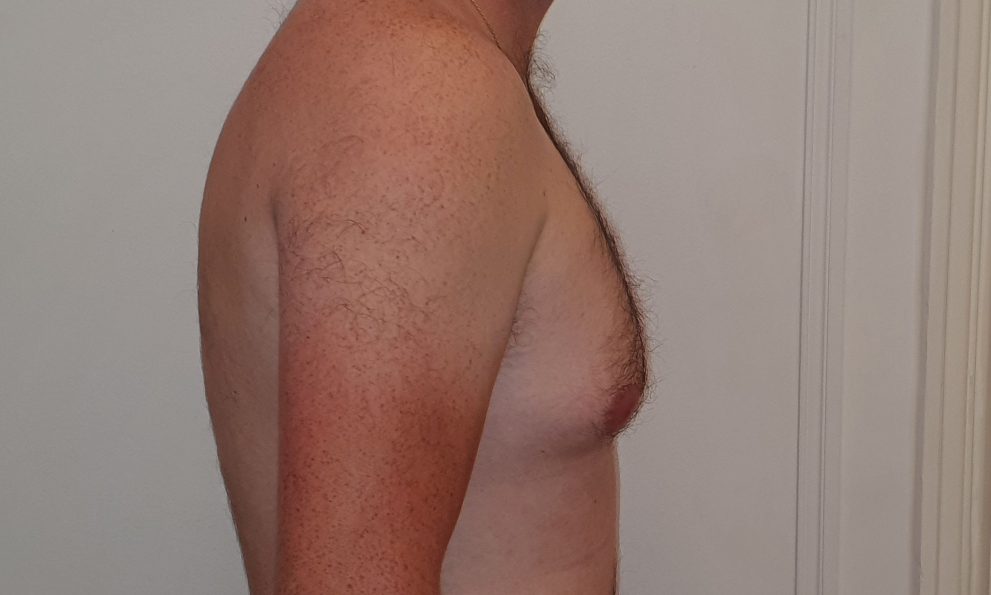
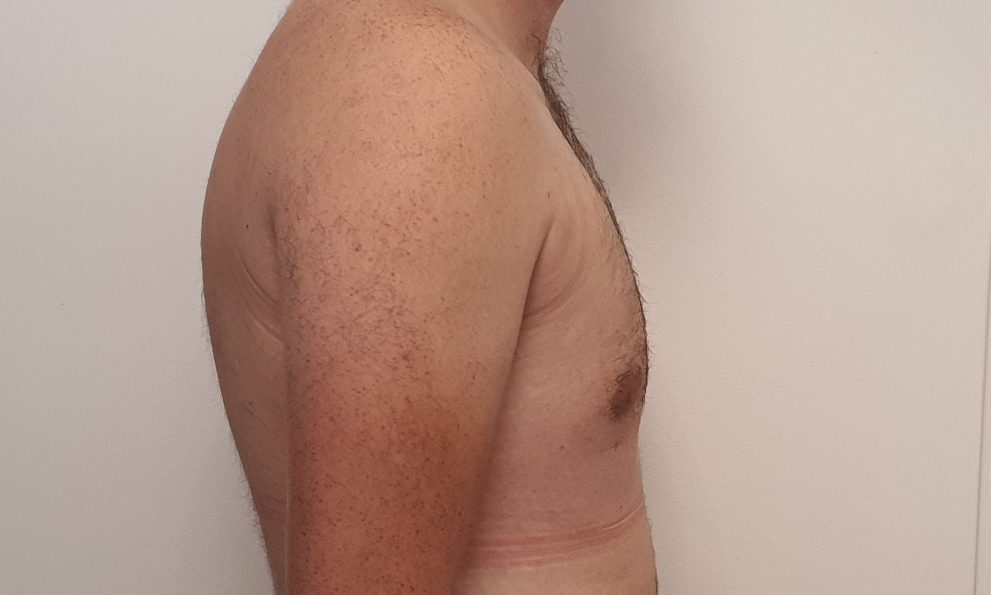

Gynecomastia Correction
Your Questions
FREQUENTLY ASKED QUESTIONS ABOUT GYNECOMASTIA
HOW DO I KNOW IF MY GYNECOMASTIA CAN REGRESS NATURALLY OR IF AN OPERATION IS NECESSARY?


Gynecomastia that has only recently appeared, especially during puberty, can regress in one or two years. Conversely, a breast volume that has been present for several years, is stable and bothersome on a daily basis, and is unlikely to disappear without surgical treatment. The decision to undergo surgery depends on the patient's age, the length of time it has been present, the hormonal balance and the impact on social life. A specialized consultation is required to assess the appropriateness of gynecomastia surgery.
WHAT ARE THE MEDICAL CRITERIA FOR GYNECOMASTIA SURGERY?
The main criteria are :
- presence of a mammary gland confirmed clinically and on ultrasound
- real and lasting discomfort despite time or conservative measures
- Stabilized weight and absence of serious untreated cause
- State of health compatible with anesthesia
- Informed consent for procedures, scars and post-operative care
IS GYNECOMASTIA SURGERY PAINFUL AND HOW LONG DOES POST-OPERATIVE DISCOMFORT LAST?
Gynecomastia surgery is rarely described as very painful. For the first few days, a tension and chest pain are frequent, but well controlled by prescribed analgesics. The most noticeable discomfort often comes from the compression garment, which is necessary for several weeks.
As a rule, daily life becomes fairly comfortable again within a few hours. ten days, although mild discomfort and local fatigue may persist for a few more weeks.
CAN GYNECOMASTIA SURGERY CHANGE THE APPEARANCE OF THE AREOLAS OR THE POSITION OF THE NIPPLES?
Yes, because breast volume reduction modifies areola support. In simple shapes, the areola often appears flatter and better integrated into a flatter torso.
In severe forms with In the case of excess skin, a real areola plasty can be planned: repositioning higher up, reducing diameter, symmetrization. These adjustments are intended to reinforce the masculine aspect of the torso. They are always explained before the procedure, with photos if necessary.
UNILATERAL GYNECOMASTIA: WHY IS ONLY ONE BREAST AFFECTED AND WHY IS SURGERY NECESSARY?
It is not unusual for one side to be more affected than the other., or even alone. Local differences in hormonal sensitivity, fat distribution or anatomy explain this asymmetry. The assessment aims to exclude another cause, particularly tumor, on the larger breast. If unilateral gynecomastia is confirmed and aesthetically troublesome, the operation can be performed on one side only, aiming for the most natural possible symmetry with the healthy breast.
WHEN DOES SOCIAL SECURITY REFUSE TO COVER GYNECOMASTIA SURGERY?
Social Security refuses to cover when it's essentially an excess of moderate volume with no functional repercussions, or of a request for purely aesthetic.
The absence of a significant mammary gland on ultrasound, an incomplete file or a “localized thinning” context mean that the procedure is classified as cosmetic surgery.
IS IT POSSIBLE TO CORRECT SIGNIFICANT GYNECOMASTIA WITHOUT A VISIBLE SCAR, AND WHAT AESTHETIC LIMITS SHOULD BE ACCEPTED?
For moderate gynecomastia, The combination of liposuction and peri-areolar incision often offers an excellent compromise: effective correction of breast volume and very discreet scars.
For major hypertrophy with excess skin, wanting “no scars” isn't realistic: removing a lot of gland and skin imposes more visible marks. The real question becomes: what scar are you prepared to accept to regain a more masculine torso?
The surgeon will help you to consider this compromise in a clear-sighted way.
HOW TO DISCUSS GYNECOMASTIA AND THE IDEA OF SURGERY WITH THOSE AROUND YOU?
Talking to a loved one about gynecomastia often begins by describing the experience: embarrassment when undressing, avoidance of certain activities, impact on self-confidence. Explaining that it's a development of the mammary gland, and therefore a benign but real pathology, helps to move away from the register of “mere coquetry”.
Some patients choose to show the doctor's letter or the estimate in order to complete the project. Everyone is free to choose the degree of transparency they want: the most important thing is to feel supported in the process.

Dr Jérémy Djian is a plastic surgeon based at 5 square Thiers, near the Victor Hugo roundabout, in the 16th arrondissement of Paris.
He trained in Paris and worked on the team of Professor Laurent Lantieri, a leading authority on face transplant surgery.
YOU MAY BE INTERESTED
IN THESE SECTIONS




TO DR. DJIAN