

fb Post-sleeve reconstructive surgery: when to intervene?
Dr Jérémy Djian, 5 Square Thiers , 75016
menu close
Appointment appointment

Surgery

When to have reconstructive surgery after Sleeve?

published on 13.05.2020 by Dr Djian
<noscript><img width=
Summary
  • UNDERSTANDING ELEMENTS
  • SO WHEN IS THE BEST TIME?
  • WHAT ARE THE CONSEQUENCES IF SURGERY IS PERFORMED TOO EARLY?
  • WHAT IS THE IDEAL WEIGHT FOR RECONSTRUCTIVE SURGERY?
  • ABOUT PREGNANCY PLANNING AND TUMMY TUCK SURGERY?
In short
  • A reconstructive surgery after sleeve should be considered when weight is stabilized and the’BMI less than 30, ideally 18 to 24 months after weight loss.
  • A intervention too early risk of giving unsatisfactory result or require second operation not reimbursed.
  • The plastic surgeon assesses skin and tissue condition to remove excess skin at the right time.
  • In case of’BMI >30, surgery may be discussed on a case-by-case basis, but the aesthetic result will be less.
  • In the presence of a pregnancy project, it is advisable to postpone abdominoplasty after delivery to preserve the result.
  • For a covered by Social Security, a prior agreement with the medical advisor is mandatory.

When is the best time to consider reconstructive surgery after major weight loss?
As you learned when you entered the bariatric surgery circuit, if there's one thing that's important, it's getting the indication right.
There's one preconceived notion I'd like to dispel right away. It's the preconceived notion that 2 years after the sleeve, you're bound to be able to have reconstructive surgery.

While this may be the right timing for most patients, it's not an absolute truth. Two years is an order of magnitude, to give an idea of things. In reality, the reconstructive surgery after weight loss, sometimes called obesity surgery or bariatric surgery, can be made before or after this deadline.

Then the surgery after sleeve, when ?


UNDERSTANDING ELEMENTS


In cosmetic surgery, we work with the skin. Skin that has been subjected to weight fluctuations, hormonal changes and so on. This is the case for reconstructive surgery, as it is for a breast reduction after weight loss.

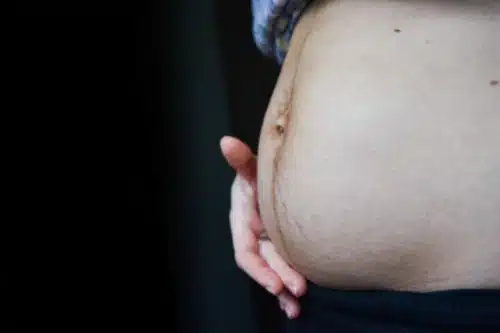
After weight loss, the skin often loses its ability to retract and some of its elasticity. That's why there's still a lot of excess skin at stomach area, The skin of the arms, thighs, breasts and sometimes the face.

When the plastic surgeon performs reconstructive surgery, he works with the state of the skin and tissues at a given moment.


SO WHEN IS THE BEST TIME?


Thesurgical operation must therefore be performed at a time or :

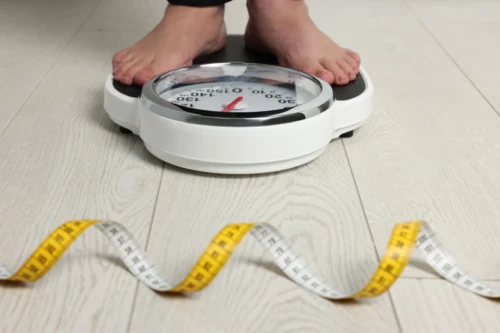
  • The weight is stabilized;
  • Weight loss is compatible with surgery.


WHAT ARE THE CONSEQUENCES IF SURGERY IS PERFORMED TOO EARLY?


If weight loss has not yet been achieved and there is still skin and fat to be removed (simply pinch off the’excess skin at arm level or belly, for example), the plastic surgeon will be limited and will not be able to pull the skin to the maximum.

As a result, the consequences can be :

  • An insufficient and unsatisfactory aesthetic result; ;
  • There is a risk of the skin falling back if the patient loses weight after the procedure. corrective surgery.


If the second risk occurs, you may need to two ireparative surgery for the same excess skin. This second surgery will not be covered by Social Security.


On the other hand, if the surgery is performed at the right time, the plastic surgeon will be able to remove the excess skin and pull on the tissues to remove as much as possible.

Find out more about Social Security cover for reconstructive surgery.


WHAT IS THE IDEAL WEIGHT FOR RECONSTRUCTIVE SURGERY?


Traditionally, a stable weight and a BMI < 30 (body mass index) are required.

A BMI below 30 means that the patient is no longer obese.


A reminder:
- A BMI between 18.5 and 25 = a normal build.
- A BMI between 25 and 30 = overweight.
- BMI >30 = obesity.


This criterion ensures the best aesthetic results in reconstructive surgery. It also reduces the risk of a number of complications (hematoma, phlebitis, etc.).

Nevertheless, and only case by case, For patients with a BMI >30, surgery may be discussed. This option is open to patients who are unable to lose more weight and who have already tried everything (exercise, dietary advice, etc.), gastric band...). The aesthetic result, on the other hand, will be inferior.


ABOUT PREGNANCY PLANNING AND TUMMY TUCK SURGERY?


If a pregnancy is imminent, it is preferable to postpone the’abdominoplasty after pregnancy.

Indeed, the belly skin will be subjected to stress during pregnancy. These stresses can further alter the skin (small apron, stretch marks).

It is quite possible to make a tummy tuck before pregnancy. However, the results of abdominoplasty cannot be guaranteed following pregnancy. It is not uncommon diastasis treatment abdominoplasty to restore abdominal muscles damaged by pregnancy. Combined surgeries are also possible, such as the Mommy Makeover which consists of performing an abdominoplasty and an abdominoplasty at the same time. breast lift.

The decision is up to the patient, in consultation with the surgeon. If the pregnancy is imminent, it is preferable to wait. On the other hand, if the pregnancy is planned for the medium or long term, reconstructive surgery can be performed.

In addition, to carry out this surgery and receive reimbursement, you will need to obtain a prior agreement from the Social Security consulting physician.


If there's one thing to remember, it's that you shouldn't be in too much of a hurry to have reconstructive surgery. The most important thing is to do it at the right time to obtain optimal results and after-effects..

Your Questions

FREQUENTLY ASKED QUESTIONS ABOUT SLEEVE SURGERY

IS POST-SLEEVE RECONSTRUCTIVE SURGERY REIMBURSED BY SOCIAL SECURITY?

more less

Yes, post-sleeve reconstructive surgery can be reimbursed if it meets strict medical criteria: excess skin must cause functional discomfort (irritation, maceration, pain, postural problems), and the procedure must be subject to an appropriate medical evaluation. request for prior agreement validated by the Social Security Medical Officer. The areas most often concerned by reimbursement are the abdomen (abdominoplasty), arms and thighs. On the other hand, purely cosmetic procedures are at the patient's expense.

SHOULD I STOP SMOKING BEFORE SLEEVE REPAIR SURGERY?

more less

Yes, it is imperative to stop smoking at least 6 weeks before and after reconstructive surgery to limit the risk of skin necrosis, infection and delayed healing.

HOW MUCH TIME OFF WORK CAN I EXPECT AFTER RECONSTRUCTIVE SURGERY?

more less

Time off work after post-sleeve reconstructive surgery averages between 2 and 4 weeks., However, this timeframe depends on a number of factors: the area operated on (abdominoplasty, arm lifts, thigh lifts, etc.), the scope of the intervention, and above all the nature of your professional activity. A physical job will often require a longer break than an office job. In the event of a combined procedure or complication, this downtime may be extended. The surgeon will determine the exact length of time after post-operative evaluation.

IS IT POSSIBLE TO HAVE SEVERAL RECONSTRUCTIVE SURGERIES AT THE SAME TIME AFTER A SLEEVE?

more less

Yes, several interventions can be combined, We offer a wide range of surgical procedures, such as abdominoplasty combined with an arm or breast lift, provided that the patient's state of health permits.

DOES RECONSTRUCTIVE SURGERY MAKE YOU LOSE WEIGHT AFTER A SLEEVE?

more less

No, post-sleeve reconstructive surgery is not a weight-loss technique The only purpose is to remove the’excess skin after significant weight loss. The weight removed during the operation (skin, sometimes a little fat) is modest, but the gain is above all functional (mobility, hygiene) and aesthetics (redesigned silhouette, better-fitting clothes). This procedure completes the transformation initiated by bariatric surgery, but does not replace a balanced lifestyle.

What did you think of this article?

Rate it !

Average Rating 4.6 / 5. Number of Votes 45

No votes yet, be the first to rate this article.

Dr. Jérémy Djian
Dr. Jérémy Djian

Dr Jérémy Djian is a plastic surgeon based at 5 square Thiers, near the Victor Hugo roundabout, in the 16th arrondissement of Paris.

He trained in Paris and remains attached to the hospital in the prestigious department of Pr Laurent Lantieri.


Going further
THESE ITEMS CAN
IN THESE SECTIONS
Your Questions
ASK YOUR QUESTIONS
TO DR. DJIAN
Atigui
12.10.2024

Hello,
I would like to know if mutual insurance companies can reimburse surgeries not covered by social security?
Thank you for your reply,
Mrs A.K.

answer
Dr Djian

Hello, ma'am,
In principle, cosmetic surgery is not covered by mutual insurance companies when the CPAM does not cover it,
Kind regards,
Dr Djian

Fabien sonia
24.09.2021

Hello, I had a sleeve in 2010 I weighed 150kg and I'm now 96kg and I'm 1m75 tall and I don't lose any more. However I have quite a lot of excess skin and I'd like to do something about it, can you help me?

answer
Dr Djian

Hello,

This is because the skin has limited capacity to retract after rapid and significant weight loss.
You should be examined to assess which reconstructive surgeries can be performed.
There are fees for surgery (partly covered by the mutual insurance company),

Kind regards,

Dr Djian

Schneider Isabelle
17.09.2021

Hello, can you do the repair in one go?
I have to do my arms, legs and stomach after losing 38 kilos.
My weight has been stable for 1 year. 78 kilo for 1.73cm. I am 56 years old.
Sincerely
Isabelle

answer
Dr Djian

Good evening, ma'am,

Combined surgeries are possible, but the 3 surgeries you mention are too many.
It is not uncommon to do a tummy tuck and a breast tuck together: this is called the Mommy Makeover.
And more generally, arms and thighs are made separately.

Kind regards