fb Deep plane facelift: deep rejuvenation
Dr Jérémy Djian, 5 Square Thiers , 75016
menu close
Appointment appointment

Surgery

Deep Plane Facelift: cervicofacial lift in Paris

published on 28.04.2022 by Dr Djian
<noscript><img width=
Summary
  • WHAT IS A DEEPLANE FACELIFT?
  • WHAT ARE THE SCARS OF A DEEP FACELIFT?
  • WHAT ARE THE POST-OPERATIVE CONSEQUENCES OF A DEEP PLANE LIFT?
  • DEEP FACELIFT OR CLASSIC FACELIFT?
  • WHO CAN BENEFIT FROM A DEEP PLANE FACELIFT?
  • COMPLEMENTARY PROCEDURES TO THE DEEP PLANE FACELIFT
  • WHICH SURGEON TO CHOOSE FOR A DEEP FACELIFT IN PARIS?
In short
  • The Deep Plane Facelift or cervico-facial lift acts deep down on the facial muscles without pulling the skin, providing natural, long-lasting results.
  • The minimal scarring and hidden near the ears and hair, almost invisible after a few months.
  • Intervention reduces sagging face and neck, restores cheek volume and improves jaw line with little pain and rapid recovery.
  • It is especially aimed at patients aged 50 and over in good health, non-smokers with no cardiovascular or drug contraindications.
  • The Dr Jérémy Djian, a cosmetic surgeon in Paris, often combines this facelift with other procedures (lipofilling, blepharoplasty, injections) for a harmonious, all-round rejuvenation.

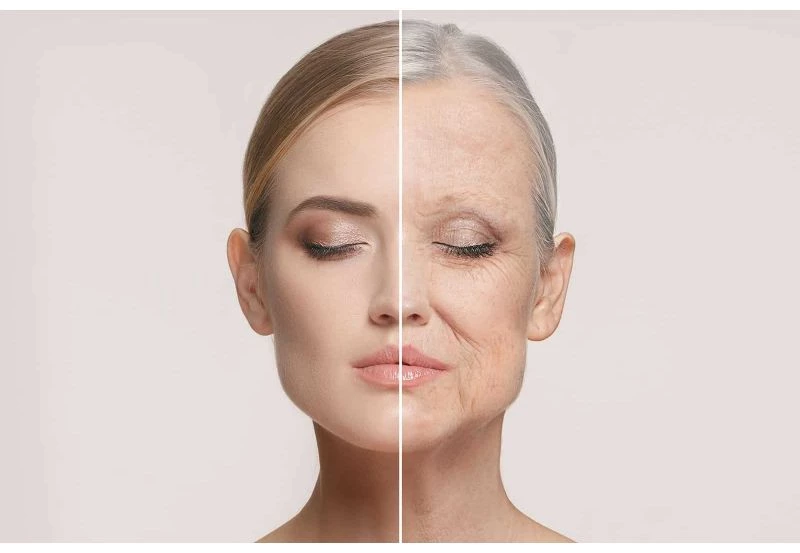
The Deep Plane facelift, dubbed « cervico-facial lift »or «deep vertical facelift» in France, is a technique for treating facial plastic surgery appeared in the 90s.
It corrects facial sagging.
Its main advantage is that it creates virtually no visible scarring. The result is natural and long-lasting.


WHAT IS A DEEPLANE FACELIFT?


The basic principle of the deep facelift is that it lifts only the muscular layer. The skin remains attached to the muscle layers. This technique avoids the «pulled» appearance that some face lifts.

The Deep Plane Facelift frees up the muscle layers instead of pulling on the skin. During the procedure, the plastic surgeon will work on four ligaments present in the face. Their re-tensioning provides a natural facelift to the face level and neck.

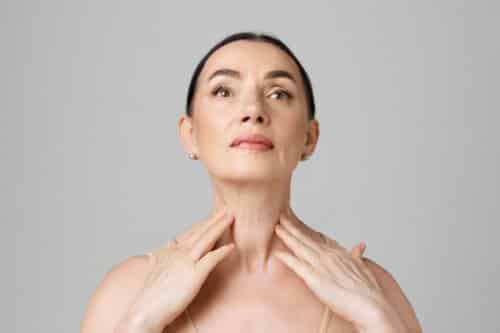
The Deep Plane Facelift offers natural, long-lasting rejuvenation of the neck and jawline. This technique also improves the definition of the jaw angle.

Unlike the traditional facelift, which stretches the face and often looks stretched, the Deep Plane Facelift creates a smoother, more natural appearance. The cheeks are plumped and the corners of the mouth are lifted.


WHAT ARE THE SCARS OF A DEEP FACELIFT?


The incisions created by a deep facelift are minimal or non-existent.

The skin is not «pulled» during the operation, nor during convalescence. In fact, scars heal better and faster than those from a conventional facelift.

In addition, the scars from a facelift are located in the neck and neck area. earlobe and at the base of the hair, on the periphery of the scalp. They are almost invisible as soon as they leave the operating theatre. After a few months, they are almost impossible to see.


WHAT ARE THE POST-OPERATIVE CONSEQUENCES OF A DEEP PLANE LIFT?


After surgery, most patients experience bruising and swelling around the repositioned areas. These symptoms post-operative last only a few days and gradually disappear.

Pain is minimal after the procedure. They can be soothed with simple analgesics.

Unlike a conventional facelift, the Deep Plane Facelift preserves the blood vessels. Facial circulation is maintained, so healing is faster.

To reduce swelling, cold compresses can be applied to sensitive areas.


DEEP FACELIFT OR CLASSIC FACELIFT?


Both techniques can be used to treat sagging cheeks, sagging cheekbones and sagging skin.’face oval and neck. However, the surgical procedure differs greatly from one technique to another.

deep vertical facelift can be performed under general anaesthesia lasts about 3-4 hours

Trauma to facial tissues is also reduced, and recovery time is shorter.

The benefits of a deep facelift :

  • Minimized tissue trauma; ;
  • Faster recovery;
  • More natural results;
  • Restoring cheek volume;
  • Reducing the burden of nasolabial folds (bitterness folds);
  • Minimal scars;
  • Possibility of removing the’minimal excess skin;
  • Longer-lasting results.


WHO CAN BENEFIT FROM A DEEP PLANE FACELIFT?


The deep facelift is designed for women and men who show signs of facial aging, including sagging and drooping skin.

In order to undergo a surgical operation, The patient must be in good health.

Most people who wish to have a Deep Plane Facelift are around 50 years old.

However, there are a few contraindications to facelift surgery:

  • Inability to perform anesthesia due to cardiac problems or respiratory insufficiency.
  • Smoking: it is advisable to stop smoking at least 8 weeks before the operation.
  • Increased risk of hematoma: use of anticoagulants, antiplatelet agents and non-steroidal anti-inflammatory drugs.
  • Medication and dietary supplements containing chondroitin, echinacea, glucosamine, ginkgo biloba, milk thistle, ginseng, turmeric and garlic.
  • High blood pressure.


COMPLEMENTARY PROCEDURES TO THE DEEP PLANE FACELIFT


To improve the results of a deep facelift, it is possible to perform additional gestures.

In fact, a surgical facelift only treats the loss of skin tone from the mid-face down to the neck. Many patients therefore resort to additional procedures to combat facial aging in its entirety, particularly around the upper face and eyes, and to treat loss of volume or wrinkles.


To treat aging on the entire upper part of the face, it is possible to resort to :

  • Fat transfer (lipofilling) to recreate volume in the middle of the face;
  • Liposuction to treat a double chin or excess neck fat; ;
  • A blepharoplasty (eyelid surgery) to enlarge the eyes;
  • Eyebrow lift (forehead lift) to delay aging of the upper face.


To work on facial features, you can use aesthetic medicine in Paris.

Several injections can be performed to fill lips, cheeks or nasolabial folds. Depending on the area, the aesthetic surgeon will perform a’Botox injection (upper face) or the’hyaluronic acid injection (lower face).

To enhance facial features without surgery, the aesthetic medicine offers effective, customized solutions.

Depending on your needs, a number of different interventions can be carried out: lip injections at a beauty salon in Paris to restore volume, fill in nasolabial folds or redefine cheekbones. The aesthetic surgeon will choose the technique best suited to the area being treated: Botox injection for the upper face, hyaluronic acid for lower zones.


A deep facelift is the ideal way to look younger.

To further preserve the results of the procedure and harmonize facial rejuvenation, Dr. Djian recommends the use of fillers. These prevent the development of new wrinkles by tempering facial muscle movements.


WHICH SURGEON TO CHOOSE FOR A DEEP FACELIFT IN PARIS?


A deep vertical facelift is a major operation.

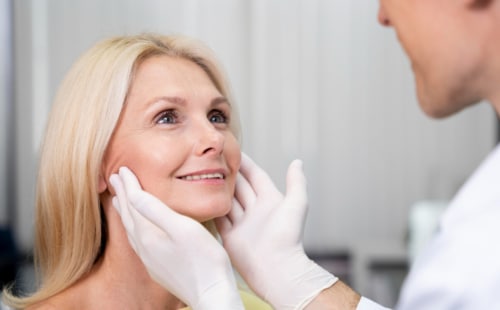
You're probably looking for a plastic surgeon in Paris, who will know how to operate you to perfection, to obtain the most natural result possible.

Doctor Jeremy Djian, a graduate of the D.E.S.C. in Plastic, Reconstructive and Aesthetic Surgery in Paris and former Senior Registrar at the Paris 5 René Descartes Faculty of Medicine, ensures a safe, controlled procedure.

When you call on Docteur Djian, you benefit from the experience of a Parisian plastic surgeon that has already proved its worth.

Consult the before/after photos from plastic surgery in Paris by Dr Djian.

Your Questions

FREQUENTLY ASKED QUESTIONS ABOUT THE DEEP PLANE FACELIFT

AT WHAT AGE SHOULD A DEEP-PLANE LIFT BE CONSIDERED?

more less

The Deep Plane Facelift is generally indicated from the age of 45-50., When the first signs of facial sagging become visible. Dr. Djian always adapts the surgery to the patient's facial morphology, skin tone and expectations. In the case of earlier sagging, a lighter alternative may be proposed, such as a mini-lifting or a combined aesthetic medicine.

IS THE CERVICOFACIAL LIFT COMPATIBLE WITH INJECTIONS?

more less

Yes, the Deep Plane Facelift can be completed with hyaluronic acid or botulinum toxin injections.. Dr. Djian often suggests this combination to smooth superficial wrinkles and harmonize facial rejuvenation. These procedures are performed a few weeks after the operation, once the tissues have stabilized. They can be used to treat areas not concerned by the facelift, such as the forehead or temples.

SHOULD YOU LOSE WEIGHT BEFORE A FACELIFT?

more less

It is advisable to have a stable weight before a facelift, but significant weight loss just before the procedure is not recommended. Dr. Djian assesses the quality of the tissues during the consultation: skin that is too loose due to recent weight loss could alter the result. A slight excess of localized fat, on the other hand, can be treated during the procedure with targeted liposuction.

HOW LONG DO THE RESULTS OF A DEEP FACELIFT LAST?

more less

A Deep Plane Facelift offers visible results for 10 to 15 years, depending on skin quality and lifestyle. Dr. Djian acts deep down on the muscular structures of the face, durably slowing down the effects of aging. The effect remains natural, with no distortion of the features, and the skin continues to age harmoniously after the procedure.

HOW LONG BEFORE I CAN GO BACK TO WORK?

more less

You can return to work after 10 to 15 days., It's time for the bruising and swelling to subside. However, Dr Djian recommends wait 3 weeks for any public activity or social event. Light make-up can camouflage the last post-operative marks as early as day 7, depending on the sensitivity of the patient's skin.

What did you think of this article?

Rate it !

Average Rating 4.6 / 5. Number of Votes 29

No votes yet, be the first to rate this article.

Dr. Jérémy Djian
Dr. Jérémy Djian

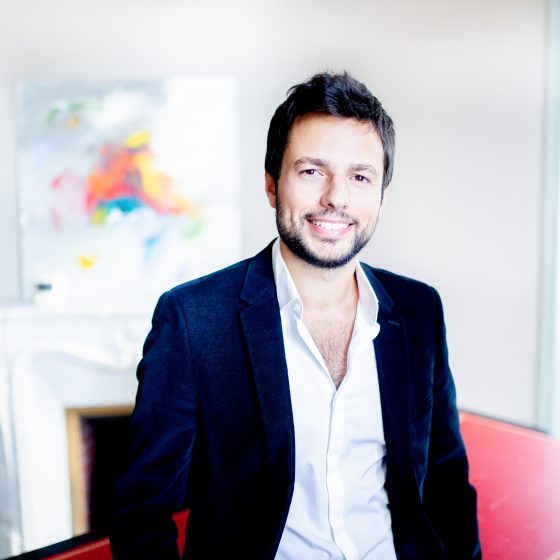
Dr Jérémy Djian is a plastic surgeon based at 5 square Thiers, near the Victor Hugo roundabout, in the 16th arrondissement of Paris.

He trained in Paris and remains attached to the hospital in the prestigious department of Pr Laurent Lantieri.


Going further
THESE ITEMS CAN
IN THESE SECTIONS
Your Questions
ASK YOUR QUESTIONS
TO DR. DJIAN