fb Facelift in Paris: techniques, results and prices 2025
Dr Jérémy Djian, 5 Square Thiers , 75016
menu close
Appointment appointment

Surgery

Facelift Paris: techniques, prices, results and complete guide 2025

published on 05.05.2025 by Dr. Djian
<noscript><img width=
Summary
  • WHAT IS A FACELIFT?
  • THE DIFFERENT FACELIFT TECHNIQUES
  • WHO SHOULD UNDERGO A FACELIFT?
  • WHAT DOES A FACELIFT CORRECT?
  • PROCEDURE FOR A FACELIFT
  • RESULTS, SCARS AND EVOLUTION AFTER A FACELIFT
  • FACE LIFT PRICES IN PARIS
  • HOW TO CHOOSE A FACE LIFT SURGEON?
  • FACELIFT: ALTERNATIVES AND COMPLEMENTARY SURGERIES
  • REJUVENATE WITHOUT BETRAYING YOUR FEATURES: ENTRUST YOUR FACE TO DR DJIAN, FACELIFT SPECIALIST IN PARIS
In short
  • The cervico-facial lift treats slackening of the face and neck (jowls, blurred oval, marked neck) for overall rejuvenation, without freezing expressions.
  • Several techniques are available, depending on age, skin type and degree of sagging: mini facelift, lifting SMAS, deep plane, forehead/temporal lifts, sometimes combined with a blepharoplasty or a lipofilling.
  • The procedure tautens deep tissues, reduces excess skin and redefines the oval; the final result can be seen after a few months and may last for several years. Ages 8 to 12 if you have a healthy lifestyle.
  • Convalescence generally requires 1 to 3 weeks of social exclusion, with edema, transient ecchymosis and discreet scars concealed around the ear and in the hair.
  • A facelift is not not reimbursed by Social Security (except in very exceptional cases); prices vary according to the technique (around 4 500 à 20 000 €) and the main challenge remains choosing an experienced surgeon.

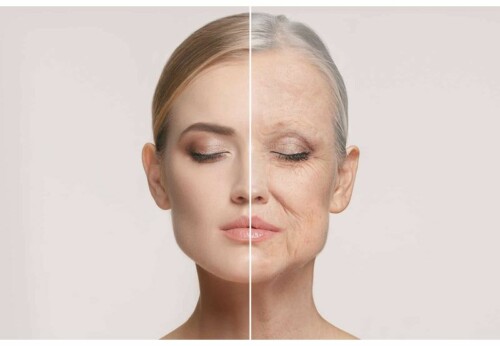
Over time, the contours of the face relax, the jowls the’oval and the eyes look more tired than before. In Paris, the cervico-facial lift appeals to more and more patients and patients in search of a natural rejuvenation and long-lasting. This technique makes it possible to tighten the skin, give the voltage at deep tissues, and correct signs of aging without freezing expressions.

Whether it's a mini lift, a SMAS facelift or a deep plane, every intervention is tailored to your skin type , at level of relaxation or aesthetic expectations. And if required, it can be combined with a blepharoplasty, a lipofilling , or to hyaluronic acid injections for a full restoration the’facial balance.

Operating time, length of hospital stayexpected results, price and post-operative follow-up In this comprehensive guide, find out how plastic surgery can save you several years - without compromising your natural expression.


WHAT IS A FACELIFT?


DEFINITION OF FACELIFT


The cervico-facial lift is a surgical procedure designed to tighten the skin surface and deep structures of the face and neck. It corrects sagging skin associated with facial aging, while preserving a natural result. This aesthetic surgery is ideal for restoring a long-lasting radiance. Today, facelifts are in great demand by patients of all ages, who wish to regain the harmonious appearance of their youth without freezing their expressions.


WHAT ARE THE BENEFITS OF A FACELIFT?


The facelift provides an overall rejuvenation of the face by :

  • Redefining the oval of the face and jowls; ;
  • Reduces bitterness folds and neck sagging; ;
  • Reshaping cheekbones, chin and upper lip.

It improves the overall structure of the face and neck, with a result that remains natural and dynamic.


AT WHAT AGE SHOULD A FACELIFT BE CONSIDERED?


The face lifting is generally envisaged between 45 and 50 years, when the first signs of aging become visible: sagging skin, volume loss, appearance of jowls or a double chin, subsidence of the neck, or loss of oval definition.

However, some younger people, sometimes as young as 35, can present with a premature sagging due to significant weight loss, a accelerated skin agingor a genetic predisposition. In this case, a mini face lift, can be considered. It enables correct the first signs of subsidence without the need for major surgery.

Board : The right time to consider a facelift is not a question of age, but of skin quality, of fabric tension, and’aesthetic expectation. A consultation with specialist surgeon Dr Djian, will provide a personalized diagnosis.


THE DIFFERENT FACELIFT TECHNIQUES


CLASSIC CERVICO-FACIAL LIFT: TIGHTENING THE SKIN AND MUSCLES


The classic facelift acts both on the epidermis and on the deep muscles (SMAS) to guarantee natural result. This surgical act allows lasting rejuvenation of the face and neck, with in-depth treatment of relaxed tissues.


MINI FACE LIFT: FOR MODERATE FIRMNESS LOSS


The mini facelift is recommended when the oval of the face begins to sag slightly, particularly in the cheeks and lower face. Benefits include:

  • Faster intervention (1h30 to 2h); ;
  • A time for reduced recovery (about 10 days) ;
  • From discreet scars, hidden in natural folds.

It is an ideal intermediate solution before resorting to a more complete facelift.

The indications for a mini facelift are limited, according to Dr Djian, who most often prefers a smas facelift.


SMAS FACELIFT: IN-DEPTH TIGHTENING FOR NATURAL RESULTS


The SMAS facelift puts voltage the superficial musculoaponeurotic system (SMAS) under the facial skin. This gesture :

  • Stabilizes rejuvenation ;
  • Avoids the look drawn ;
  • Offers a lasting effect (ages 10-15).


LIFTING DEEP PLANE: ADVANCED LIFTING WITH DEEP TISSUE RELEASE


The deep plane is more complex:

  • It deeply releases facial tissues ;
  • It repositioned the entire facial structure ;
  • It guarantees natural result with little tension on the skin.


This facelift is ideal for correcting subsidence while maintaining feature mobility.


FOREHEAD LIFT AND TEMPORAL LIFT: TREATING THE UPPER FACE


These facelifts target the upper part of the face :

  • The forehead lift treats horizontal wrinkles from front ;
  • The temporal lift rises up the outer part of the eyebrow, for radiant, youthful-looking eyes.


These surgical procedures can be performed alone or in combination with a facelift.


SURGERY-FREE FACELIFT: TENSOR THREADS, HIFU ULTRASOUND, GB LYFT


For patients wishing to avoid surgery :

  • The tensor threads reposition the skin temporarily (1-2 years); ;
  • The HIFU ultrasound stimulate the collagenesis deep ;
  • The method GB Lyft combines different technologies for a light tensor effect.
  • The Rainwater associates’plasma energy to the radiofrequency for firm up the subcutaneous tissues, particularly in the area of the neck and the’face oval.


ATTENTION:
These treatments are not sufficient in cases of marked loss of tone or significant sagging of facial tissues.


HOW TO CHOOSE THE BEST FACELIFT SOLUTION FOR YOUR AGE, SKIN TYPE AND GOALS?


The choice depends on :

  • From age and skin suppleness; ;
  • The degree of modification of facial contours (sagging, loss of tone) ;
  • The presence or absence of volume losses (sometimes requiring a facial lipofilling) ;
  • From patient expectations on the discretion of post-operative care.

A consultation with the Dr Djian, plastic surgeon specialist face lift in Paris, allows us to establish a customized treatment plan, adapted to the morphology, at skin type, and rejuvenation objectives of the patient.


WHO SHOULD UNDERGO A FACELIFT?


IDEAL FACELIFT CANDIDATES


The facelift is primarily aimed at patients featuring :

  • Marked sagging of the skin on the lower part of the body face and neck; ;
  • Loss of definition in the oval of the face face with the appearance of jowls; ;
  • Excess skin, sometimes accompanied by an excess of grease, chin or neck; ;
  • Moderate volume loss that may be associated with a lipofilling.

The ideal candidate:

  • Is in good general health; ;
  • No major medical contraindications to anesthesia; ;
  • Has realistic expectations for the result surgery.

Good natural elasticity also makes for better results. results when it comes to re-tensioning.


CAN A FACELIFT BE PERFORMED AFTER AESTHETIC MEDICINE (INJECTIONS, TENSOR THREADS)?


Yes, it is quite possible to make a facelift even after resorting to :

However, certain precautions must be taken:

  • It may be important to allow time injected products to reabsorb ;
  • clinical examination enhanced by the plastic surgeon is essential to adapt the technique used.

The plastic surgery can correct the limits of the aesthetic medicine by acting in a more profound and lasting way on the relaxed tissues.


WHAT DOES A FACELIFT CORRECT?


The cervico-facial lift to correct the effects of aging across the lower face and neck. In particular, it acts on :

  • Theface oval and mandibular contours ;
  • The jowls, the sagging cheeks and the double chin ;
  • The repositioning of cheekbones ;
  • Excessive skin on the neck.

These improvements are made possible by :

  • A re-tensioning from underlying muscles and deep tissues ;
  • A reduction of excess skin ;
  • A harmonious repositioning of structures, without distorting expressions.

This type of facelift allows you to effectively treat wrinkles, subsidence, and signs of sagging, with a natural result and sustainable.


FACELIFT LIMITATIONS: WHAT A FACELIFT CANNOT CORRECT


The facelift does not deal directly with :

  • The skin quality (texture, pigmentation spots, superficial wrinkles) ;
  • The significant loss of volume without the addition of lipofilling ;
  • The wrinkles very superficial, sometimes requiring additional treatment with hyaluronic acid injections or laser.


In some cases complementary care are offered alongside the surgical facelift to optimize rejuvenation global.

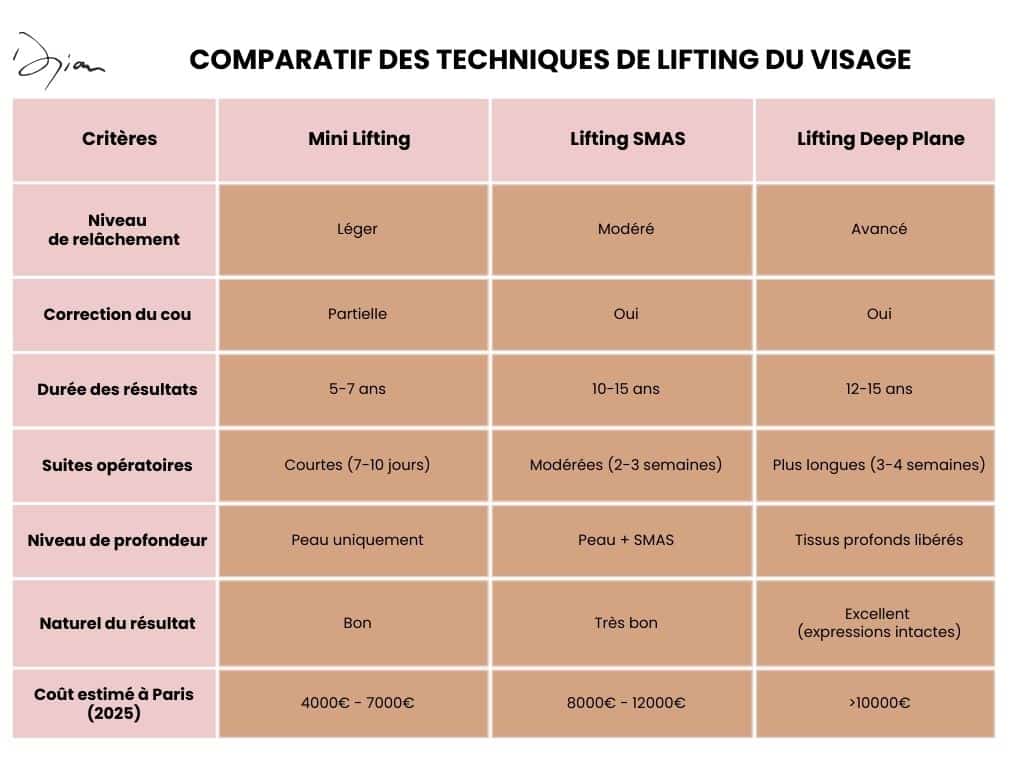
Comparative table of facelift techniques

To find out about Dr Djian's prices, please refer to the following page Rates


PROCEDURE FOR A FACELIFT


PREOPERATIVE CONSULTATIONS AND EXAMINATIONS


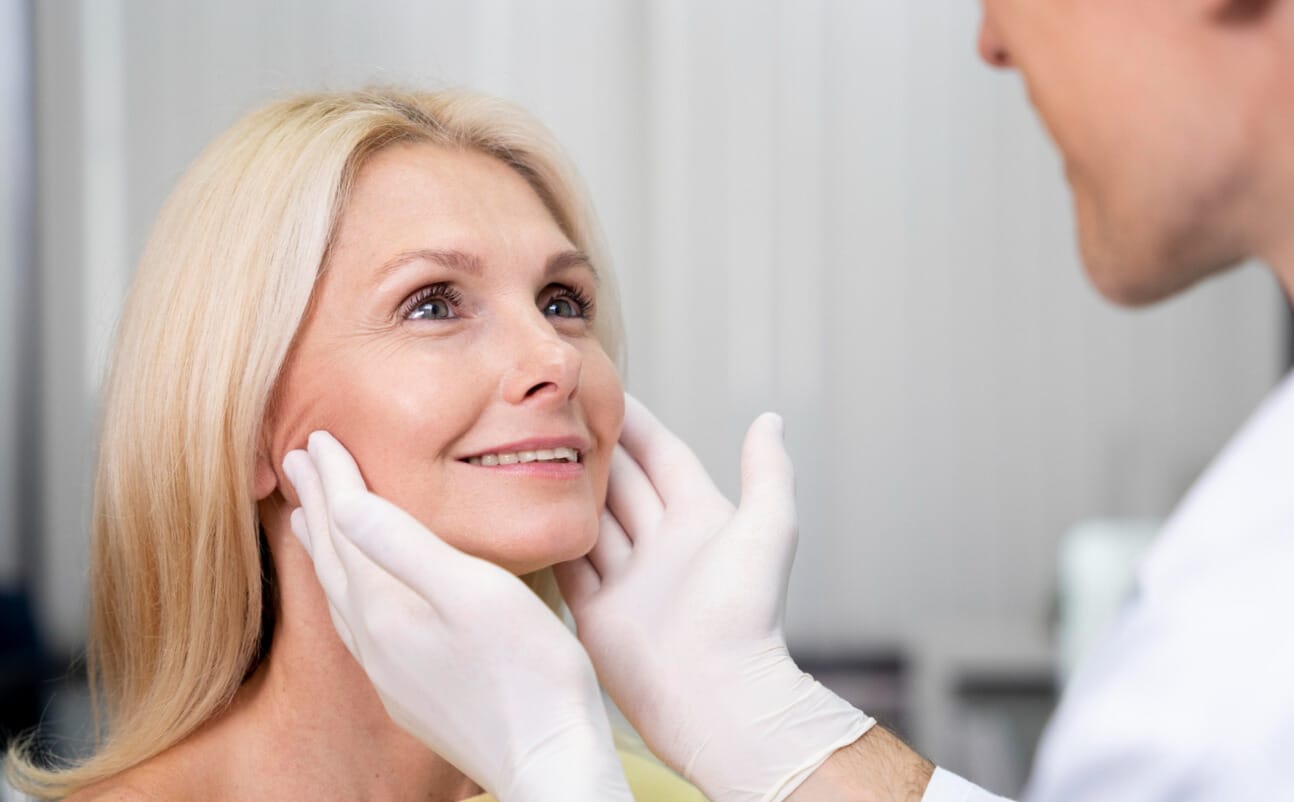
First and foremost facelift, one or two pre-operative consultations are necessary. They enable :

  • Define aesthetic objectives with the patient ;
  • Assess the skin quality, the relaxation, and areas to be corrected ;
  • Create a pre-operative medical check-up complete ;
  • Explain the terms and conditions, the risks and precautions.

From medical photos are taken to compare before-and-after results. Visit anesthesiologist is also met a few days before the operation.

Board : Preparing a list of questions to ask during the consultation can help you feel more serene.


WHAT HAPPENS DURING SURGERY?


On D-day, the patient is welcomed at the clinic. After checking the documents and preparation, the intervention takes place :

  • Visit operating roomunder local or general anaesthesia according to the method defined ;
  • With discreet incisions hidden in natural folds or scalp ;
  • By respecting a protocol precise to reposition the deep tissues without excess tension.

The average duration of a cervico-facial lift is around 2 hours (depending on the additional procedures performed). The operation is performed in ambulatory or with overnight hospitalization.


WHAT ANESTHESIA IS REQUIRED FOR A FACELIFT?


Two options are available:

  • General anesthesia often chosen for complete or combined facelifts; ;
  • Local anesthesia with sedation : possible for a mini facelift or an isolated act (temporal, frontal).

The choice is discussed with the anesthesiologist, depending on the patient's state of health and preference.

The majority of patients :

  • Go home the same day (light facelift or mini-facelift); ;
  • Or stay overnight for more comfort.

A compression bandage is usually applied at the end of the procedure to protect the skin. face then removed the next day or two.


GOOD TO KNOW :
Patients must be accompanied when they leave, as they cannot drive alone after a facelift under anesthesia.


RESULTS, SCARS AND EVOLUTION AFTER A FACELIFT


IMMEDIATE AND LONG-TERM RESULTS


As soon as the operation is over, the first results may be perceptible despite swelling, bruising and a feeling of pain moderate for the first few days, generally well controlled by appropriate treatment. After a few weeks, the face is starting to take shape again.

  • The relaxation skin is corrected; ;
  • The contours from face are visibly restored; ;
  • Theappearance general is rejuvenated, while remaining natural.

The result is sustainable, especially if the patient maintain a healthy lifestyle.


WHERE ARE THE SCARS FROM A FACELIFT LOCATED?


The incisions are carefully placed in :

  • The natural fold in front and behind the ear; ;
  • Hairy area (temple or occipital scalp); ;
  • Sometimes under the chin if the neck is also covered.

They are discreet and become almost invisible over time.


HOW DO SCARS EVOLVE OVER TIME?


  • The scars are pinkish for the first few weeks; ;
  • They gradually fade to become virtually undetectable after 6 to 12 months ;
  • healing cream, gentle massages and strict sun protection are recommended.


GOOD TO KNOW :
Certain types of skin (fine or pigmented) require special care. to avoid visible or thickened scars.


HOW LONG DOES IT TAKE TO SEE THE FINAL RESULT AFTER A FACELIFT?


  • A clear improvement is visible after 3 to 4 weeks; ;
  • The final result can be observed between 3 and 6 months, once the swelling fully absorbed.


HOW MANY YEARS YOUNGER CAN YOU LOOK WITH A FACELIFT?


The cervico-facial lift offers a rejuvenation estimated between Ages 8 to 12, variable according to :

  • Theskin elasticity ;
  • The operating mode used (SMAS, deep plane...) ;
  • Healthy living and care patient's post-operative care. 

Board avoid tobacco and alcohol, and adopt a healthy lifestyle. regular care routine maximizes the durability of the result.


HOW LONG IS THE HOSPITAL STAY FOR A LOWER FACELIFT?


Most of the patients are discharged the same day or the day after the operation. In the event of complete facelift, a night of’hospitalization is generally recommended for optimal post-operative follow-up.


RECOVERY TIME AFTER A FACELIFT


  • It is often necessary to take 7 to 15 days off work; ;
  • The bruises and the swelling are frequent during the first 10 days; ;
  • Thesocial eviction is recommended for 2 to 3 weeks, depending on individual sensitivity.


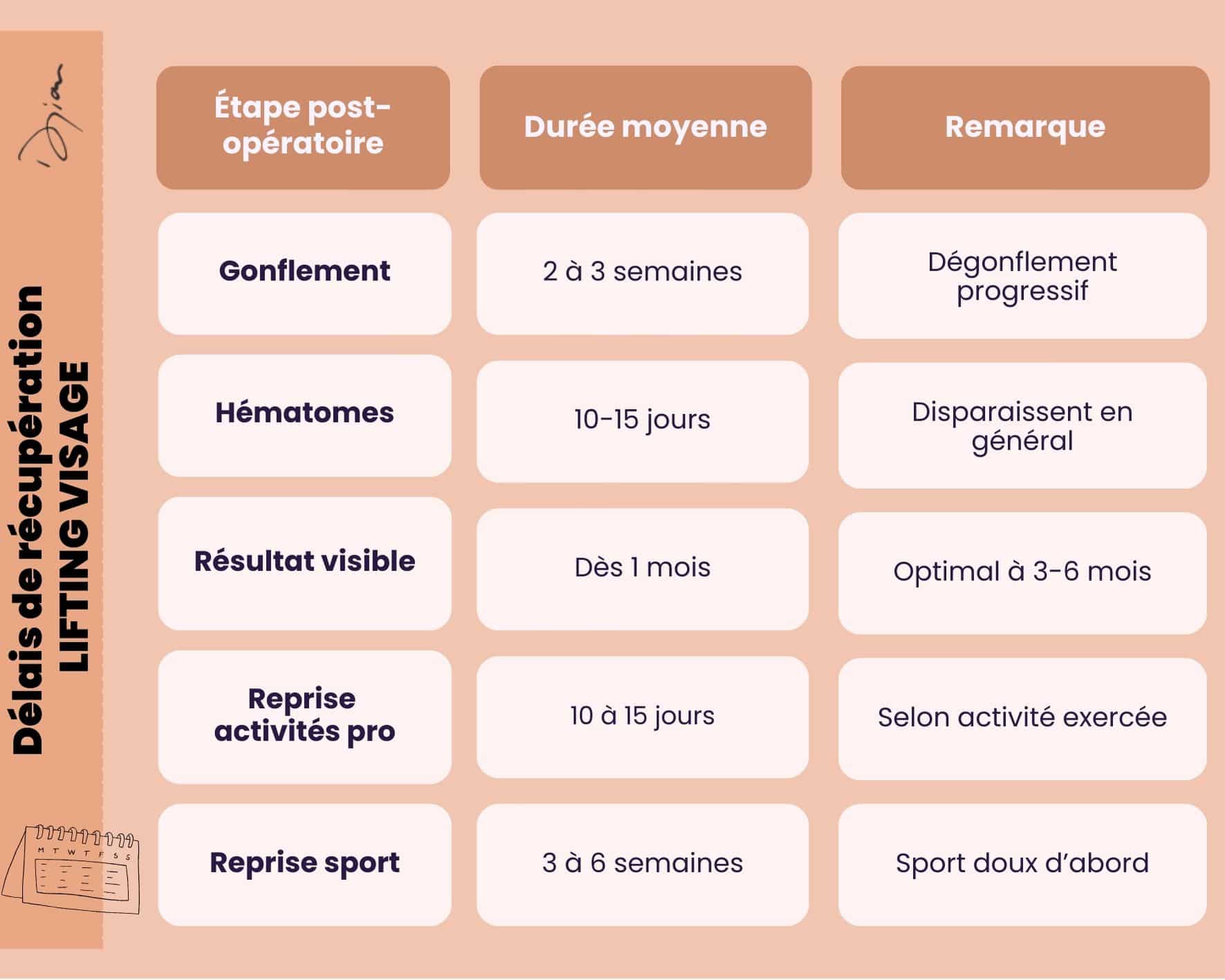
Table of postoperative recovery times

Recovery times FACE LIFTING


HOW LONG DOES IT TAKE TO SWELL AFTER A FACELIFT?


The swelling (oedema) begins to diminish in the first week and gradually subsides:

  • 70 % disappear in 2 to 3 weeks; ;
  • The residual edema can persist for up to 2 months in some cases.


TIP:
Applying cold packs and resting with head elevated accelerate deflation.


HOW TO LIMIT HEMATOMA AND SWELLING AFTER SURGERY?


  • Follow the recommendations of the surgeon to the letter ;
  • Avoid any physical activity or lifting for 15 days; ;
  • Sleep on your back with your head slightly elevated; ;
  • Apply the post-operative care (dressings, creams).


WHAT PRECAUTIONS SHOULD BE TAKEN AFTER SURGERY?


  • Do not wet the plasters in the early days; ;
  • Do not expose scars to direct sunlight. sun for at least 3 months; ;
  • Do not resume sport for at least 3 to 4 weeks; ;
  • Avoid heat sources (sauna, hammam).


HOW TO MAINTAIN FACELIFT RESULTS (CARE, HYGIENE)?


To preserve results from facelift, we recommend :

  • to adopt a adapted cosmetic routine (moisturizing, sun protection) ;
  • perform complementary dermatological treatments (peeling, mesotherapy, soft laser); ;
  • avoid tobacco and alcohol, which accelerate the skin aging ;
  • to maintain a balanced diet and a good sleep hygiene.


POSSIBLE COMPLICATIONS AFTER A FACELIFT


Although rare, some complications may occur:

  • Large hematomas requiring evacuation; ;
  • Delayed healing or keloid scars ;
  • Temporary sensitivity disorders (numbness) ;
  • Local infection (rare if closely monitored).

Important : Post-operative follow-up with the plastic surgeon is essential to quickly detect any anomalies and effectively remedy them.


FACELIFT ADAPTATION FOR BLACK, ASIAN AND CAUCASIAN SKIN TYPES


The face lifting must be tailored to the skin type to guarantee natural result and minimize risk of abnormal scarring. Each skin type has its own specific characteristics :

  • Black skin thicker, with a tendency to hypertrophic scars or keloids. The surgeon will prefer internal incisions or well-concealed, and rigorous monitoring of the healing.
  • Asian skins are generally finer and more sensitive, requiring delicate handling to avoid damage. volume changes or structure face. Deep facelifts such as the SMAS or the deep plane are suitable if done with finesse.
  • Caucasian skin often more prone to premature sagging of the skin, but also to a more discreet healing. Surgical options are more varied, depending on the quality of the skin tissue.


GOOD TO KNOW :
The choice of surgical procedure depends as much on the facial morphology than scarring reaction expected. Good communication with the surgeon is essential.


FACELIFTS FOR THIN OR MATURE SKIN: WHAT ARE THE PARTICULARITIES?


The thin skins, often associated with advanced skin aging, These new technologies require a gentle, controlled approach:

  • The skin tension must be measured to avoid pulled appearance ;
  • The use of a lipofilling to restore lost volumes while preserving the softness of the features; ;
  • intensive moisturizing before and after the procedure optimizes the quality of results.

Board Thin skins benefit from enhanced support, including post-lifting beauty treatments such as the mesotherapy, the hyaluronic acid injections or the soft laser to even out skin texture.


FACE LIFT PRICES IN PARIS


PRICE RANGE BY METHOD USED


The price of a facelift depends on many factors, including the surgical technique chosen, the level of complexity of the procedure and the surgeon's reputation. Here are the average ranges observed in 2025:

  • Mini facelift: between €4,500 and €7,000; ;
  • Conventional facelift: between €6,000 and €10,000; ;
  • SMAS facelift: from €10,000 to €13,000 ;
  • Deep plane lift: between €10,000 and €20,000.

These rates generally include :

  • Surgeon's fees; ;
  • Anesthesia fees; ;
  • Hospitalization (outpatient or 1 night) ;
  • Pre- and post-operative consultations.


DOES THE PRICE VARY ACCORDING TO THE TECHNIQUE USED?


Yes, the more complex the technique and the deeper the work required (such as a deep-plane lift), the higher the cost. A mini facelift is more affordable, but offers limited results over time.


IS PARTIAL COVERAGE AVAILABLE?


Since a facelift is a cosmetic surgery procedure, it is not covered by Social Security. However, there are some exceptions:

  • In case of functional discomfort (e.g. post-traumatic facial sagging), partial coverage may be considered on the basis of medical records; ;
  • Some mutual insurance companies offer «well-being» or «aesthetic» packages, which are rarely sufficient to cover the procedure.


HOW TO CHOOSE A FACE LIFT SURGEON?


THE IMPORTANCE OF EXPERTISE AND TECHNIQUE


The face lifting is more than just a simple operation: it's an act of precision, combining medical rigor and artistic flair. For a natural, harmonious results, the choice of surgeon is decisive.

The Doctor Jérémy Djian, plastic surgeon in Paris, puts his expertise at the service of every patient by customizing the technique according to facial shape, tissue quality and aesthetic expectations. A graduate in Plastic, Reconstructive & Aesthetic Surgery, registered with the Ordre des Médecins, he worked alongside Prof. Laurent Lantieri in the face transplant team. He masters the most advanced approaches to restoring vitality to the face - without freezing expressions.


HOW TO CHECK THE SURGEON'S QUALIFICATIONS AND RESULTS?


Here are a few things to check before committing yourself:

  • The surgeon's career path; ;
  • Patient reviews and before/after photos; ;
  • The feeling of trust and fluid communication during consultations.


DID YOU KNOW?
Dr. Djian will never encourage you to rush into surgery. He always takes the time to’explain alternatives, limitations and possible risks for an informed decision.


SHOULD YOU CHOOSE A PRIVATE HOSPITAL OR CLINIC?


Both options are possible, however :

  • A specialized aesthetic clinic often offers a more comfortable environment, dedicated staff and greater discretion; ;
  • The partner clinics of renowned surgeons have modern operating theatres and an experienced nursing team.


FACELIFT: ALTERNATIVES AND COMPLEMENTARY SURGERIES


ASSOCIATED SURGERIES: BLEPHAROPLASTY, LIPOFILLING, RHINOPLASTY


A facelift can be combined with other procedures cosmetic surgery procedures to get a harmonious rejuvenation and complete face. The most frequently associated procedures are :

  • The blepharoplasty (eyelid surgery) to correct tired or droopy eyes; ;
  • The facial lipofilling to restore lost volume to cheekbones, temples or furrows; ;
  • The rhinoplasty to refine or rejuvenate the nose in line with new facial contours.

Advantage Performing several gestures in a single operation enables you to reduce anesthesia costs and benefit from unique recovery time.


WHEN TO COMBINE SEVERAL GESTURES IN A SINGLE OPERATION?


It is recommended to combine several procedures when :

  • The various face zones show signs of aging ;
  • The patient wishes to limit successive recoveries ;
  • The patient's state of health allows a moderate intervention time (between 3 and 5 hours).

The plastic surgeon establishes a personalized global plan based on the patient's objectives and the surgical feasibility.


WHY NOT JUST AESTHETIC MEDICINE?


The techniques aesthetic medicine (tensor threads, hyaluronic acid, botulinum toxin) are very useful for :

  • Delaying the need for a facelift; ;
  • Correcting localized imperfections ;
  • Maintain results of a facelift over time.

However, they cannot replace a surgical operation when the relaxation is advanced or the skin has a large surplus.

To remember only one facelift allows deep, long-lasting tension release facial structures.


REJUVENATE WITHOUT BETRAYING YOUR FEATURES: ENTRUST YOUR FACE TO DR DJIAN, FACELIFT SPECIALIST IN PARIS


The face lifting remains an effective, customized solution for mitigating the effects of skin aging, The result is a more rested appearance, without distorting expressions. Thanks to different techniques available - from mini facelift at SMAS facelift or deep plane - Each patient can benefit from a tailor-made approach, adapted to their age, skin type and objectives.

If you are considering a facelift in Paris, the Dr Jérémy Djian, specialist in plastic surgery, welcomes you to its practice in the 16ème arrondissement, We provide a personalized assessment and support you every step of the way, from choice of technique to post-operative follow-up.

Make an appointment (Tel: 01 88 33 61 61) now to ask your questions and plan your treatment in complete confidence.


Your Questions

FREQUENTLY ASKED QUESTIONS ABOUT FACELIFTS IN PARIS

CAN A FACELIFT BE PERFORMED AFTER MAJOR WEIGHT LOSS?

more less

Yes, after weight loss, skin slackening is often significant. A facelift removes excess skin and redefines contours.

CAN GLASSES BE WORN IMMEDIATELY AFTER A FACELIFT?

more less

Yes, but avoid frames that are too heavy or too tight around the ears for the first 10 days.

CAN I GET IN TOUCH WITH THE DOCTOR QUICKLY IF I HAVE ANY DOUBTS AFTER THE OPERATION?

more less

Yes, post-operative follow-up is a priority for Dr. Djian, who provides personalized support after each operation. Follow-up appointments are scheduled, and rapid contact is always possible in the event of questions, unusual sensations or doubts, to ensure a safe and optimal recovery.

CAN I HAVE ANOTHER FACELIFT AFTER MY FIRST ONE?

more less

Yes, a second facelift can be performed approximately 10 to 15 years after the first. As the tissue has aged again, a new tightening can be envisaged.

FACELIFTS AND THE SUN: WHAT PRECAUTIONS SHOULD BE TAKEN?

more less

It is essential to avoid direct sun exposure for at least 2 to 3 months. UV rays can alter healing and cause abnormal scar pigmentation.

FACE-LIFT AND DERMATOLOGICAL TREATMENTS: COMPATIBLE?

more less

Once healing is complete (around 2 months), it is possible to resume certain aesthetic treatments: light peels, mesotherapy, soft laser. The advice of the plastic surgeon is essential.

HOW LONG AFTER A FACELIFT CAN YOU RESUME SPORT?

more less

Moderate physical activity can be resumed after 3 to 4 weeks. Intense or high-impact sports (running, fitness) are not recommended before 6 weeks.

WHAT IS THE BEST POST-OPERATIVE ROUTINE AFTER A FACELIFT?

more less
  • Gentle skin cleansing ;
  • Application of healing and moisturizing creams; ;
  • High sun protection for several months; ;
  • Avoidance of tobacco and alcohol; ;
  • Light massages from week 3 (on medical advice).

WHY IS THE CHOICE OF TECHNOLOGY MORE IMPORTANT THAN PRICE?

more less

The right technique guarantees a natural result, faster recovery and better overall facial balance. A poorly chosen facelift can accentuate imbalances or freeze expressions.

IS IT POSSIBLE TO FEEL THE “BABY BLUES” AFTER A FACELIFT?

more less

Some patients may experience a temporary phase of doubt or emotional sensitivity during convalescence. This is usually brief and linked to the wait for the final result.

IS THE FACELIFT COVERED BY SOCIAL SECURITY?

more less

No, except in very exceptional cases of recognized functional disorders (after-effects of facial paralysis, malformations). In all other cases, the procedure is considered cosmetic surgery.

What did you think of this article?

Rate it !

Average Rating 4.3 / 5. Number of Votes 4

No votes yet, be the first to rate this article.

Dr. Jérémy Djian
Dr. Jérémy Djian

Dr Jérémy Djian is a plastic surgeon based at 5 square Thiers, near the Victor Hugo roundabout, in the 16th arrondissement of Paris.

He trained in Paris and remains attached to the hospital in the prestigious department of Pr Laurent Lantieri.


Going further
THESE ITEMS CAN
IN THESE SECTIONS
Your Questions
ASK YOUR QUESTIONS
TO DR. DJIAN