fb Tummy tuck after abdominoplasty: true or false?
Dr Jérémy Djian, 5 Square Thiers , 75016
menu close
Appointment appointment

Surgery

Is it possible to regain a tummy after abdominoplasty? What is definitive and what can still evolve?.

published on 22.01.2026 by Dr Djian
Can you regain your tummy after abdominoplasty? What is definitive and what can still evolve.
Summary
  • WHAT DOES ABDOMINOPLASTY REALLY CORRECT AND WHY DOES IT NOT ALWAYS PREVENT A TUMMY TUCK?
  • WHEN IS IT POSSIBLE TO REGAIN A TUMMY AFTER ABDOMINOPLASTY?
  • WHAT FACTORS INFLUENCE TUMMY TUCK AFTER ABDOMINOPLASTY?
  • CONVALESCENCE AFTER ABDOMINOPLASTY: RULES TO FOLLOW TO AVOID A TUMMY TUCK
  • ACTIVITIES NOT RECOMMENDED AFTER ABDOMINOPLASTY AND RISK OF TUMMY TUCK
  • HOW TO AVOID A TUMMY TUCK AFTER ABDOMINOPLASTY?
  • TUMMY TUCK AFTER ABDOMINOPLASTY: WHY PERSONALIZED ADVICE MAKES ALL THE DIFFERENCE
In short
  • Abdominoplasty corrects excess skin and sometimes diastasis, but does not prevent subsequent abdominal weight gain.
  • The aesthetic result is long-lasting si weight remains stable after surgery.
  • A pregnancy, the sedentary lifestyle or a unbalanced diet increase the risk of tummy tuck.
  • Thepostoperative edema can result in a swollen belly for several weeks without indicating failure.
  • The compliance with instructions and the plastic surgeon follow-up condition the stability of the result.

Theabdominoplasty in Paris often offers a aesthetic result spectacular, but there's one question on the minds of many patients : can we gain weight after this abdominal surgery ? Enter weight gain, evolution of muscle, quality skin, postoperative edema or resuming the’physical activity, There are many possible causes.
This guide sorts out what is final and what can still evolve after the operation, by tackling a balanced diet, sport, the sheath, recovery and risk factors such as pregnancy or a sedentary lifestyle.

Before considering a recovery, let's take a look at what the operation actually corrects... and its limitations.


WHAT DOES ABDOMINOPLASTY REALLY CORRECT AND WHY DOES IT NOT ALWAYS PREVENT A TUMMY TUCK?


An abdominoplasty or tummy tuck can correct up to 3 elements:

  • excess skin (this is the priority),
  • excess localized fat with the help of a liposuction,
  • and muscle relaxation of the abdominal wall.

The surgeon removes the "abdominal apron, tightens the skin, sometimes combines a tummy tuck liposuction and sidewalls, and if necessary bring the abdominal muscles (diastasis) to recreate a more toned abdominal belt.

The aesthetic result can be spectacular, but this cosmetic tummy tuck procedure does not block weight-gain mechanisms, nor effects of a future pregnancy or a prolonged sedentary lifestyle.


WEIGHT LOSS AND VOLUME LOSS AFTER ABDOMINOPLASTY: TWO DIFFERENT THINGS


Abdominoplasty never replaces dieting. It removes a excess skin and fat and reshapes the silhouette, without altering metabolism. On the scale, weight loss can be modest, while the waistline is reduced by several centimetres and the stomach becomes flatter.

On the other hand, regaining just a few kilos after the operation can be enough to regain the belly, as fat is readily stored in the abdominal area. Hence the’he importance of aiming for a stable weight before and after surgery.


AESTHETIC RESULT OF THE BELLY VS. FUNCTIONAL RESULT OF THE ABDOMINAL MUSCLES


We often confuse flat stomach and functional belly.

Abdominoplasty improves’belly appearance by removing excess skin and tightening the wall. But muscle strengthening, posture, back support and everyday comfort also depend on deep muscles and regular physical activity.

You can keep a visually flatter tummy while still feeling some discomfort, or on the contrary, regain better support despite a slight volume. Protecting the results of surgery therefore means act on both aesthetics and muscle function.


WHEN CAN A TUMMY TUCK BE PERFORMED?


After abdominoplasty, the tummy can still swell., The challenge is to understand the situations in which this happens and the factors you can really influence.


WEIGHT GAIN AFTER ABDOMINOPLASTY: IMPACT ON THE ABDOMEN


After the operation, the body continues to store fat. If significant weight gain occurs, fat can accumulate again on the skin. belly and flanks, but also in non-lipo-aspirated areas.

The faster and more significant the weight gain, the greater the risk of regaining weight.. The result of the surgery is not reversed, but the appearance of the silhouette may deteriorate.

To avoid regaining your tummy after abdominoplasty, maintain a stable weight and a balanced diet remains the key.


SECONDARY MUSCLE RELAXATION AND REAPPEARANCE OF THE BELLY


When the surgeon corrects a diastasis, it draws the abdominal muscles together like a zipper. But prolonged excessive abdominal pressure can reopen this closure, for example :

  • carrying heavy loads too soon,
  • intense effort,
  • a chronic cough,
  • untreated constipation,
  • or a new pregnancy.


The secondary muscle relaxation doesn't happen overnight, it's built up over time.

Results the belly bulges again. Appropriate follow-up and a gradual return to deep muscle gain are essential.


PREGNANCY AFTER ABDOMINOPLASTY: RISK OF TUMMY TUCK


Pregnancy after abdominoplasty is possible, but it logically puts a strain on the stomach and increases the risk of a post-partum belly distended.

The growing uterus distends the skin, fat and abdominal wall. The aesthetic result may still be acceptable if weight gain is moderate and skin quality is good, However, there is a real risk of skin and muscle slackening, and even recurrence of diastasis.

That's why we recommend, whenever possible, to scheduling abdominoplasty after pregnancy. If you are planning a pregnancy, a personalized consultation with your Paris plastic surgeon is particularly useful. In some cases, particularly when the tummy is associated with changes to the breasts, a comprehensive approach such as a "tummy tuck" or a "tummy tuck" is recommended. Mommy Makeover can be discussed in consultation.


WHAT FACTORS INFLUENCE TUMMY TUCK AFTER ABDOMINOPLASTY?


The return of the tummy after abdominoplasty is almost always multifactorial (weight, diet, sedentary lifestyle, hormones, skin quality, smoking, treatments...), and the challenge is not to feel guilty but to identify with your surgeon what can really be corrected or improved.


DIET AND HEALTHY LIVING: THEIR ROLE IN THE RECOVERY OF THE BELLY


Recommended diet after abdominoplasty

After a tummy tuck, the belly remains sensitive to diet and healthy living.

A very rich diet, nibbling, regular alcohol consumption and soft drinks all contribute to weight gain, and therefore to the storage of abdominal fat.

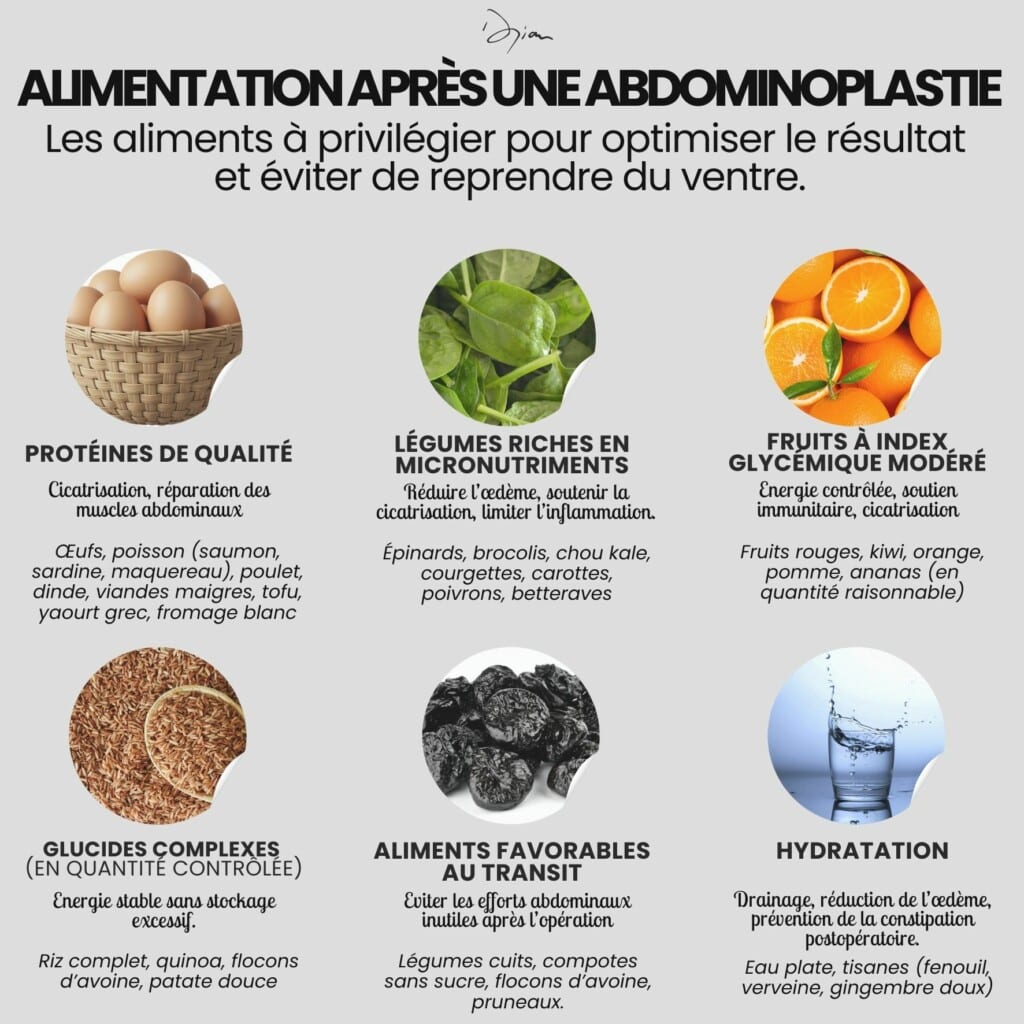
The opposite is true of a balanced diet, rich in vegetables, fibre, protein quality and proper hydration help maintain a stable weight and a flatter stomach. The idea is not strict dieting, but a sustainable living that supports the results of cosmetic tummy tuck surgery.


SEDENTARY LIFESTYLE AND LACK OF PHYSICAL ACTIVITY AFTER ABDOMINOPLASTY


Remaining sedentary for long after abdominoplasty encourages weight regain, muscle wasting and loosening of the abdominal belt. In the early stages, immobilization is necessary to promote healing.

But if the resumption of walking, followed by appropriate physical exercise, is delayed, the body loses tone and the tummy may appear less flat. L’regular physical activity, adapted to each phase of convalescence, helps maintain aesthetic and functional results over the long term.


HORMONAL AND METABOLIC FACTORS FAVOURING TUMMY RECOVERY


The menopause, some hormone treatments, thyroid disorders or a metabolic slowdown can lead to abdominal weight gain, despite a healthy lifestyle. In these situations, it is possible to regain a fuller abdomen after abdominoplasty without massive dietary changes.

This does not mean that the procedure has failed, but that the hormonal context has changed. A medical check-up and lifestyle adjustment, sometimes associated with nutritional follow-up, help to limit abdominal volume regain.


CONVALESCENCE AFTER ABDOMINOPLASTY: RULES TO FOLLOW TO AVOID A TUMMY TUCK


Recovery from abdominoplasty is a decisive phase, during which the tummy remains fragile. Respecting the instructions (girdle, limitation of effort, organization of daily life) protects the result and limits volume regain.


ACTUAL RECOVERY TIME AND ABDOMINAL RECOVERY


We often underestimates recovery time after abdominoplasty. For the first few days, rest is key, with limited walking. Over the weeks, pain is reduced, the sheath is progressively better tolerated and mobility improves.

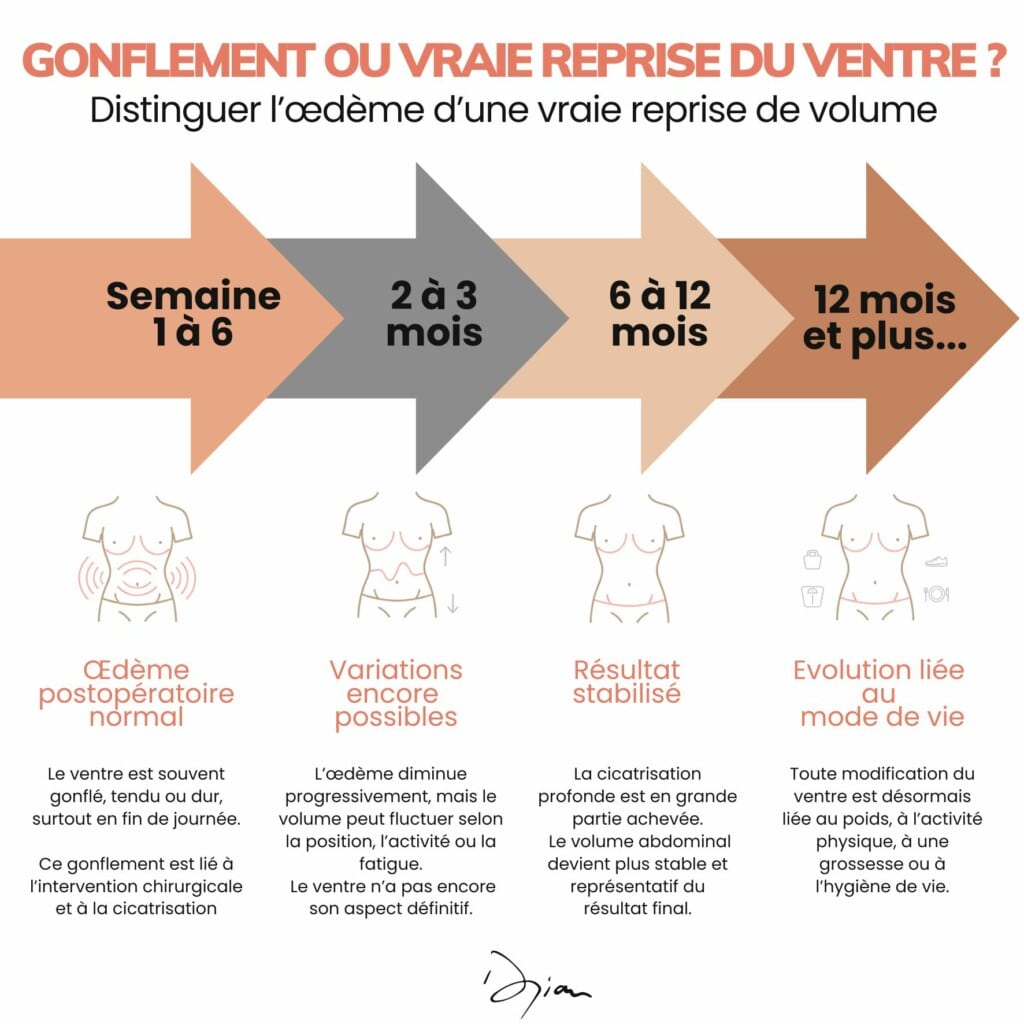
However, thehe abdominal wall takes several months to heal in depth. We often count 3 months to resume full physical activity, and up to one year to judge the final result. Forcing too much too soon increases the risk of a swollen belly.


EDEMA, SWELLING AND TUMMY CHANGES


Swelling or real tummy tuck. evolution over time


In the first few weeks, the belly is often swollen, hard and sometimes asymmetrical.. This edema is normal after abdominal surgery and may persist for several months, especially at the end of the day.

This is not a case of weight regain or a failure of the procedure, but rather a case of healing stage. Hence the importance of waiting before asking yourself whether you can regain your tummy after abdominoplasty or whether it's simply a case of transient swelling.


ACTIVITIES NOT RECOMMENDED AFTER ABDOMINOPLASTY AND RISK OF TUMMY TUCK


After abdominoplasty, the challenge is not to immobilize yourself, but to pause heavy loads and sudden efforts to protect the abdominal wall and the scar, and to secure the result by scrupulously following your surgeon's instructions.


PHYSICAL ACTIVITIES TO AVOID


The impact sports, jumps, classic abdominals, intense weight training, heavy weight training, fighting sports or some dynamic group classes are to be avoided at the outset. They greatly increase pressure on the abdominal wall and internal scar.

Resuming sport should be gradual first, the walk, and then gentle exercises, then a targeted muscle strengthening.

Build this schedule with a plastic surgeon accustomed to the tummy tuck surgery in Paris helps reduce the risk of tummy tuck.


ACTIVITIES OF DAILY LIVING TO BE LIMITED


Wear heavy loads (bulky shopping, children), standing for long periods of time intensive cleaning or repeated twisting movements can be deleterious in the first few weeks. These are not “small” efforts for the freshly operated abdominal wall.

Adapt the organization of the house, ask for help for arduous tasks and provide sufficient time off work are practical ways of avoiding putting too much tension on the tummy tuck too early.


WHEN TO RETURN TO WORK AND DRIVING


Returning to work after abdominoplasty depends on the physical intensity of the activity performed.

For sedentary work, without carrying loads or moving for long periods of time, a stop of 2 to 4 weeks is usually sufficient, provided the post-operative course is straightforward.

For a physical job, The recovery period is generally longer than that of a normal hospital stay, since it involves carrying loads, repeated movements, bending or prolonged standing. 6 to 8 weeks, sometimes more in the case of full abdominoplasty with muscle re-tensioning.

Returning to activity too soon can lead to persistent pain, delayed healing and weakening of the abdominal wall.

Driving is possible when movements are possible without sudden pain, particularly emergency braking and trunk rotation. This usually corresponds to a delay of 2 to 3 weeks, variable according to the gesture made and individual recovery.

Personalized advice during a consultation allows you to’fine-tune the duration of work stoppage to your actual situation, the type of surgery performed and the post-operative evolution.


HOW TO AVOID A TUMMY TUCK AFTER ABDOMINOPLASTY?


Preserving abdominal results after abdominoplasty depends on a few very practical habits: maintain a stable weight as possible, protect the abdominal wall during convalescence and adopt a lifestyle compatible with the surgical result. In concrete terms, this means :

  • wear an abdominal girdle properly adjusted, for as long as recommended, to limit swelling and support healing; ;
  • resume physical activity progressively, starting with walking and then gentle exercises before more intense muscle strengthening; ;
  • adopt a balanced diet, A varied diet, rich in vegetables, fibre and quality proteins, to avoid major weight variations; ;
  • listen for warning signs (unusual pain, asymmetrical swelling, rapid volume recovery) and discuss them with your surgeon without delay, so that follow-up can be adjusted if necessary.


WHEN A SECOND ABDOMINOPLASTY MAY BE CONSIDERED


A second abdominoplasty remains exceptional and responds to very precise indications.

It can be offered :

  • after a major weight gain followed by a major weight loss.
  • after pregnancy with marked skin and muscle slackening.
  • following a diastasis recurrence responsible for functional discomfort
  • because of significant, visible or painful scarring

The decision is based on skin quality and abdominal wall. The surgeon also assesses fat distribution, scarring, weight and general condition. Only a specialized consultation can determine whether a second abdominoplasty is really indicated.


TUMMY TUCK AFTER ABDOMINOPLASTY: WHY PERSONALIZED ADVICE MAKES ALL THE DIFFERENCE


To sum up, to the question« is it possible to regain a tummy after abdominoplasty? the answer is yes, but not at random. The procedure corrects excess skin, fat and any diastasis, and these elements are to a large extent the responsibility of the surgeon. final. Weight, muscle tone, skin quality, the impact of pregnancy or an overly sedentary lifestyle all play a part. This is why the stability of the result depends as much on the surgical procedure as on diet, physical activity and compliance with post-operative instructions.

If you are wondering about a tummy tuck, a future pregnancy, the durability of your flat stomach after abdominoplasty or about the price of an abdominoplasty according to your situation, you can make an appointment with Doctor Jérémy Djian in Paris for a personalized opinion and advice tailored to your body type and goals.


Your Questions

FREQUENTLY ASKED QUESTION ABOUT TUMMY TUCK AFTER ABDOMINOPLASTY

IS A SECOND ABDOMINOPLASTY THE ONLY SOLUTION FOR A TUMMY TUCK?

more less

No, a second abdominoplasty is not the only option. Before considering further surgery, we first explore non-surgical levers: gradual weight loss, targeted physical activity, abdominal re-education, improved lifestyle habits. In some cases, a simple liposuction of the tummy or a more limited procedure may suffice to improve the silhouette. A personalized assessment with a plastic surgeon in Paris will enable you to choose the option best suited to your situation and expectations.

HOW TO TREAT A BULGE AFTER ABDOMINOPLASTY?

more less

Bulges after abdominoplasty can have several origins: edema (swelling), seroma (accumulation of liquid), scar adhesions or excess skin and/or residual fat. Some of these irregularities are frequent at the beginning of the healing process and tend to be more frequent at the end of the healing process. gradually fade over a few months (often 3 to 6 months) with regular wearing of the sheath, the lymphatic drainage and an adapted version of the’physical activity.

On the other hand, while some areas remain marked or asymmetrical, small targeted surgical touch-ups (notably to correct “pig's ears”) can be envisaged. In all cases, regular medical follow-up is essential to analyze the situation and, if necessary, propose the most appropriate solution.

IS IT NECESSARY TO FOLLOW A DIET AFTER ABDOMINOPLASTY?

more less

After abdominoplasty, a restrictive diet is neither necessary nor recommended, except on medical advice. The organization has need energy to heal properly. A balanced diet, rich in protein, fibers and micronutrients, helps to stabilize weight and limit tummy tuck. Drink enough water helps reduce oedema. We recommend that you choose foods iron-rich to compensate for blood loss during the operation. Finally, the very sweet, fatty or ultra-processed foods must be kept to a minimum to ensure lasting results.

WHICH ABDOMINAL EXERCISES ARE BEST FOR MAINTAINING A FLAT STOMACH AFTER A TUMMY TUCK?

more less

No abdominal exercise is recommended for the first 2 months, while the abdominal wall heals. After that, we prefer walking, followed by gentle strengthening of the back and deep abdominal cavity, always validated by the plastic surgeon.

Example of a sit-up exercise Lying on your back, knees bent, engage your perineum muscles. Inhale slowly through the nose, then exhale through the mouth, gradually drawing in the belly until the lungs are completely emptied.

The aim is to maintain the silhouette without weakening muscle function or scarring.

WHAT HAPPENS IF I LOSE 5 KILOS AFTER ABDOMINOPLASTY?

more less

Losing 5 kilos after abdominoplasty can further refine the figure, especially around the abdomen. If the significant weight loss is gradual, it is generally well tolerated.

On the other hand, sudden weight loss can make excess skin more visible. In case of doubt, discuss it during your post-operative follow-up.

WHAT FOOD TO AVOID AFTER ABDOMINOPLASTY?

more less

After abdominoplasty, it is advisable to limit the amount of very salty foods, industrial and rich in fast sugars, which promote oedema and can contribute to weight gain. Eat a healthy, varied diet, rich in vegetables and water, to help the body in the post-operative phase.

HOW MANY SIZES CAN YOU LOSE WITH AN ABDOMINOPLASTY?

more less

Size loss after abdominoplasty varies from patient to patient. It depends on the size of the’excess skin removed, whether or not it is associated with a abdominal liposuction and initial morphology.

In practice, one or two sizes can be lost, Sometimes more when the surgery combines skin removal and liposuction of the stomach and flanks. The aim is to gain volume, not to lose weight. No precise figures can be guaranteed before surgery.

HOW DOES AN ABDOMINOPLASTY AGE?

more less

Abdominoplasty ages well overall, provided that weight gain is avoided and regular exercise is maintained. Over time, the skin may loosen slightly, as on the rest of the body. Tobacco, the excessive sun and weight variations accelerate these changes.

What did you think of this article?

Rate it !

Average Rating 4.5 / 5. Number of Votes 2

No votes yet, be the first to rate this article.

Dr. Jérémy Djian
Dr. Jérémy Djian

Dr Jérémy Djian is a plastic surgeon based at 5 square Thiers, near the Victor Hugo roundabout, in the 16th arrondissement of Paris.

He trained in Paris and remains attached to the hospital in the prestigious department of Pr Laurent Lantieri.


Going further
THESE ITEMS CAN
IN THESE SECTIONS
Your Questions
ASK YOUR QUESTIONS
TO DR. DJIAN