fb Breast agenesis: solutions and management
Dr Jérémy Djian, 5 Square Thiers , 75016
menu close
Appointment appointment

Surgery

Breast agenesis: definitions, causes, diagnosis, treatments and management

published on 24.10.2025 by Dr Djian
<noscript><img width=
Summary
  • THE DIFFERENT FORMS OF BREAST HYPOTROPHY
  • WHAT CAUSES BREAST AGENESIS?
  • HOW DO I KNOW IF I HAVE BREAST AGENESIS?
  • WHAT SURGERY IS NEEDED TO CORRECT BREAST AGENESIS?
  • AFTER-EFFECTS, SCARS, PAIN AND CONVALESCENCE
  • AFTER THE PROCEDURE: RESULTS, FOLLOW-UP AND FEELINGS
  • RISKS AND COMPLICATIONS ASSOCIATED WITH BREAST AGENESIS
  • PRACTICAL LIFE: BREASTFEEDING, SPORTS, CLOTHING AFTER BREAST AGENESIS TREATMENT
  • MANAGEMENT OPTIONS FOR BREAST AGENESIS
  • CONCLUSION
In short
  • Mammary agenesis corresponds to a total or partial absence of mammary gland, due to genetic, hormonal or congenital causes.
  • The diagnosis is based on clinical examination, imaging and sometimes a hormone test to distinguish between agenesis, hypoplasia and other forms of hypotrophy.
  • The surgical solutions include breast implants, the lipofilling (autologous fat) or combined techniques depending on morphology.
  • This condition has a strong psychological impact, and the reconstruction restores both the silhouette and the self-confidence.
  • A partially covered by Social Security is possible in certain cases recognized as reparative (total aplasia, severe asymmetry).

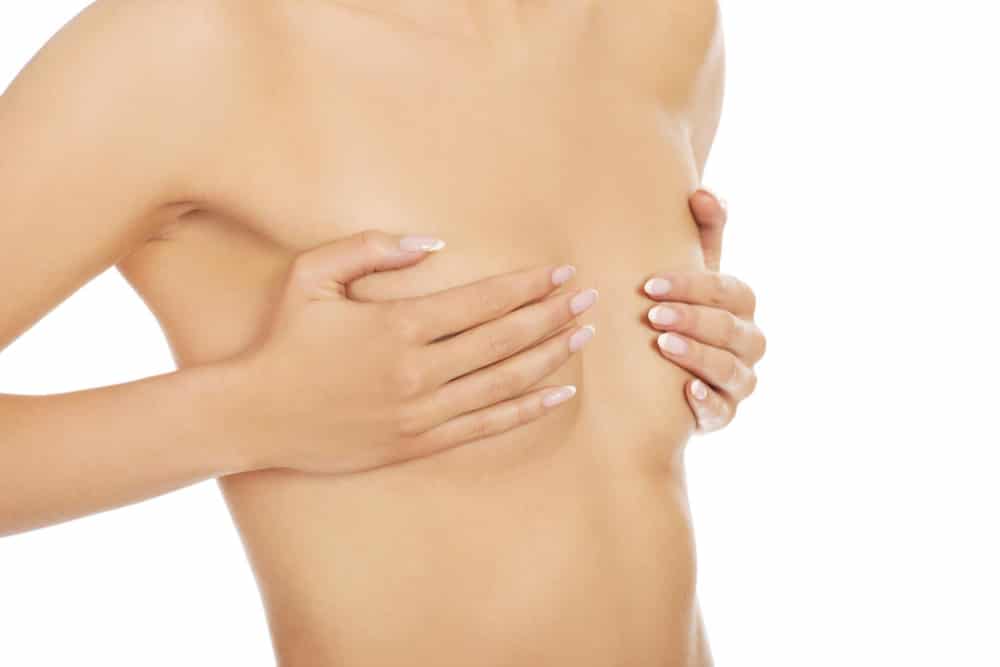
Why won't my breasts grow? This is a question many women ask themselves at puberty, when faced with a complete absence of breasts or breasts that have remained flat. This abnormality in breast development, known as breast agenesis, is a total or partial absence of the breast, sometimes bilateral, sometimes linked to a congenital syndrome such as Poland. It is often the result of a genetic or hormonal factor that has prevented the mammary gland from forming. While this condition does not affect physical health, its psychological impact is real: loss of confidence, embarrassment in social or intimate life. Dr. Djian, breast augmentation specialist in Paris, accompanies patients through the process of correcting missing breasts, reconstructing breast volume and restoring a harmonious silhouette, with techniques adapted to each morphology.


THE DIFFERENT FORMS OF BREAST HYPOTROPHY


Having no breasts at all can have several origins. Breast hypotrophy can result from hypoplasia or a genuine agenesis. Each form corresponds to a different degree of underdevelopment of the mammary glands.


DEFINITION OF BREAST AGENESIS


Mammary agenesis corresponds to complete absence of mammary gland development. Mammary tissue does not exist, or exists only in a rudimentary state, sometimes with a absence of nipple or areola. We speak of’bilateral breast agenesis when both breasts are absent, and’unilateral agenesis when only one side is affected, creating a marked asymmetry.

This congenital malformation may be isolated or associated with other abnormalities, notably the Poland syndrome, where the pectoral muscle is himself absent. In these situations, reconstruction often requires a complex reconstructive surgery, A combination of prosthesis, lipofilling or muscle flap, depending on the patient's morphology.


NOT TO BE CONFUSED WITH BREAST HYPOPLASIA


Breast hypoplasia, on the other hand, designates a partial breast development. The mammary gland is present, but too small or insufficient to create a harmonious volume. The breast therefore exists, but remains poorly projected, often equivalent to an A cup or smaller, and disproportionate to the general morphology. This breast insufficiency can appear at the end of puberty, or later, after pregnancy, significant weight loss or hormonal imbalance.

In the so-called severe breast hypoplasia, The volume is greatly reduced, but glandular tissue remains, which distinguishes this condition from breast agenesis, where the gland is totally absent.


OTHER FORMS OF BREAST HYPOTROPHY


The word hypotrophy comes from the Greek hypo («below») and trophy («nutrition, growth»), literally designating a insufficient development of a tissue or organ. A breast hypotrophy can sometimes be associated with breast ptosis, This is a sagging of the breasts, often observed after pregnancy, breast-feeding or rapid weight loss. In other cases, the condition is accompanied by malformation of tuberous breasts, This is where the base of the breast is narrow and volume is concentrated towards the areola, accentuating breast deformity and asymmetry.


WHAT CAUSES BREAST AGENESIS?


Mammary agenesis has no single cause. It is most often the result of a combination of genetic, hormonal or congenital factors that disrupt the normal formation of the mammary gland during growth.


GENETIC AND EMBRYONIC FACTORS


Mammary gland development begins very early, from foetal life, by the formation of a mammary bud located in the thorax. An anomaly at this stage can prevent the gland from forming properly. Some cases of agenesis are therefore linked to a genetic damage or a transfer during embryonic growth.

Sometimes the condition affects several members of the same family, suggesting a hereditary predisposition. These genetic anomalies, often isolated, do not affect other organs, but lead to a lifelong absence of breast tissue.


HORMONAL IMBALANCES AND ENDOCRINE DISORDERS


For some young girls, the problem appears at puberty. Insufficient estrogen, disrupted pituitary hormones or poor hormone receptor response can block breast development. These imbalances result in breast hypoplasia or, in the most severe forms, agenesis.

A complete hormonal check-up is often necessary to determine the exact cause. In the rare cases where hormone deficiency is identified early, medical treatment can stimulate breast growth, but only before the end of puberty.


ASSOCIATED CONGENITAL SYNDROMES


Mammary agenesis can be part of a number of more complex congenital malformations. Visit Poland syndrome, for example, associates’partial absence of the pectoralis muscle to a mammary development defect on one side only. This causes significant asymmetry between the two breasts.

The Turner syndrome, is the result of a chromosomal abnormality which can lead to lack of development of secondary sexual characteristics, including mammary glands. In these situations, the surgical strategy must take into account the underlying thoracic structure and the lack of muscle tissue available for reconstruction.


WHY DIDN'T THE BREAST DEVELOP? UNDERSTANDING THE MECHANISMS OF BREAST AGENESIS


The breast is a complex organ, closely dependent on the hormonal system. Its formation begins in the womb. A slight skin bud, called the primary mammary bud, appears in the fetus at 5 weeks of development. Under the influence of sex hormones, it gradually expands at puberty to form the definitive mammary gland.

Estrogen and progesterone play a central role in this transformation. They stimulate mammary cell multiplication and glandular tissue growth. Growth hormone (GH) and IGF-1 complement this action by promoting tissue maturation.

When these hormonal signals are absent, poorly transmitted or blocked by a genetic anomaly, the process is interrupted. The result: a lack of breast development or partial, typical of agenesis. This interruption may occur at different stages, explaining the diversity of forms observed: mild hypoplasia, unilateral or bilateral agenesis.


HOW DO I KNOW IF I HAVE BREAST AGENESIS?


Recognizing breast agenesis is not based solely on the absence of visible volume. Diagnosis combines clinical observation, imaging and sometimes hormonal tests.


CLINICAL CRITERIA AND AGE OF DIAGNOSIS


Agenesis is generally identified at the end of puberty, when the rest of the figure has already formed. In adulthood, the chest remains flat or only slightly defined, with no glandular relief. This lack of breast development may affect one or both breasts.


CLINICAL EXAMINATIONS


During an initial consultation, the surgeon assesses :

  • thorax symmetry,
  • the presence of areolae,
  • skin quality
  • and pectoral base.


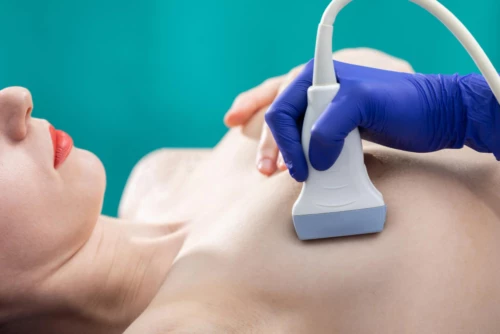
A full ultrasound or MRI scan to confirm the absence or residual presence of breast tissue.

Hormone analysis can be prescribed to search for endocrine cause.

These examinations enable us to distinguish between hypoplasia, where the gland exists but remains small, and true agenesis, where it is absent, in order to guide us towards the best correction strategy.


PSYCHOLOGICAL AND SOCIAL IMPACT


Living without breasts or with incomplete development is often experienced as an injustice. Many patients report feelings of embarrassment, withdrawal and repercussions on their intimate life. Mockery, clumsy remarks or the gaze of others can reinforce their unease.

Femininity being culturally associated with breasts, this missing breasts has a profound impact on body image. Psychological support can help restore confidence and prepare the way for reconstruction.

Dr Djian pays particular attention to this dimension before any intervention.


WHAT SURGERY IS NEEDED TO CORRECT BREAST AGENESIS?


Correcting breast agenesis requires a tailored surgical approach. The choice of technique depends on morphology, the amount of tissue available and the desired result.


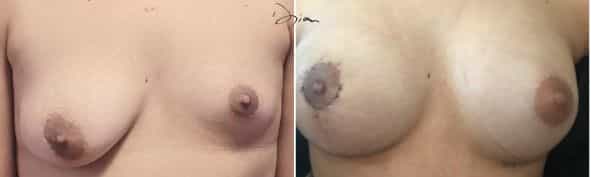
Unilateral breast agenesis


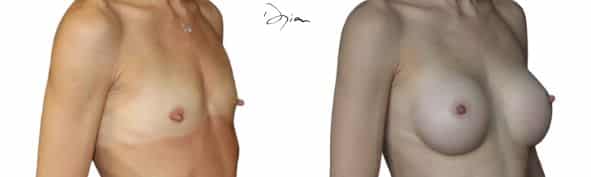
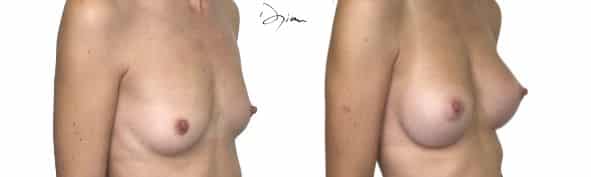
Bilateral agenesis


Breast Augmentation


BREAST AUGMENTATION WITH BREAST PROSTHESES


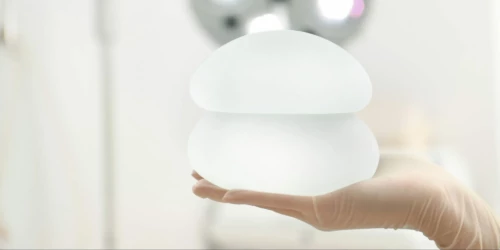
Breast implants are the most frequently used solution for correcting complete agenesis. The silicone gel implants are placed under the pectoral muscle using a technique known as “breast augmentation".“dual plane”. This approach ensures stable, natural results.

Scars can be discreet: under the breast, around the areola or under the armpit. The choice depends on the skin, the shape of the thorax and the desired volume. A prosthesis adapted to the morphology of the patient restores a fuller figure. harmonious breast volume and regain a balanced figure.


BREAST LIPOFILLING (AUTOLOGOUS FAT)


Lipofilling involves reinjecting the patient's own fat, taken from an area such as the abdomen or thighs. This technique offers a more natural result, with no foreign bodies. It is particularly interesting for women with a small fat stock who want a more natural look. gentle breast augmentation.

The injected fat gradually integrates into the tissues. The volume obtained is moderate, but the texture and appearance are very natural. Several sessions may be required to achieve the desired volume.


COMBINED APPROACHES (PROSTHESES + LIPOFILLING)


In certain situations, the surgeon combines the two techniques. Implants provide the basis for volume, while lipofilling refines the contour and smoothes the transition between the prosthesis and the skin. This two-stage procedure produces a more natural result, especially in the case of very thin patients.

This combination also corrects asymmetry and limits the palpability of the implant.


COMPLEX FLAP RECONSTRUCTIONS


When the chest wall is deficient, as in the case of Poland syndrome, If there is no tissue present, or if there is a total lack of tissue, reconstruction requires more elaborate reconstructive surgery. Dorsalis flap is the most common technique. It consists of transferring a fragment of muscle, skin and fat from the back to reconstruct the base of the breast before an implant is placed.

This longer surgical procedure offers a stable and natural result, especially in patients with a bilateral breast agenesis with muscle damage. It requires expertise in reconstructive surgery.


HORMONE TREATMENT


Finally, in adolescent girls, when agenesis is detected early and hormonal deficiency is confirmed, estrogen treatment may be considered. The aim is to stimulate breast growth before the end of puberty. However, this treatment has no effect on adult women, as the glandular tissue is already fixed.

Dr Djian systematically assesses this possibility before any surgery, in order to favour the most natural solution possible for each patient.

Regaining a balanced bust is not just a question of aesthetics. It's a way of reconciling with your body.
For personalized care, make an appointment with Dr Djian in Paris and discover the solution best suited to your situation.


AFTER-EFFECTS, SCARS, PAIN AND CONVALESCENCE


Breast agenesis surgery requires careful follow-up. The after-effects are generally straightforward, but require regular monitoring to ensure optimal healing and a lasting result.


WHAT TO EXPECT AFTER BREAST SURGERY


For the first few days, the breasts may feel tight and slightly swollen. Wearing a support-contention bra is mandatory for several months. weeks to stabilize the result. Dressings are changed regularly, and it is possible to resume daily activities after a few days. Physical exertion and sport are not recommended during the first month.


SCARS ACCORDING TO TECHNIQUE


Scars vary according to the technique chosen. In the case of prostheses, they are usually located under the breast. With lipofilling, incisions are tiny and virtually invisible. The quality of the skin and the regularity of post-operative care play an essential role in their evolution.


PAIN AND COMFORT


Pain after the procedure remains moderate. It is mainly manifested by a sensation of muscle tension, linked to the placement of the prosthesis under the pectoral muscle. In most cases, simple analgesics are sufficient. Slight functional discomfort may persist for a few days, as the tissues soften. A healthy lifestyle, regular sleep and gentle movements will help you recover quickly.

To find out about all post-operative advice after breast augmentation see our dedicated article.


AFTER THE PROCEDURE: RESULTS, FOLLOW-UP AND FEELINGS


EXPECTED RESULTS


Breast surgery enables us to achieve a volume that is adapted to the patient's morphology, with a natural curve. Patients often describe a sense of reconciliation with their image, and an overall improvement in their well-being. Any adjustments are made over time, once healing is complete.

MAINTENANCE AND LONG-TERM


Breast implants have an average lifespan of 10 to 15 years, or even longer, depending on the model and conditions of use. Regular checks, every two to three years, are recommended to verify their integrity. Lipofilling, on the other hand, offers a stable result, provided a constant weight is maintained. Touch-ups can be proposed if the patient wishes to adjust the volume over time. Medical follow-up remains the best guarantee of a lasting result.


PSYCHOLOGICAL IMPACT OF BREAST AGENESIS


Recover the volume of the A new look for the bust also means rebuilding an identity. After years of unhappiness, many women rediscover a figure in which they can recognize themselves. This transformation goes far beyond appearance: it restores coherence between the body and self-esteem.

Reclaiming one's body can take time, however. Some patients go through an adaptation phase before feeling fully at ease. Dr Djian sometimes encourages additional psychological support, because reconstruction is not limited to surgery.

Breast reconstruction not only changes the body, it changes the way we look at ourselves.
For complete support, get in touch with Dr. Djian, a renowned Paris specialist in breast surgery.


RISKS AND COMPLICATIONS ASSOCIATED WITH BREAST AGENESIS


Even if the surgical procedure is well mastered, the risks associated with breast augmentation As with any surgical procedure, whether involving implants, lipofilling or a combined technique, the risks remain.


RISKS ASSOCIATED WITH ALL SURGICAL PROCEDURES


The general complications are rare but possible: hematoma, infection or delayed healing. A rigorous post-operative monitoring and compliance with the surgeon's instructions will ensure significantly reduce the probability of and ensure optimal recovery.


RISKS RELATED SPECIFICALLY TO IMPLANTS


Complications specific to prostheses include :

  • shell formation,
  • the break,
  • moving
  • or intolerance of the foreign body.


Although extremely rare, these incidents warrant regular follow-up. In the event of discomfort, further surgery may be required to replace or remove the implant.


RISKS SPECIFIC TO LIPOFILLING


The risks associated with fat injection are rarer than those observed with a breast implant surgery, The technique involves no foreign bodies or prostheses. The reinjected fat, derived from the patient's own tissue, limits inflammatory reactions and complications. A slight volume reduction may occur over the months, but this is normal and not serious. If necessary, a second session allows you to adjust the result and obtain a perfectly balanced bust.


PRACTICAL LIFE: BREASTFEEDING, SPORTS, CLOTHING AFTER BREAST AGENESIS TREATMENT


BREASTFEEDING AFTER BREAST AUGMENTATION


After a breastplasty, breastfeeding often remains impossible if the mammary gland is absent. The presence of a prosthesis or lipofilling does not contraindicate pregnancy, but medical monitoring must be reinforced.


RESUMING ACTIVITY AND SPORT


Sport can be resumed gradually from the second month onwards, depending on the healing process. Activities that place heavy demands on the pectoral muscle, such as weight training, should be avoided at the outset. Gentle exercises, such as walking or yoga, help recovery.


POST-OPERATIVE GARMENTS AND BRAS


A support bra is worn day and night for about 6 weeks. It maintains the tissue and prevents movement of the prosthesis. Once this period is over, conventional undergarments can be gradually reintroduced. The choice of lingerie finally becomes a pleasure, a symbol of new-found femininity. To help you choose your bra after breast augmentation you can read our dedicated article.


MANAGEMENT OPTIONS FOR BREAST AGENESIS


Depending on the type of agenesis, a covered by Social Security can be considered. Visit total or partial reimbursement depends on degree of malformation and medical diagnosis established by the surgeon. Three situations generally qualify for this assistance:

  • Total breast aplasia, corresponding to a complete absence of breasts ;
  • Severe breast asymmetry, with a significant difference in volume between the two breasts ;
  • Tuberous breasts, characterized by a abnormal, elongated breast shape.

In these cases, the intervention is recognized as a corrective surgery and may be reimbursed, in whole or in part, with the prior agreement of the medical advisor from Assurance Maladie.

To find out more about the cost of breast augmentation and how it is covered, please consult our dedicated article : Price of breast implantation in France: what to expect?


CONCLUSION


Identifying a lack of breast development makes it possible to envisage a reconstruction tailored to each individual woman. Thanks to advances in plastic surgery, it is now possible to restore natural volume, improve the figure and regain self-confidence.

Today, approaches combining implants and lipofilling offer harmonious, long-lasting results, tailored to each patient's morphology and expectations. Psychological support remains an essential element in this transformation, both physical and emotional.

Medical research is now exploring stem cells and tissue engineering, in the hope of regenerating the mammary gland naturally, without implants or muscle harvesting. These experimental advances open up a fascinating question: tomorrow, will we be able to reconstruct a living breast, without invasive surgery?

If you suffer from a partial or total absence of breasts, Dr Jérémy Djian, cosmetic surgeon in Paris, will accompany you every step of the way, from diagnosis to reconstruction, with recognized expertise and a personalized, human approach.

Your Questions

FREQUENTLY ASKED QUESTIONS ABOUT BREAST AGENESIS

Breast agenesis, definition and difference with hypoplasia or hypotrophy?

more less

Mammary agenesis refers to the total or partial absence of a mammary gland. Hypoplasia refers to a gland that is present but underdeveloped. Hypotrophy refers to a breast that is too small for its morphology.

These conditions can only be distinguished by clinical examination and imaging.

At what age should treatment be considered?

more less

Intervention is only envisaged’after the end of growth, around 17 or 18 years of age. In some cases, hormonal treatment may be discussed beforehand if the deficit is diagnosed during puberty. In adults, only reconstructive surgery can restore lasting volume.

What is the average recovery time after surgery for missing breasts?

more less

Full recovery takes about a month. Pain is moderate and scars discreet. Find out more about convalescence after breast augmentation: stages, duration and advice, see our dedicated article.

How much does breast augmentation cost?

more less

The cost varies according to the technique used and the complexity of the case. Reconstruction by implant or lipofilling can cost from 4,000 to 7,000 euros. If the agenesis is recognized as a malformation, part of the cost may be reimbursed by the Assurance Maladie and the mutuelle.

How is coverage provided by Social Security, and what prior steps are required?

more less

The covered by Social Security for a breast agenesis depends on a prior agreement obtained after a prior agreement request (DEP). The surgeon establishes a precise diagnosis, draws up a medical report detailing the malformation (total breast aplasia, severe asymmetry or tuberous breasts) and attaches standardized photos. This file is sent to the CPAM's medical advisor, together with an estimate and the planned surgical coding. The response time is 15 days The absence of a reply is tantamount to tacit agreement. In the event of agreement, the operation is recognized as reconstructive surgery and may be reimbursed in full or in part, depending on the severity and the technique used (implant, lipofilling, flap). Extra fees and related costs may be covered by the mutual insurance company, subject to presentation of notification of agreement.

Do breasts reconstructed by lipofilling evolve over time like natural breasts?

more less

Yes, breasts reconstructed by lipofilling evolve in a similar way to natural breasts. The autologous fat injected integrates with existing tissues and reacts in the same way as they do to variations in weight, hormonal cycles or aging. Slight volume resorption may occur in the first few months, but the result remains stable thereafter. This prosthesis-free technique offers a supple, natural and long-lasting result, provided you maintain a stable body weight after the procedure.

What did you think of this article?

Rate it !

Average Rating 5 / 5. Number of Votes 1

No votes yet, be the first to rate this article.

Dr. Jérémy Djian
Dr. Jérémy Djian

Dr Jérémy Djian is a plastic surgeon based at 5 square Thiers, near the Victor Hugo roundabout, in the 16th arrondissement of Paris.

He trained in Paris and remains attached to the hospital in the prestigious department of Pr Laurent Lantieri.


Going further
THESE ITEMS CAN
IN THESE SECTIONS
Your Questions
ASK YOUR QUESTIONS
TO DR. DJIAN