

fb Breast lift after sleeve, how is it managed?
Dr Jérémy Djian, 5 Square Thiers , 75016
menu close
Appointment appointment

Price

Breast lift after sleeve and management

published on 20.05.2020 by Dr Djian
<noscript><img width=
Summary
  • WHY DO BREASTS FALL OFF?
  • BREAST LIFT: COVERAGE?
  • BREAST LIFT: WHEN SHOULD YOU CONSIDER IT?
In short
  • The breast lift or mastopexy corrects the breast ptosis (sagging breasts) due to weight loss, pregnancy, age or breast hypertrophy.
  • After a sleeve or massive weight loss, the breasts become empty and droopy, often requiring skin tightening or even prostheses to restore volume.
  • The covered by Social Security is exceptional: it is only possible if more than one 300 g are removed per breast or in case of congenital malformation or major asymmetry.
  • The remaining costs (extra fees, hospitalization) are at the patient's expense; the correction of simple ptosis is considered as a "normal" procedure. non-refundable aesthetic.
  • It is recommended to consider this surgery after weight stabilization, to ensure lasting result and prevent the chest from falling again.

Many patients ask me questions about the breast surgery after weight loss, in particular about breast lifts with or without prostheses. Among these questions is whether or not the procedure is covered by Social Security and mutual insurance companies.

I'll try to summarize the main questions here, in order to provide some answers.


WHY DO BREASTS FALL OFF?


The breast is made up of mammary gland,of grease and skin.

After significant weight loss, the breasts may droop, sag or empty. These consequences follow fat loss. The The drooping of the breasts is called «breast ptosis».».

There are also fluctuations in glandular volume linked to hormonal changes: pregnancy, breastfeeding, menopause...

To correct sagging breasts, the plastic surgeon can practice a « mastopexy »This is the surgical term for a breast lift.

The breast lift consists of subtracting the excess skin to lift the breast thanks to an inverted T scar, also known as a sea anchor scar.

Skin weighs very little, compared to fat or the mammary gland.

In certain special cases, where the breast is only slightly drooping, a single scar can be used. around the areola is possible (round block).


The causes of breast ptosis :

  • Congenital ptosis :

Ptosis may appear in young girls. It may be associated with other «malformations», such as asymmetrical breasts and/or tuberous breasts. These anomalies often give rise to severe complexes.

  • Breast hypertrophy

It is the most common cause, the consequence of a breast hypertrophy. Excess breast volume cannot be supported by the skin bag. As a result, the breast envelope becomes distended, leading to sagging.

  • Pregnancy and breastfeeding

Ptosis may result from one or more pregnancies, with or without breast-feeding. The process is the same as for ptosis caused by breast hypertrophy. There is significant distension of the breast envelope.

  • Weight loss

The origins of ptosis can lie in weight loss, which has caused a melting of breast fat. The skin of the breast has not retracted properly over the new, smaller breast volume. As a result, the patient is left with what are colloquially referred to as «ptosis breasts".« washcloth ».

  • Age

Age is also one of the causes of breast ptosis. As we age, the skin loses its elasticity and firmness. The breast envelope becomes more fragile, leading to general sagging of the breasts. What's more, with age, fatty infiltration of breast tissue causes the breast to lose its original shape and contour.


BREAST LIFT: COVERAGE?


Social security covers breast reductione, but not the breast lift.

Coverage for breast ptosis alone is exceptional. Indeed, its correction is considered a purely cosmetic surgical procedure. Only ptosis correction associated with clear asymmetry and/or breast reduction involving the removal of more than 300 g of glands per breast can be reimbursed by the French health insurance system.

When a patient undergoes a breast reduction of more than 300 grams per breast combined with a facelift, it is therefore eligible for reimbursement by the French Social Security system. In this case, we speak of breast reduction. These 300 grams can be made up of either fat or gland.

Removing 300 g per breast corresponds roughly to removing between 1 and 2 cups of breast volume. This operation is performed under general anesthesia.

It is quite rare for a patient who has already lost more than 30 kg to still have fat to remove from the breasts.

Even if this is the case, it's still quite rare to reach the famous 300 grams. More often than not, the plastic surgeon may have to fill the lack of breast volume with breast implants. This type of’breast augmentation in Paris is frequently proposed after significant weight loss, when the mammary gland has emptied without the need to remove excess fat.


Other cases of coverage of the breasts are :

- Birth defect with asymmetry ;

- Breast hypoplasia (from birth): no or very small breasts ;

- Thoracic malformation.

In other words, having sagging breasts is not a reason for Social Security reimbursement. This may seem justified by the fact that, diet or not, all women will have sagging breasts one day, due to aging.

In fact, after weight loss by sleeve or bypass, breast surgery is generally the only procedure that is not covered. It is considered to be a plastic surgery to 100 %. There may be exceptions. These are examined on a case-by-case basis.

In the case of a breast lift combined with a breast reduction, only a portion of the costs are covered. reimbursable by the Assurance Maladie. Social security covers part of the surgeon's and anesthetist's fees. Any additional fees, as well as hospital and clinic charges, remain the patient's responsibility.


BREAST LIFT: WHEN SHOULD YOU CONSIDER IT?


It's important to know that a breast lift performed before the patient loses weight again doesn't guarantee that the breasts won't tend to droop again. Removing excess skin through plastic surgery is effective, but does not guarantee results if further weight changes occur.

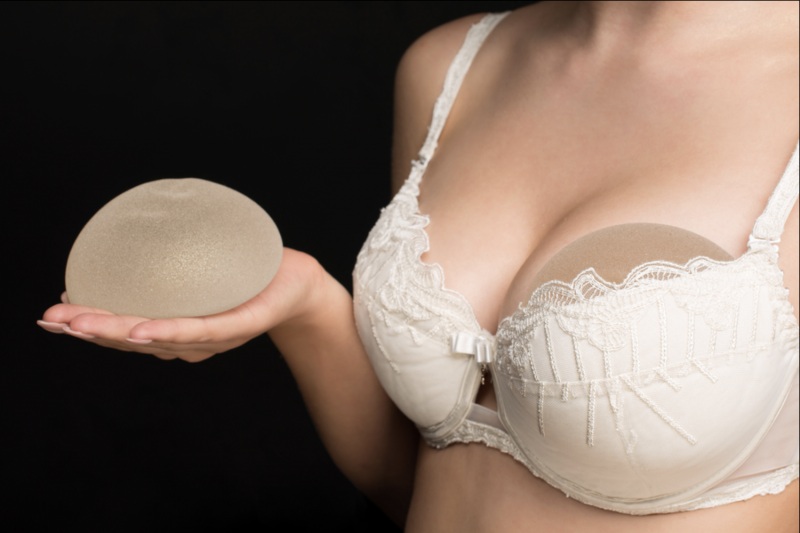
It is also possible to perform a combined surgery called the mastopexy prosthesis. It consists of a breast lift and a breast augmentation. breast augmentation by breast implants. Selon la morphologie, une mastopexie peut aussi être associée à un lipofilling mammaire (réinjection de la graisse liposuccée à un autre endroit du corps) pour redonner du galbe.

Breast surgery after weight loss is the exception to the rule for abdominoplasty, breast enlargement and breast augmentation. brachioplasty and cruroplasty. These are generally covered. However, they must meet certain covered by Social Security very precise.

It's important to point out that, after adolescence, there's no such thing as a woman with perfectly symmetrical breasts. Moreover, the larger the breasts, the heavier they are and the more likely they are to fall off.


If you're not sure and would like to know if you're one of the patients for whom a breast lift is an operation to consider, ask your surgeon for advice!

Your Questions

FREQUENTLY ASKED QUESTIONS ABOUT BREAST LIFT

IS A BREAST LIFT AFTER A SLEEVE PAINFUL?

more less

The breast lift after sleeve mainly causes moderate discomfort for the first few days, This is more of a pain than a sensation, and is well relieved by simple analgesics prescribed after the procedure. Sensitivity varies from patient to patient, depending on the volume of skin removed and whether breast implants have been fitted. Tension around the scars or a feeling of tightness may persist for a few days, but intense pain is rare. The return to comfort is gradual, generally taking one to two weeks.

SHOULD PROSTHESES BE FITTED AFTER A BREAST LIFT?

more less

Yes, breast prosthesis insertion after sleeve is frequently proposed when weight loss has drained the breasts of their initial volume, leaving excess skin without contour. A breast lift lifts the breasts, but does not restore volume. Breast implants The result is a more rounded, natural or projected shape, depending on the patient's wishes. This choice is discussed on a case-by-case basis with the surgeon, depending on the patient's anatomy, ptosis and desired result.

HOW MUCH DOES A NON-REIMBURSED BREAST LIFT COST?

more less

In the absence of care, the price of a breast lift after weight loss with Dr Jérémy Djian starts at 6 500 €, including fees for the surgeon, anesthetist and operating room. This rate may vary according to the associated procedures (fitting of prostheses, correction of asymmetry, etc.) and the type of operation.

WHEN CAN I RESUME SPORT AFTER A BREAST LIFT?

more less

After a post-sleeve breast lift, In general, you should wait 4 to 6 weeks before resuming sporting activity, avoiding sudden movements of the upper body.

CAN YOU BREASTFEED AFTER A BREAST LIFT?

more less

Yes, breast-feeding is sometimes still possible after a breast lift, This depends on the surgical technique used (preservation of the areola and milk ducts) and the initial quality of the mammary gland. If the facelift is combined with a major reduction or prosthesis, the chances of breastfeeding may be reduced. As each case is unique, it is essential to discuss this point with your surgeon beforehand, especially if you are planning to have children.

What did you think of this article?

Rate it !

Average Rating 4.4 / 5. Number of Votes 24

No votes yet, be the first to rate this article.

Dr. Jérémy Djian
Dr. Jérémy Djian

Dr Jérémy Djian is a plastic surgeon based at 5 square Thiers, near the Victor Hugo roundabout, in the 16th arrondissement of Paris.

He trained in Paris and remains attached to the hospital in the prestigious department of Pr Laurent Lantieri.


Going further
THESE ITEMS CAN
IN THESE SECTIONS
Your Questions
ASK YOUR QUESTIONS
TO DR. DJIAN
Euridyce
Le 17.04.2021

Hello,
J'envisage un lifting mammaire associé à une augmentation mammaire suite à une grosse perte de poids.
Étant d'origine antillaise ( peau noire), je crains d'avoir une mauvaise cicatrisation, trop visible par la suite.
La cicatrisation en T est elle la seule proposée?
Thanks in advance

answer
Dr Djian

Hello, ma'am,
you need to be examined
dans des cas très précis on peut faire une cicatrice unique autours du sein
pour améliorer la cicatrice il existe un laser (urgotouch) à appliquer pendant la chirurgie
sincerely

Sara
Le 05.11.2020

Hello,

Après une perte de poids de 30kg, j’ai perdu énormément de poitrine (je faisais du 85E en taille).
Aujourd’hui mes seins tombent et surtout j’ai beaucoup de peau en excès.
Je ne peux pas mettre des décolletés à cause de toute cette peau “pliée” qu’on voit, ça me gene dans mes gestes quotidiens , dans le sport, et surtout psychologiquement, à 23 ans, c’est très dur.
Si j’ai bien compris, l’assurance maladie ne prend pas ça en charge mais il y a t’il des cas particuliers? Les 300 grammes ne sont pas attendus avec la peau en excès à enlever? Une bonne mutuelle ne peut pas s’en occuper non plus?
Honnêtement je comprends qu’il y a pire et que une poitrine qui tombe n’est pas un cas urgent pour la sécurité sociale, mais ne pas avoir de poitrine (parce que pour moi non, celle que j’ai ce n’est pas une poitrine) mais uniquement un surplus de peau dans un soutien gorge, est handicapant physiquement et psychologiquement.
J’aimerais donc en savoir plus s’il vous plait.

Je vous remercie d’avance

Best regards,

Sara

answer
Dr Djian

Hello, ma'am,

Malheureusement la peau pèse quasiment rien (peut-etre 50 grammes).
Je comprends votre détresse mais je légifère pas à la sécurité sociale.

Je reste à votre disposition toutefois,

Dr Djian

Farah
Le 25.09.2020

Hello,

J'ai un sein qui a une taille différente à l'autre, c'était assez flagrant, je me suis fait poser des prothèses afin de régler ce problème au Venezuela, à l'époque il y a eu les fameuses PIP que je porte toujours, en plus cela a gêné beaucoup l'allaitement de mon enfant, bref tout cela fait que je voudrais me faire enlever les prothèses et corriger la différence de taille, est-ce qu'il y aurait un moyen de justifier cela médicalement pour une prise en charge par la sécu ? merci

answer
Dr Djian

Hello, ma'am,

Si les prothèses sont enlevées sans repose de nouvelle prothèses, et sans geste associé (lifting mammaire), il y a une prise en charge possible.
Néanmoins le résultat ne sera pas formidable.

En cas de changement d'implant et lifting, ce n'est pas pris en charge.

Dans tous les cas il faudrait vous examiner pour statuer.

Yours sincerely

Diakite
Le 13.08.2020

Hello
J’ai eu 3 enfant et mes seins se son bcp abîmer et tombe beaucoup .
J’aimerai savoir si au vu d’une opération sa peut Être pris en charge Par la sécu svp .
En attente de votre réponse mes salutation

answer
Dr Djian

Hello, ma'am,

Malheureusement non, si vous avez lu cet article vous aurez l'explication (> 300 g de sein)

Yours sincerely,

Dr Djian