

fb Rhinoplasty preservation Paris | Dr Djian
Dr Jérémy Djian, 5 Square Thiers , 75016
Surgery

Rhinoplasty in Paris

Published and scientifically verified by Dr Djian on 02/08/2021
Preservation rhinoplasty in Paris
Summary
  • QU’EST-CE QUE LA RHINOPLASTIE DE PRÉSERVATION ?
  • À QUEL ÂGE PEUT-ON FAIRE UNE RHINOPLASTIE DE CONSERVATION ?
  • QUAND FAIRE UNE RHINOPLASTIE PRÉSERVATIVE ?
  • QUELS SONT LES AVANTAGES DE LA RHINOPLASTIE DE PRÉSERVATION ?
  • CAN THE TIP OF THE NOSE BE CORRECTED WITH THIS TECHNIQUE?
  • QUELLE DIFFÉRENCE AVEC LA RHINOPLASTIE ULTRASONIQUE ?
  • WHAT IS MEDICAL RHINOPLASTY?
  • QU’EST-CE QUE LE PUSH-DOWN ?
  • PREPARATION INSTRUCTIONS BEFORE PRESERVATIVE RHINOPLASTY
  • POSTOPERATIVE INSTRUCTIONS FOLLOWING CONSERVATIVE RHINOPLASTY
  • HOW DOES THE CONSULTATION IN PARIS WORK?
  • CETTE TECHNIQUE EST-ELLE ADAPTÉE À LA RHINOPLASTIE SECONDAIRE ?
  • HOW MUCH DOES RHINOPLASTY COST IN PARIS?
In short
  • The rhinoplasty preservation reshapes the nose while preserving the dorsum, ligaments and tip cartilage, for a result natural and distortion-free.
  • Suitable for bumpy nose, drooping or too wide tip, It prevents “nose job” and preserves breathing.
  • Produced under general anesthesia, it is suitable for 16-18 years, after the end of growth.
  • The Push-Down or Let-Down techniques can correct the hump without breaking the bone.
  • The average price of a rhinoplasty to preserve Paris is 6 000 à 7 000 €.

Effacer une bosse ou affiner une pointe sans donner au nez un aspect « refait » : c’est l’objectif de la rhinoplastie de préservation. Contrairement aux techniques classiques, elle respecte l’architecture naturelle du nez au lieu de la reconstruire.

Chirurgien esthétique pratiquant la rhinoplasty in Paris, le Dr Djian a fait de cette approche sa technique de référence. Il vous explique ce qui la distingue et à qui elle s’adresse.


QU’EST-CE QUE LA RHINOPLASTIE DE PRÉSERVATION ?


The rhinoplasty preservation désigne une opération de chirurgie esthétique, qui a pour but d’épargner certaines nose structures.

The aim is to preserve three major groups of nasal structures :

  • the back of the nose (dorsum preservation)
  • nasal ligaments
  • the cartilages of the nose tip.

Here, the surgeon reshapes the nose without modifying its external architecture. He will work under the bridge of the nose to reshape it.

Preservation rhinoplasty is also called rhinoplasty, conservation rhinoplasty. This is a recent technique, recommended by a number of world experts.

The « Preservation Rhinoplasty »rhinoplasty is simpler, more reliable and safer.

It offers more natural results, without irregularities, since it preserves the native aesthetic lines nose.

This technique reduces the risk of significant nasal obstruction following surgery.


À QUEL ÂGE PEUT-ON FAIRE UNE RHINOPLASTIE DE CONSERVATION ?


The operation can be performed when the

The operation can be performed when the face has finished growing. bone and cartilage, or around 16-18 years of age.

It is important to know that, overall, the nose skin des sujets jeunes s’adapte mieux aux changements de forme. Plus le patient sera jeune, plus les chances de successful rhinoplasty will be high. On the other hand, as we age, skin tends to become thinner and lose its elasticity. This phenomenon is amplified when the skin has been exposed to a lot of sunlight, or when the person is prone to smoking.

Par ailleurs, après 40-45 ans, les os sont plus cassants et les cartilages plus durs. La modification des structures peut aboutir à des irrégularités. Pour pallier cela, le plastic surgeon uses the same principles as with thin skins, trying not to reduce the osteo-cartilaginous structures too much. This is where conservation rhinoplasty comes into its own.


Rhinoplasty is one of the plastic and aesthetic surgery.

There are two types of rhinoplasty:

  • aesthetics
  • reconstructive

Rhinoplasty with deviation of the nasal septum or reconstruction can have a significant covered by Social Security.

The most common case is respiratory discomfort due to nasal obstruction. Most often, the nasal septum is deviated.

In the case of complex rhinoplasty or reconstruction, a cartilage graft may be required.

A nose scanner must demonstrate an anomaly in the nasal septum responsible for respiratory problems.

Some patients may be referred by their GP for functional discomfort.


QUAND FAIRE UNE RHINOPLASTIE PRÉSERVATIVE ?


Conservation rhinoplasty is suitable for people who expect a natural result and who have a :

  • With a bump; ;
  • A nose that's too long
  • A drooping tip
  • A deviated nose
  • Or a tip that is too wide or bulbous.

Most aesthetic anomalies of the nose can be corrected with a «nose job".« Preservation Rhinoplasty ». In some cases, it can be used for the ethnic rhinoplasty.

The technique is constantly evolving, and scientific conferences are held regularly to improve and disseminate it.

This type of rhinoplasty may not be the best solution for :

  • Complex secondary and tertiary rhinoplasty ;
  • Very broad nose; ;
  • Corrections requiring an open track

In addition, people who can't stand general anesthesia will not be able to undergo this intervention.

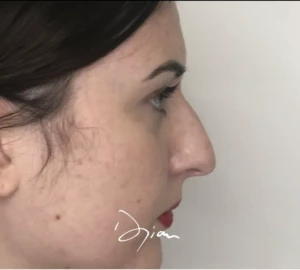
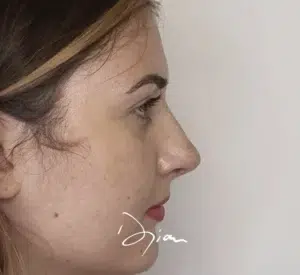
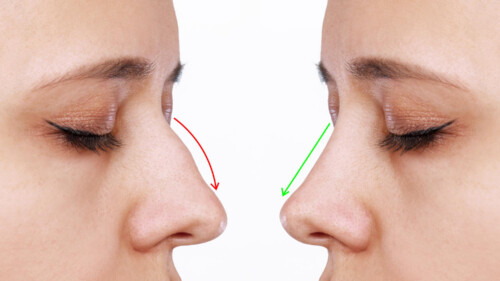
Example of a rhinoplasty with a before-and-after photo of a patient in profile. Postoperative appearance at 1 month after rhinoplasty in Paris.

  • The hump is treated while preserving the patient's dorsum.
  • The tip is refined and slightly raised on women.
  • Smoother face

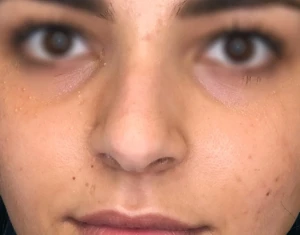
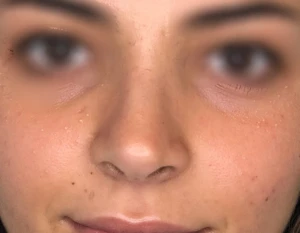
rhinoplasty front photo rhinoplasty after surgery


QUELS SONT LES AVANTAGES DE LA RHINOPLASTIE DE PRÉSERVATION ?


This type of rhinoplasty preserves the bridge of the nose, classically called the «nose bridge".« dorsum« .

Here, the plastic surgeon reshapes it, thus avoiding :

  • The visual effect of a nose job, the famous «surgical look»; ;
  • Major obstructions of the nose: the nose is not «narrowed».
  • Irregularities in the dorsum.

Moreover, aesthetically, this operation gives a natural appearance.

This type of rhinoplasty is suitable when the patient suffers from its nose in profile, but the nose looks good from the front. This technique will not be the most suitable for a nose that is very wide from the front.


CAN THE TIP OF THE NOSE BE CORRECTED WITH THIS TECHNIQUE?


This procedure also makes it possible to raise the tip of the nose unsightly, by remodeling the wing cartilages to refine them.

The surgeon performs invisible incisions inside the nostrils to expose the wing cartilage responsible for the shape of the tip of the nose.

If the wing cartilages are too wides (the majority of cases), the surgeon carries out a wing cartilage resection.

If the wing cartilages are too long, a remodeling is possible to shorten them.

In the majority of cases, the tip is fixed with a cartilage graftinge to prevent it from falling out postoperatively and ensure a lasting result.

When the nostrils are too large, A reduction of the nostrils can be performed during the operation. The scar is hidden inside the nostrils.

If the skin of the nose is very thick, the structural changes made by the surgeon will be less visible.


Photos avant-après d’une correction de pointe bulbeuse (ronde) chez une femme. Résultat à 3 mois d’une rhinoplastie.

photo before rhinoplasty photos after rhinoplasty


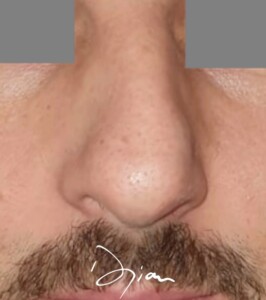
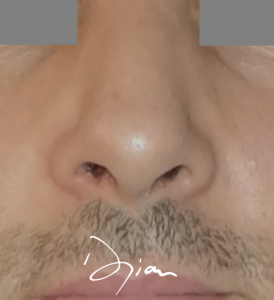
Before-and-after photos of a rhinoplasty for men Complex tip correction with deviation. Postoperative appearance at 1 month.

  • Excess wing cartilage is corrected
  • The tip is refined and symmetrical

rhinoplasty nose tip  rhinoplasty nose tip


QUELLE DIFFÉRENCE AVEC LA RHINOPLASTIE ULTRASONIQUE ?


The ultrasonic rhinoplasty is a surgical technique using open path (scar under the nose), some of which are performed with motorized instruments.

Because the surgery is «open», each structure of the nose must be rebuilt one by one, usually with multiple cartilage grafts.

Il n’y a pas de « meilleure » technique tant que celle-ci est bien maîtrisée par le spécialiste.

Nevertheless, the approach and philosophy of open ultrasonic rhinoplasty and closed preservation rhinoplasty are quite different.

The aim of rhinoplasty preservation is to minimize the amount of structure to be reconstructed.


WHAT IS MEDICAL RHINOPLASTY?


The medical rhinoplasty in Paris is an aesthetic medicine technique that allows you to’removing a nose bump or correct a slightly drooping tip.

Unlike surgical rhinoplasty, volume is added to the nose using an absorbable product, hyaluronic acid.

This technique is therefore not suitable for noses with a pronounced hump, or for noses that are too long, where volume needs to be reduced first and foremost.

The The result is also ephemeral, since hyaluronic acid is resorbed after 9 to 12 months.


QU’EST-CE QUE LE PUSH-DOWN ?


The Push-Down is one of the main techniques for rhinoplasty preservation.

Instead of surgically cutting the hump, the entire nose is moved back.

To achieve this, the surgeon performs osteotomies combined with resection of a strip of septal cartilage, enabling the nose to be moved further back.

Once these two gestures have been performed, the surgeon performs the push-down with a controlled gesture that gently allows the surgeon to pull back the nose.

The alternative to PushDown is the LetDown.

These techniques allow most bumps to be corrected, and therefore most profile anomalies.

This preservation of the structures at the back of the nose helps to avoid the deformations caused by sectioning the cartilaginous hump, which can lead to major deformities at a distance.

Ces techniques chirurgicales nécessitent le recours à un specialist.


PREPARATION INSTRUCTIONS BEFORE PRESERVATIVE RHINOPLASTY


Visit advice before rhinoplasty of preservation to follow :

  • Strict cessation of tabac 1 month before surgery; ;
  • Stop taking aspirin, anti-inflammatory drugs and oral anticoagulants 15 days before the operation (risk of bleeding);
  • Beard and moustache perfectly shaved ;
  • Medical treatment sinusitis or a cold.

In the case of cosmetic rhinoplasty, no sick leave will be issued.

Preservation rhinoplasty

  • avoid splinting
  • avoid wicks
  • a same-day outing

Allow around 10 days' downtime.


POST-OPERATIVE INSTRUCTIONS FOLLOWING CONSERVATIVE RHINOPLASTY


Some advice to follow after a conservation rhinoplasty:

No special treatment is required, apart from washing the nose with saline solution and gomenol oil to prevent crusting.

Other instructions are :

  • Do not blow your nose.
  • Rest
  • Apply a compress of cold water to your nose every night for 1 month to help deflate; ;
  • Sleep with your head slightly elevated; ;
  • Avoid all sporting activities for 1 month. You can resume stretching and brisk walking after 15 days;
  • Avoid combat sports.
  • No SPA (sauna and hammam) for 2 months.

The final result of a rhinoplasty can be assessed between 6 and 12 months. This is the time needed for all the swelling to subside.


HOW DOES THE CONSULTATION IN PARIS WORK?


Dr. Jérémy Djian is a plastic surgeon specializing in rhinoplasty.

The patient explains his or her wishes, and the surgeon takes a medical and surgical history to ensure that there are no contraindications to surgery.

A clinical examination of the nose allows the doctor to assess nasal defects that can be corrected. Nasal obstruction is looked for.

In consultation with the surgeon, it is possible to perform a simulation by computer.

It is important to understand that the purpose of this simulation is to ensure that the patient’s wishes align with the preoperative plan regarding the desired shape of the nose.

To do this, the surgeon takes a profile photo and uses software to simulate the expected result.

Front photos do not provide a simulation of the postoperative result.

Simulation is a help, but does not guarantee the postoperative appearance. It allows surgery to be tailored to each individual face.

A quote est remis au patient et des photos sont prises, de face, de profil, de trois quarts, de vue du dessus et de vue du dessous.


CETTE TECHNIQUE EST-ELLE ADAPTÉE À LA RHINOPLASTIE SECONDAIRE ?


If the initial surgery was a non-preservative procedure, a preservative rhinoplasty would likely not be the most appropriate technique for correcting defects in a primary rhinoplasty.

On the other hand, if the goal is to correct imperfections resulting from an initial breast-conserving surgery, this technique may be used again in cases such as, for example,

  • bump recurrence
  • tip displacement


HOW MUCH DOES RHINOPLASTY COST IN PARIS?


The price of rhinoplasty is identical to that of a classic primary rhinoplasty.

It can vary from specialist to specialist, and from city to city.

The total cost of a rhinoplasty is the sum of the surgeon’s fees, the anesthesiologist’s fees, and the clinic’s fees. As a result, prices may vary from one clinic to another, particularly between Paris, the Paris region, and other parts of the country.

Count on between 6,000 and 7,000 euros in Paris for primary rhinoplasty.

This fee does not include the first consultation with the Dr Djian ni la consultation d’anesthésie.

In the case of complex or reconstructive rhinoplasty, the operating time and anesthesia are longer. The price changes accordingly.

To find out about the price of a rhinoplasty in Paris, it is necessary to carry out an initial consultation with the plastic surgeon in Paris. Le docteur Djian pourra alors établir un devis détaillé pour le patient.

Your Questions

FREQUENTLY ASKED QUESTIONS ABOUT RHINOPLASTY PRESERVATION IN PARIS

IS RHINOPLASTY SUITABLE FOR MEN?

more less

Yes, Dr. Djian regularly performs this procedure on men., to correct a hump in the profile or a drooping nose tip without altering the face's identity. The aim is to preserve a straight, natural, masculine nose, with no visible surgical effect.

IS IT NECESSARY TO WEAR A SPLINT AFTER SURGERY?

more less

Dr. Djian does not use rigid splints A simple bandage holds the nose in place thanks to the rhinoplasty preservation technique, which avoids bone fractures. No filling is required either, making the postoperative period lighter and more comfortable..

CAN YOU ACHIEVE A NATURAL RESULT WITH THICK SKIN?

more less

The result is more gradual, but remains natural if the technique is adapted. Dr. Djian takes into account the thickness of the skin to avoid over-correction or irregularity: he favors deep structural work, subtly refining cartilage and avoiding excessive volume reduction. With thick skin, the final result may take several months to refine, but it remains harmonious and long-lasting.

WHEN TO CONSIDER A TOUCH-UP AFTER RHINOPLASTY?

more less

Dr. Djian does not consider a touch-up between 6 and 12 months after the operation, when the oedema has fully subsided and the tissues have stabilized. This delay is essential to accurately assess the final result, especially in patients with thick skin. A touch-up may be indicated in the case of persistent minor imperfections, but this is rare when the rhinoplasty has been well indicated and performed from the outset.

HOW LONG DOES THE PROCEDURE IN PARIS LAST?

more less

The procedure performed by Dr. Djian lasts between 2h to 2h30. It is performed in Paris under general anaesthetic, with same-day discharge in most cases.

What did you think of this article?

Rate it !

Average Rating 4.9 / 5. Number of Votes 40

No votes yet, be the first to rate this article.

Dr. Jérémy Djian
Dr. Jérémy Djian

Dr Jérémy Djian is a cosmetic surgeon based at 5 square Thiers, near the Victor Hugo roundabout, in the 16th arrondissement of Paris.

He trained in Paris and worked in the team of Prof. Laurent Lantieri, a leading figure in face transplant surgery.


Going further
THESE ITEMS CAN
IN THESE SECTIONS
Your Questions
ASK YOUR QUESTIONS
TO DR. DJIAN