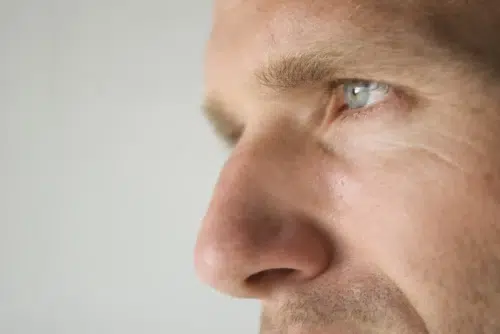
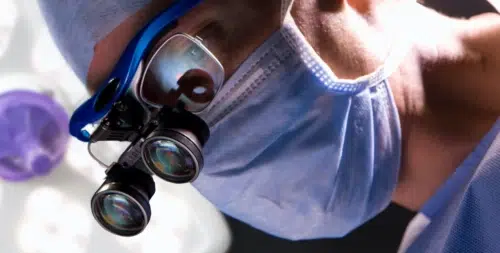
- The ultrasonic rhinoplasty sculpts the bones and cartilage the nose using a vibrating instrument called a Piezotome.
- It is ideal for correcting wide, irregular or deviated noses, with a precise surgical control.
- The procedure is performed under general anesthesia, lasts approximately 3 hours and requires open path, causing a more pronounced swelling.
- A external splint and internal silicone splints are worn during 7 to 10 days.
- The recovery is fast: back to work after 1 week, sport après 6 weeks.
- The results appear after 8 to 10 days, are refined in 1 to 3 months and become definitive after 12 to 18 months, with a rendering natural and harmonious.
Your Questions
FREQUENTLY ASKED QUESTIONS ABOUT ULTRASONIC RHINOPLASTY
ARE THERE MORE RISKS WITH ULTRASONIC RHINOPLASTY?
No, ultrasonic rhinoplasty presents no more risk than a conventional technique, provided it is performed by an experienced surgeon. The Piezotome is extremely precise, limiting trauma to surrounding tissues. Serious complications are rare, but post-operative swelling can be more pronounced. Dr. Djian adapts the method to the patient's profile to ensure safety at every stage of the procedure.
IS ULTRASONIC RHINOPLASTY PAINFUL?
No, ultrasonic rhinoplasty is painless. Thanks to the precision of ultrasound, the surrounding tissues are less traumatized, which reduces post-operative pain. Dr. Djian generally prescribes simple analgesics such as paracetamol. Sensations of tension or discomfort are common in the first few days, but acute pain is rare. General anaesthesia ensures a comfortable, pain-free operation.
CAN AN ULTRASONIC TECHNIQUE BE USED TO TREAT A TRAUMATIZED NOSE?
Yes, ultrasonic rhinoplasty is particularly suitable for noses that have suffered trauma, with humps, deviations or bony irregularities. The Piezotome offers surgical precision for reshaping structures after fracture or previous surgery. Dr. Djian uses this technique to refine already affected areas without weakening them, particularly when bones are deformed or irregularly healed.
IS ULTRASONIC RHINOPLASTY SUITABLE FOR ALL PATIENTS?
No, ultrasonic rhinoplasty is mainly indicated to correct a bony bump or asymmetry., However, it is not systematically suitable for very thick tips or purely cartilaginous noses. Dr. Djian evaluates the appropriateness of this technique on a case-by-case basis. For certain profiles, preservation rhinoplasty or a hybrid approach may be more appropriate to reduce edema and improve recovery.
Going further
THESE ITEMS CAN
IN THESE SECTIONS
IN THESE SECTIONS
Your Questions
ASK YOUR QUESTIONS
TO DR. DJIAN
TO DR. DJIAN