
fb Sport after breast augmentation: Dr Djian's complete guide
Dr Jérémy Djian, 5 Square Thiers , 75016
menu close
Appointment appointment

Tips & advice

Exercise after breast augmentation and other activities: when to resume?

published on 24.03.2025 by Dr. Djian
Sport after breast augmentation and other activities: when to resume?
Summary
  • THE IMPORTANCE OF RECOVERY BEFORE RESUMING PHYSICAL ACTIVITY
  • THE DIFFERENT STAGES IN RETURNING TO SPORT AFTER BREAST AUGMENTATION
  • SPORTS TO PREFER OR AVOID AFTER BREAST AUGMENTATION
  • IN CONCLUSION
  • AFTER BREAST AUGMENTATION: DISCOVER ALL ARTICLES
In short
  • After a breast augmentation, to avoid any physical effort for the first 2 weeks to preserve healing and implant stability.
  • The gentle walk can be resumed as early as 3ᵉ week, while the moderate sports (yoga, Pilates, swimming) are available. after 6 weeks, with the surgeon's approval.
  • The high-impact sports (running, CrossFit, contact sports) should only be taken up with’after 3 months, under medical supervision.
  • A too rapid recovery may lead to implant displacement, pain, edema or scarring complications.
  • Wearing a support bra remains essential throughout the recovery phase to limit tension on the chest.
  • The trade-in must be progressive, and adapted to each patient's specific needs. type of intervention and the physical tolerance.

After breast augmentation, Many women wonder when they'll be able to resume their sporting activities. This is a crucial issue, as resuming sport too quickly or in the wrong way can compromise the results of the operation. Here we take a look at the various stages involved in returning to sport safely, and at which activities should be maintained or avoided.


THE IMPORTANCE OF RECOVERY BEFORE RESUMING PHYSICAL ACTIVITY


WHY IS REST ESSENTIAL AFTER BREAST AUGMENTATION?


Impact of physical effort on healing


Rest after breast augmentation is essential for proper healing. Internal and external sutures need to consolidate, and too much physical effort could lead to complications such as wound opening or implant malposition.


Risks of returning to sport too soon


Returning to sport too soon can lead to bruising, infection or displacement of the breast implants. Women who have undergone sub-muscular breast augmentation need to be particularly vigilant, as physical exertion places a direct strain on the pectoral muscles.


THE BENEFITS OF A GRADUAL RETURN TO SPORT


Keeping fit


A gradual resumption of physical activity allows you to slowly restore your physical condition without jeopardizing the results of the operation. Walking or gentle exercise can be beneficial from the very first weeks, subject to Dr. Jérémy Djian's recommendations.


Preventing post-operative complications


Respecting the recovery steps considerably reduces the risk of complications. A measured approach limits tension on the breast and preserves implant positioning.


THE DIFFERENT STAGES IN RETURNING TO SPORT AFTER BREAST AUGMENTATION


WEEKS 1 TO 2: ABSOLUTE REST


Activities to avoid


During the first two weeks, it is essential to avoid all physical activity, even slight ones. This includes carrying heavy loads, sudden movements and exercises involving the arms or upper body.


The importance of following medical recommendations


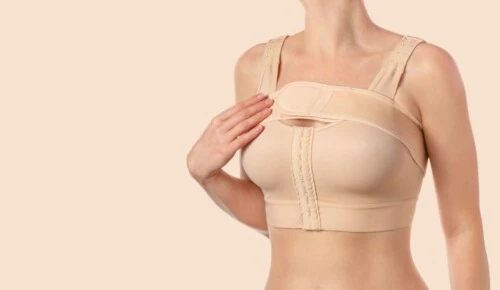
Your plastic surgeon, Dr. Djian, will provide you with precise instructions. It is essential to wear a suitable post-operative bra, to hold the implants in place and support the breasts.


WEEKS 3 TO 6: RESUMPTION OF LIGHT ACTIVITIES


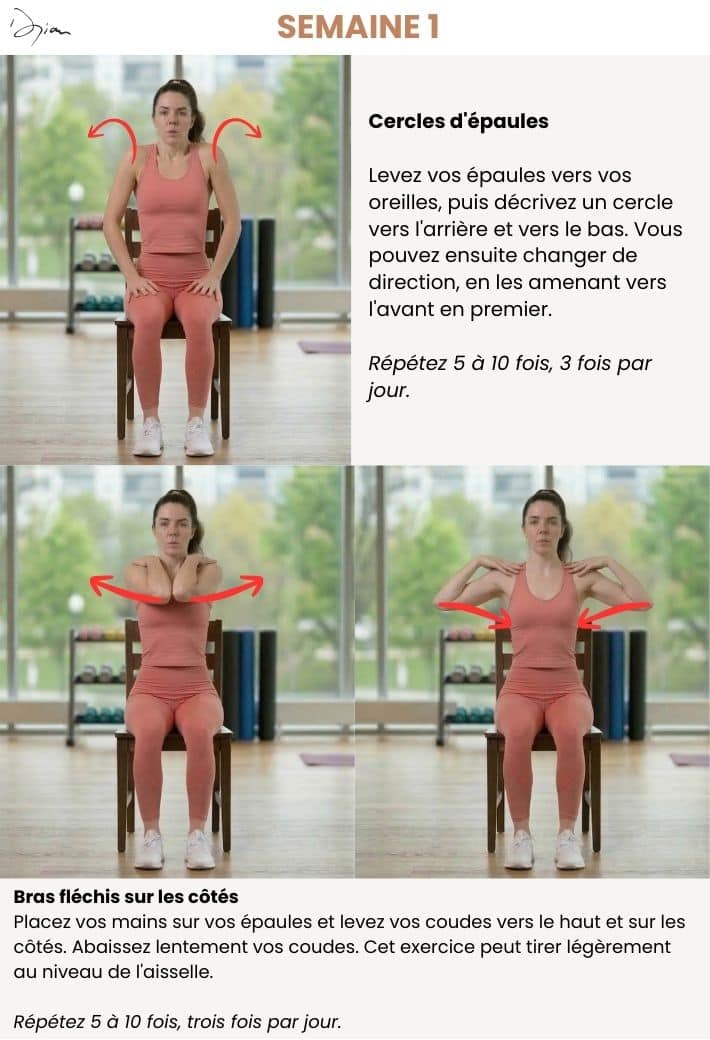
Walking and gentle exercise permitted


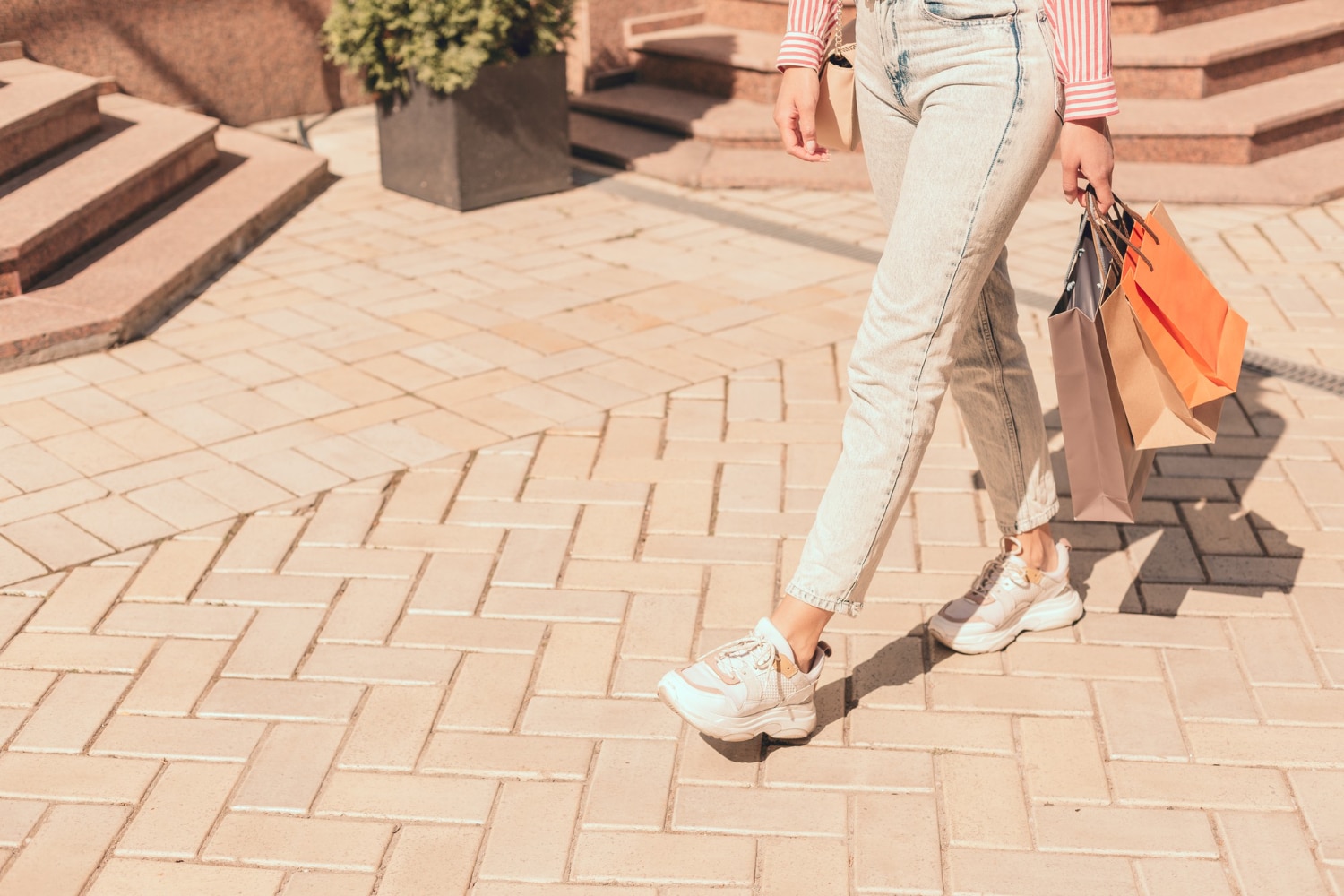
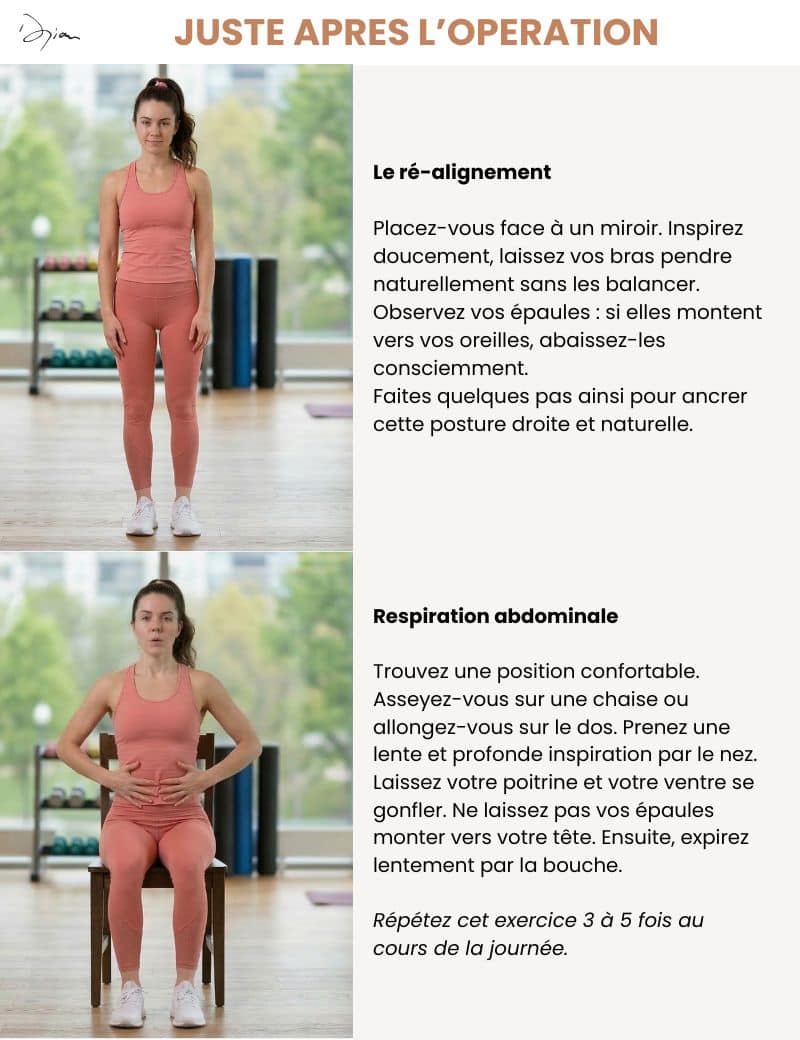
Walking is the ideal activity for gently stimulating blood circulation without traumatizing the operated area. Breathing and relaxation exercises can also be performed.


Precautions to avoid tension on the chest


It's crucial to avoid movements that strain the pectoral muscles. This includes sports such as intensive yoga or stretching exercises requiring excessive extension of the arms.


AFTER 6 WEEKS: GRADUAL RETURN TO MODERATE SPORTS


Which sports are recommended?


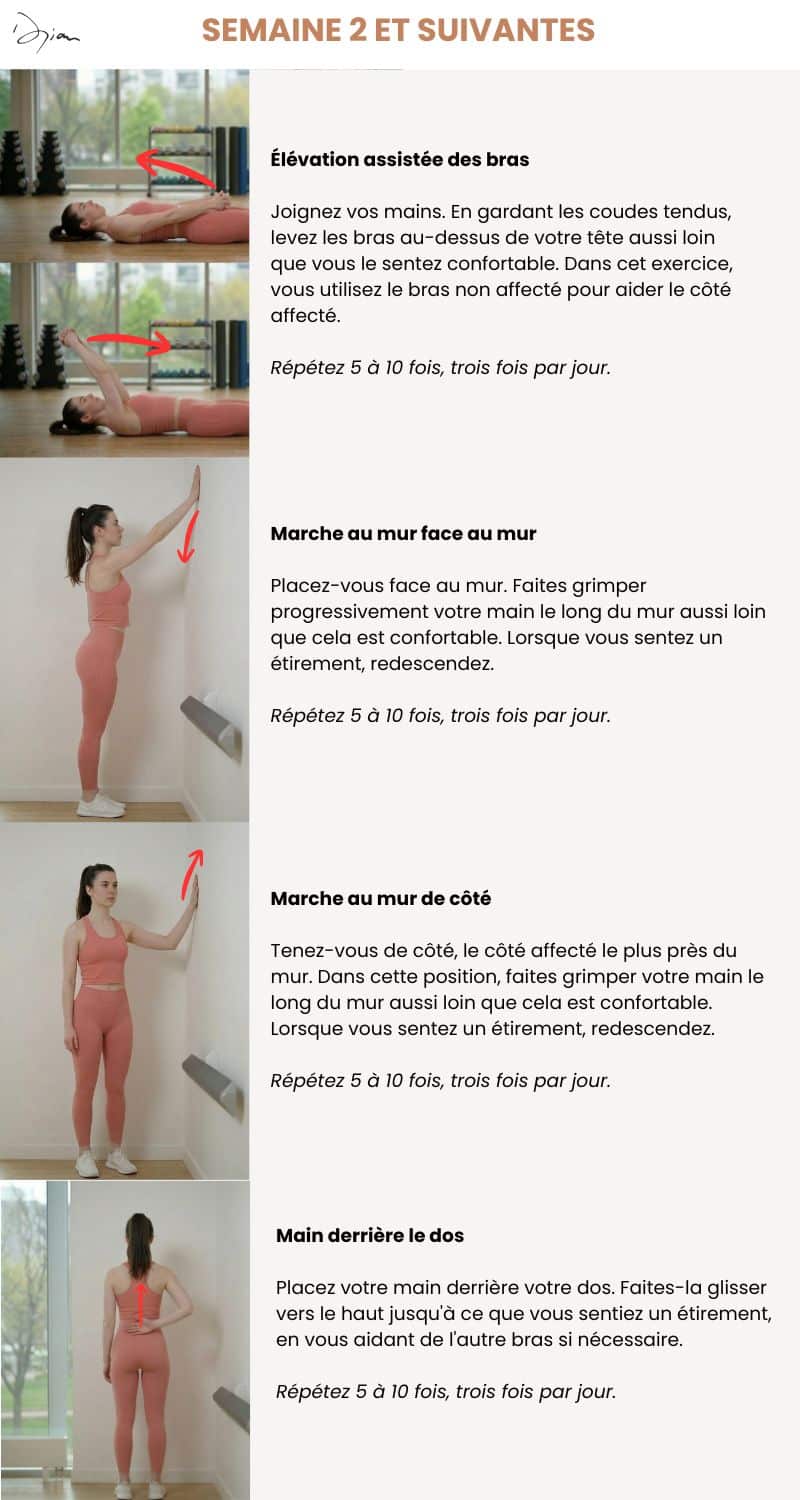
After six weeks, activities such as gentle yoga, Pilates or swimming (after approval by the surgeon) can be considered. These sports help to strengthen the body without exerting excessive pressure on the chest.


Can you walk after breast augmentation?


Walking remains an excellent way of staying active throughout the recovery process. However, you should avoid fast climbs or demanding hikes.


Activities to avoid despite the recovery


Contact sports, CrossFit and running should be avoided until Doctor Jérémy Djian has given the green light.


AFTER 3 MONTHS: FULL RESUMPTION OF SPORTING ACTIVITIES


Conditions for resuming high-impact sports


Once the 3-month period has elapsed, you can resume high-impact sports such as running or combat sports, provided you have good physical tolerance and medical support. Regular post-operative follow-up remains essential. Before resuming strenuous activities, make sure your surgeon has validated the healing and stability of the implants.


SPORTS TO PREFER OR AVOID AFTER BREAST AUGMENTATION


Sports to avoid after mammography


RECOMMENDED SPORTS FOR A SMOOTH RECOVERY


Gentle yoga, walking, swimming (under medical supervision)

These activities allow you to work on your flexibility and physical condition, while respecting your body. However, swimming should only be undertaken after a doctor's approval, to avoid any risk of infection.


HIGH-IMPACT SPORTS: THE NEED FOR CAUTION


CrossFit, running, contact sports

These sports, although very popular, should be taken up with great caution. They exert a great deal of pressure on the torso, which can adversely affect implant stability.


TARGET EXERCISES TO STRENGTHEN THE BODY WITHOUT RISK


  • Sheathing exercises : an excellent option for strengthening the core without directly stressing the pectoral muscles. Variations such as the static plank can be introduced gradually.
  • Stretching without straining the chest: should be adapted so as not to engage the chest muscles. Encourage leg and back stretching for a smooth recovery.


Download the infographic which lists all the sports recommended, avoided or banned after breast augmentation.


IN CONCLUSION


Returning to sport after breast augmentation is a process that requires patience and care. Following medical recommendations and respecting the recovery stages will enable you to return to your favorite activities while preserving the results of your surgery.


AFTER BREAST AUGMENTATION: DISCOVER ALL ARTICLES


Your Questions

FREQUENTLY ASKED QUESTIONS ABOUT RETURNING TO SPORT AFTER BREAST AUGMENTATION

CAN YOU RESUME CYCLING AFTER BREAST AUGMENTATION?

more less

Cycling can be resumed approximately 4 to 6 weeks after the operation, provided you avoid heavy shocks and wear a suitable support bra. The more stable exercise bike is recommended before resuming outdoor cycling, where vibrations and upper-body movements are more pronounced.

ARE WATER EXERCISES (AQUAGYM, AQUABIKE) LESS RISKY FOR A GRADUAL RECOVERY?

more less

Yes, exercise in water is generally better tolerated, as it reduces impact and supports the body. However, it is imperative to wait until the wound has healed completely, i.e. 4 to 6 weeks, before resuming aquagym or aquabike. What's more, early immersion in water can increase the risk of infection. Ask Dr Djian for advice.

WHEN IS IT SAFE TO CARRY A HEAVY BACKPACK OR BABY AFTER BREAST AUGMENTATION?

more less

Carrying heavy loads, including a backpack or baby, is not recommended for the first 6 weeks to avoid excessive pressure on pectoral muscles and scars. After that, it's advisable to resume gradually and listen to your body to avoid pain and tension.

ARE THERE ANY ADDITIONAL RESTRICTIONS FOR PATIENTS WHO HAVE UNDERGONE BREAST AUGMENTATION COMBINED WITH A FACELIFT?

more less

Yes, a breast lift involves more extensive healing and additional tension on the skin. Resuming physical activity must therefore be even more gradual. It is often advisable to wait 6 to 8 weeks before resuming sport, paying particular attention to exercises that put strain on the breasts.

WHAT ARE THE RISKS FOR WOMEN INVOLVED IN SPORTS REQUIRING REPETITIVE UPPER-BODY MOVEMENTS (E.G. TENNIS, ROWING, GOLF)?

more less

Sports involving repetitive movements of the arms and shoulders directly stress the pectoral muscles, which can :

  • Increased risk of implant displacement.
  • Prolong post-operative inflammation and pain.
  • Alter healing, particularly if the incision is submammary.
    Resumption after 8 to 12 weeks is often recommended, with a gentle progression and the wearing of a suitable bra.

WHAT ARE THE SIGNS OF RETURNING TO SPORT TOO SOON?

more less

Signs of too-rapid recovery include:

  • Unusual or persistent pain.
  • Sensation of excessive tension or burning in scars.
  • Appearance of new swelling or bruising.
  • Redness or discharge from scars, which may indicate inflammation or infection.

If such symptoms occur, consult your surgeon immediately.

WHAT ARE THE SYMPTOMS OF IMPLANT DISPLACEMENT FOLLOWING PHYSICAL EFFORT?

more less

A breast implant may shift as a result of excessive strain on the pectoral muscles. Signs to watch out for are :

  • Sudden breast asymmetry.
  • A change in the shape or position of a breast.
  • A sensation of excessive implant mobility.
  • Localized discomfort or pain that does not improve with rest.

If in doubt, consult your surgeon.

DO PATIENTS WHO EXERCISE REGULARLY RECOVER MORE QUICKLY?

more less

Yes, optimal overall physical condition promotes faster recovery thanks to improved blood circulation, muscle tone and tissue elasticity. However, this does not exempt you from respecting medical recommendations concerning the resumption of sporting activities after surgery.

What did you think of this article?

Rate it !

Average Rating 5 / 5. Number of Votes 2

No votes yet, be the first to rate this article.

Dr. Jérémy Djian
Dr. Jérémy Djian

Dr. Jérémy Djian is a plastic surgeon based at 5 Square Thiers, near the Victor Hugo roundabout in Paris's 16th arrondissement.
He trained in Paris and remains affiliated with the hospital in the prestigious department headed by Prof. Laurent Lantieri.

Going further
THESE ITEMS CAN
IN THESE SECTIONS
Your Questions
ASK YOUR QUESTIONS
TO DR. DJIAN