fb Post-partum belly: when to operate?
Dr Jérémy Djian, 5 Square Thiers , 75016
menu close
Appointment appointment

Surgery

Post-partum belly: when does surgery become coherent?

published on 13.01.2026 by Dr Djian
<noscript><img width=
Summary
  • IS IT NORMAL FOR MY POSTPARTUM BELLY TO RELAX AFTER PREGNANCY?
  • HOW LONG DOES POST PARTUM TUMMY TUCK RECOVERY TAKE? THE REAL DELAYS
  • WHAT CAN IMPROVE A POST-PARTUM TUMMY WITHOUT SURGERY (AND WHAT CAN'T)
  • IS SURGERY INEVITABLE FOR A POST-PARTUM TUMMY TUCK?
In short
  • The postpartum belly changes over several months, not in a few days after delivery.
  • A natural recovery is possible as long as the skin and muscles evolve.
  • Sport, rehabilitation and skin care improve tone, but not long-lasting excess skin.
  • After 12 to 18 months without progress, a professional consultation is needed to evaluate a surgical solution.

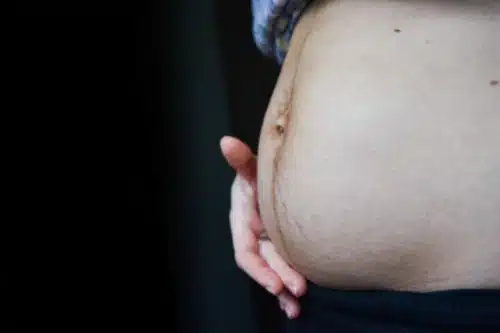
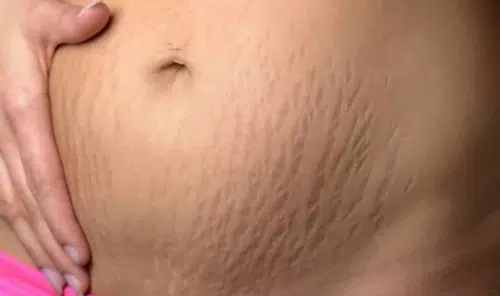
Since giving birth, your post-partum belly remained swollen, soft, with occasional cellulite, and stretch marks and a sagging skin in the abdomen. You're looking to regain a flat stomach without knowing whether your body still needs time to recuperate or whether a excess skin settled in despite your best efforts, healthy diet and regular exercise.

In this article, we take a look at the role of re-education, muscle strengthening and, if necessary, of the l'abdominoplasty.

The stakes are not only aesthetic, but also medical Distinguishing between what is normal physiological recovery and what requires a genuine surgical management.


IS IT NORMAL FOR MY POSTPARTUM BELLY TO RELAX AFTER PREGNANCY?


NORMAL POST-PARTUM TUMMY CHANGES


Many women are surprised by the appearance of their belly after pregnancy. In nine months, the abdomen has stretched an average of one-and-a-half to two times its initial size to accompany the baby's growth. So it's only logical that it should remain swollen and flabby, sometimes comparable to a late-second-trimester silhouette just after delivery.

This aspect is linked to a uterus still large, to stretched abdominal muscles and a skin that has undergone prolonged stretching. In the first few weeks, this post-partum belly is neither “damaged” nor definitive: it corresponds to a normal physiological condition, still in the reorganization phase.

The body needs time to recover. It doesn't return to normal overnight, and there's nothing abnormal about this slowness.


WHICH IS COMMON AFTER PREGNANCY BUT DOES NOT ALWAYS DISAPPEAR


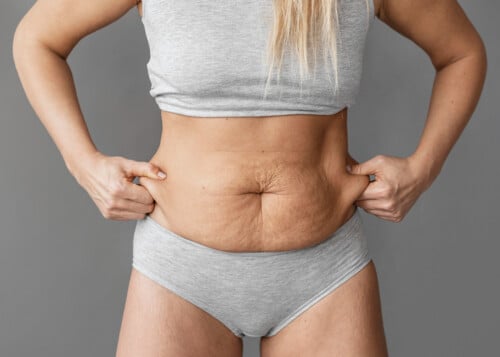
As the months go by, some of the changes regress, but some women still have a hanging belly, excess skin or a "abdominal apron. This is all the more frequent after a twin or multiple pregnancies, In this case, the problem is no longer just postpartum swelling, but also postpartum swelling. Here, the problem is no longer just post-partum swelling, but a real skin sagging with excess skin (and sometimes grease).

This type of post-pregnancy belly is not not necessarily pathological, but it is not always spontaneously reversible. Despite a balanced diet, weight loss and regular exercise, flabby skin may remain, especially if the’skin elasticity has been exceeded. Understanding this difference is essential. So what can we do to correct it?


HOW LONG DOES POSTPARTUM TUMMY TUCK RECOVERY TAKE? THE REAL DELAYS


WHAT HAPPENS IN THE FIRST FEW WEEKS AFTER DELIVERY


In the first few weeks, the belly after childbirth changes quickly. Uterine involution decreases The uterus, which is very large at the end of pregnancy, gradually returns to its normal size once the placenta has been expelled. The uterus, which is very large at the end of pregnancy, gradually returns to its normal size once the placenta has been expelled. A visible reduction in swollen belly, above all between the first and sixth week post-partum. This is the most dynamic phase.

During this period, the body needs time, rest, a healthy diet and a minimum of physical activity. gentle mobility to promote blood circulation and drainage.

The postpartum belly is often larger, however, and the distended abdominal muscles and skin lacks firmness. It's still too early to judge the final result or decide on surgery.

We're in the “wait and see” phase, not the “operate” phase.


WHICH CAN EVOLVE UP TO 12 MONTHS


Recovery doesn't stop at six weeks. The body can continue to reduce abdominal fat, firm skin and reorganize abdominal muscles for up to 12 months, sometimes a little longer. Gradual weight loss, appropriate abdominal re-education and a return to more sustained physical activity play a key role.

Over the months, the abdominal muscles can be strengthened, especially if the perineal and abdominal rehabilitation are well managed. The post-partum belly can become flatter, The waistline is reshaped and the skin sometimes becomes more toned.

However, if the’skin elasticity is exceeded or if a abdominal diastasis is present, certain aspects will remain limited, no matter how hard you work. Hence the importance of knowing the natural limits of this recovery phase.


WHEN THE EVOLUTION OF THE POST-PARTUM BELLY STOPS


It is generally considered that after 12 to 18 months post-delivery, especially if breast-feeding has ended and weight has stabilized, the’spontaneous tummy development after pregnancy becomes minimal. If, despite a healthy lifestyle, a balanced diet and regular exercise, the tummy remains the same, we can talk about stagnation.

The signs of stagnation are quite clear In this case, the abdominal apron no longer diminishes, skin sagging remains unchanged over several months, and the waistline no longer changes despite stable weight. At this point, Waiting no longer often brings significant benefits. This is the time when a discussion with a healthcare professional, or even a plastic surgeon, This makes it all the more relevant to consider different solutions and clarify what medicine or surgery can really offer.


WHAT CAN IMPROVE A POST-PARTUM TUMMY WITHOUT SURGERY (AND WHAT CAN'T)


PERINEAL AND ABDOMINAL REHABILITATION: THE REAL ROLE


The perineal reeducation is the foundation of post-pregnancy recovery. It protects the perineum, prevents bladder weakness and prepares the body for resuming sport.

The abdominal rehabilitation, When done properly, it helps to gently strengthen the deep abdominal muscles, to be improved posture and support the belly. It's an essential element for regaining tone.

On the other hand, even an excellent rehabilitation cannot remove excess skin or completely correct major skin laxity or a very pronounced abdominal apron. It acts on muscles, not on damaged skin or excess skin tissue and fat.

Understanding this real role helps you avoid feeling guilty: if, despite a serious rehabilitation protocol, your hanging belly no longer moves, it's not because you've “missed” something.


EXERCISE AND RETURNING TO SPORT AFTER PREGNANCY


Resuming sport is a gradual process.

First, some gentle activities such as walking, the postnatal yoga, the Adapted Pilates, which respect the perineum and weakened abdominal muscles. These exercises promote blood circulation, improve posture and help loss of weight. They are invaluable in helping you regain your post-pregnancy tummy within realistic limits.

Later, after rehabilitation and with the agreement of a healthcare professional, we can introduce a more intense muscle strengthening. The aim is to help tone the abdominal belt, refine the waistline and reclaim the body.

But even regular exercise, well-conducted, will not make a large abdominal apron disappear or skin that no longer retracts due to severe distension.

Sport improves muscular structure and overall silhouette, not the elasticity of already outdated skin.


DIET, WEIGHT LOSS AND SKIN QUALITY


Feeding plays a role in weight loss and body composition. on the amount of fat in the lower abdomen. A healthy, balanced diet combined with regular exercise helps reduce abdominal fat and give you a flatter stomach. It also supports collagen production, essential for skin elasticity. It's an important lever, but not a magic one.

Even after losing all or more of their pregnancy weight, some women still retain Loose, damaged skin and stretch marks.Weight loss can also make skin folds more visible. Creams, massages and supplements can improve skin comfort, microcirculation and suppleness, but they do not eliminate advanced skin slackening.

When the slackening is major, only a surgical operation can actually tighten the abdomen.


IS SURGERY INEVITABLE FOR A POST-PARTUM TUMMY TUCK?


WHEN SURGERY IS NOT INDICATED


When there is above all a moderate excess abdominal fat, If you have a slight loss of firmness and no real excess skin, non-surgical treatment is usually all you need. A well-balanced diet, regular exercise, progressive muscle strengthening and local care can improve the figure.

Surgery is not indicated either until the body has completed its functional rehabilitation process. In the first few months, or until weight gain has stabilized, it would be premature to intervene.

You also need take into account future pregnancy plans It is generally preferable to’wait until after pregnancy before a tummy tuck. An honest healthcare professional will clearly explain when surgery is too much and when it's best to continue with non-surgical work.


WHEN SURGERY BECOMES A COHERENT OPTION


Surgery becomes a consistent option when the postpartum belly presents significant excess skin, abdominal apron, major skin laxity or significant abdominal muscle diastasis, and all of these no further improvement despite several months of well-managed treatment.

This is the typical case in which an abdominoplasty, sometimes combined with an abdominoplasty, is required. liposuction, The result is a flatter stomach and improved abdominal muscles.

Mini-abdominoplasty can be proposed when excess skin is limited to the lower part of the abdomen, below the navel. It can be used to correct a moderately drooping tummy without excessive scarring. They must be discussed calmly, with an understanding of the benefits, risks, post-operative pain and convalescence. A specialist consultation is essential to define a suitable protocol.


COSMETIC SURGERY OR MEDICAL TREATMENT: HOW TO DECIDE?


In some cases, abdominoplasty is considered to be a "surgical" procedure. purely cosmetic surgery The main goal is to restore a flat stomach, a better figure and a normal waistline, without major functional discomfort.

In others, the skin completely covers the pubis and leads to repeated skin problems or a a real hindrance to everyday life In this case, care may be partially medical, depending on the criteria of each healthcare system.

Choosing between cosmetic surgery and medical care requires precise evaluation. It's not just about“lose its The aim is to analyze the condition of the skin, muscles, fat and overall impact.

Seek the advice of a surgeon accustomed to post-partum tummy tucks, such as Docteur Djian in Paris., This is where you can ask any questions you may have, and find out about all the different treatment options available. This will enable you to make an informed decision on the most appropriate solution for your needs. reclaim your body.


Your Questions

FREQUENTLY ASKED QUESTIONS ABOUT THE POSTPARTUM BELLY

WHAT CAUSES EXCESS SKIN AFTER PREGNANCY?

more less

Persistent distended skin after pregnancy can be explained by a progressive stretching of the abdomen over several months, The skin cannot instantly compensate for this after childbirth. Skin retraction capacity varies according to several factors:

  • Age Younger skin contains more collagen and elastin, making the post-operative phase easier.
  • Genetics Some women naturally have more elastic skin than others.
  • Hydration Well-moisturized skin recovers its elasticity better.
  • Weight gain during pregnancy A moderate grip favours better retraction than large variations.

Stretch marks and diastasis They weaken skin tissue and reduce muscular support, leaving the skin hanging.

MY BELLY IS STILL SWOLLEN AT 3 MONTHS AFTER GIVING BIRTH. IS THIS NORMAL?

more less

Yes, a post-partum belly can remain swollen for several months. The uterus completes its involution, the abdominal girdle reorganizes and weight loss is not always complete by 12 weeks. As long as the evolution is progressive and the abdominal apron is not very marked, we often remain within the normal range. This is still the time to accompany the body, not to talk about surgery right away.

IS IT NECESSARY TO WAIT UNTIL ALL PREGNANCIES ARE OVER BEFORE UNDERGOING ABDOMINOPLASTY?

more less

As a general rule, yes. A new pregnancy after abdominoplasty stretches the skin of the abdomen and the abdominal wall again.. The aesthetic result may be altered, with the risk of having to re-intervene.. That's why surgeons often recommend scheduling this procedure when the maternity project has been completed.

If the discomfort is very serious, a personalized discussion with a plastic surgeon will help you weigh up the pros and cons in your specific case.

IS POST-PARTUM TUMMY TUCK SURGERY VERY PAINFUL?

more less

Pain after a abdominal reconstructive surgery is real, but generally well controlled by appropriate analgesics. The first few days are the most sensitive, then the discomfort diminishes over the weeks. A feeling of tension in the abdominal girdle is common, especially in cases of diastasis repair. Rest, medical follow-up and compliance with instructions for resuming activity are essential to ensure a smooth recovery.

WHEN SHOULD I CONSULT A SURGEON ABOUT MY TUMMY AFTER PREGNANCY?

more less

A consultation may be considered if, 9 to 12 months after delivery, If your post-partum tummy doesn't improve despite rehabilitation, sport and a balanced diet. The abdominal apron may then become long-lasting, sometimes associated with back pain. It's best to have a stabilized weightand to have no longer breastfeeding.

WHAT'S THE DIFFERENCE BETWEEN MINI-ABDOMINOPLASTY AND FULL ABDOMINOPLASTY?

more less

The mini-abdominoplasty corrects a excess skin below the navel, without major repositioning of the abdominal muscles.

Complete abdominoplasty treats a more extensive relaxation, with re-tensioning the abdominal muscles.

The choice depends on the degree of relaxation and the desired result.

IS MOMMY MAKEOVER SUITABLE FOR ALL WOMEN AFTER CHILDBIRTH?

more less

No. The mommy makeover is a comprehensive surgical management approach that combines treatment of the post-partum tummy with one or more breast procedures, such as a breast lift sometimes with prostheses, depending on the sequelae observed. It is intended for women whose bodies have completed their postnatal recovery, generally after one year.

It is not indicated for young mothers who are still experiencing intense fatigue, who are breastfeeding or whose weight is unstable.. Every situation deserves a personalized consultation and follow-up.

HOW LONG DOES RECOVERY LAST AFTER ABDOMINOPLASTY?

more less

Recovery from abdominoplasty is spread over several phases. The first few weeks require rest and gentle movements, followed by a gradual return to activity. Full functional recovery generally takes 6 to 12 weeks, In some cases, this involves a rehabilitation program and support to help strengthen the abdominal muscles.

SHOULD YOU ACCEPT POST-PARTUM TUMMY CHANGES OR TRY TO CORRECT THEM?

more less

The two are not mutually exclusive. Accepting the changes associated with the post-partum period does not preclude correcting a lasting excess. The challenge is to distinguish between what is a normal upheaval and what persists despite time and care. An informed decision requires patience, re-appropriation and professional consultation.

What did you think of this article?

Rate it !

Average Rating 5 / 5. Number of Votes 1

No votes yet, be the first to rate this article.

Dr. Jérémy Djian
Dr. Jérémy Djian

Dr Jérémy Djian is a plastic surgeon based at 5 square Thiers, near the Victor Hugo roundabout, in the 16th arrondissement of Paris.

He trained in Paris and remains attached to the hospital in the prestigious department of Pr Laurent Lantieri.


Going further
THESE ITEMS CAN
IN THESE SECTIONS
Your Questions
ASK YOUR QUESTIONS
TO DR. DJIAN