


TUBEROUS BREAST
Les seins tubéreux sont une malformation mammaire congénitale, visible dès la puberté, qui affecte la croissance de la poitrine. Le Dr Djian, spécialiste de la breast surgery, corrige cette déformation, qui se caractérise par une forme en « tube », une asymétrie marquée et différents degrés de sévérité.
- Malformation Congenital abnormality of the breast base, visible as early as puberty.
- Shaped Breasts tubular, with often prominent areoles.
- 3 stages severity (grades 1 through 3), which determine the technique used.
- Edited by lipofilling, prostheses and/or areola reshaping (round block).
- In most cases, a single procedure is sufficient, under general anaesthetic.
- Reconstructive surgery, frequently coverage in part by Social Security.
HOW TO RECOGNIZE TUBULAR BREASTS?

Tuberous breasts can be recognized by several visible signs, which appear gradually during puberty and do not fade over time:
- a chest of elongated shape, tubular rather than rounded; ;
- a wide areola, curved, pointing downward or forward; ;
- a significant space between the breasts, with a narrow implant base; ;
- a groove beneath the breast located higher than usual; ;
- a difference in shape or volume between the two breasts.
These signs may be present in part or in full, with varying intensity depending on the stage of the malformation. Only a clinical examination can confirm the diagnosis and accurately assess its severity.
There is a classification system established by Grolleau JL et al. (1), who define the various Stages of tuberous breasts.
| Description | Most Common Technique | |
|---|---|---|
| Stage 1 | Defect limited to the infero-internal quadrant only | Round block or lipofilling alone; implants are rarely necessary |
| Stage 2 | The two lower quadrants are deficient | Lipofilling combined with a low-projection implant |
| Stage 3 | All 4 quadrants are affected; the base is significantly narrowed | Glandular plasty + implant, sometimes combined with a facelift (inverted T-shaped scar) |
Patients may exhibit one or more of these characteristics in one or both breasts, and no genetic or environmental cause has been definitively confirmed: in the vast majority of cases, no specific cause can be identified.
This chest deformity, when severe, can be the cause of a a real source of discomfort for the patient, or even a full-fledged complex which affects self-esteem on a daily basis. Nevertheless, in the vast majority of cases, surgical treatment can achieve a satisfactory and long-lasting aesthetic result, and regain self-confidence.
Do you recognize several of these signs?
A clinical examination lasting just a few minutes is sufficient to confirm the diagnosis.
WHAT CAUSES TUBERULOUS BREASTS?
The exact cause of a tubular breast remains uncertain, but the cause is thought to stem from breast development before birth, during fetal development (embryological).
The malformation is thought to involve a abnormality of the superficial fascia of the breast, a sort of two-layered fibrous sheath that normally surrounds the glandular tissue.
A thickening of collagen fibers If this membrane were to remain intact, it would create a fibrous ring that is underdeveloped and rigid—like a tight belt—which would prevent the breast from growing normally during puberty. In short, a kind of internal restraint prevents the breast from developing normally.
Since breast tissue cannot spread out, it ends up pushed forward through the areola, forming a small protrusion. This constraint limits the breast's natural expansion, which explains the reduced volume and the conical shape characteristics of this malformation.
TUBEROUS BREASTS, BREAST PTOSIS, OR ASYMMETRY: HOW CAN YOU TELL THE DIFFERENCE?
- Tuberous Breasts are the result of a growth abnormality present from puberty onward: the base of the breast is narrow, the inframammary fold is too high, and the areola is often prominent.
- The breast ptosis, on the other hand, appears later—after pregnancy, breastfeeding, or weight loss—in breasts that were initially normal.
- A breast asymmetry An isolated case may exist without any of the characteristic abnormalities of the tuberous breast.
Only a clinical examination can confirm the diagnosis.
SURGICAL TECHNIQUES FOR CORRECTING TUBULAR BREASTS
Tuberous breast surgery requires :
- Restaurer la breast base, c’est-à-dire l’implantation mammaire sur la poitrine ;
- Correct the areola size et sa protrusion ;
- Create or redefine submammary fold ;
- Redonner du volume aux seins.
Ce dernier point rapproche la correction des seins tubéreux d’une breast augmentation in Paris, à la différence près que l’objectif n’est pas seulement de gagner du volume, mais aussi de remodeler la forme du sein.
To achieve this, here are the various treatments available to restore breast anatomy:
Breast prosthesis
Breast Augmentation with Implants is an effective solution for restoring the breast base of a tuberous breast. The plastic surgeon can precisely measure the diameter of the breast base he wishes to project on the thorax.
The breast implants The most commonly used ones are in silicone gel.
Inserting them requires making an incision under the breast or around the areola. The location of the scar is chosen based on whether a combined procedure (such as areola reduction) is necessary.
The combined procedure may involve the placement of an implant prosthesis and a breast round-block, for example.
Breast lipofilling
The breast lipofilling in Paris involves harvesting some of the patient's fat and then reinjecting it into the breast after processing. The fat is removed from stomach, hips, thighs and knees.
The advantage of this procedure is that only the patient's own tissue (fat) is used. In fact risks of rejection are zero.
The breast lipofilling is an interesting option if the patient has the amount of fat necessary. It is suitable for breast reconstruction cases ranging from mild to moderate in severity.
It is possible to carry out several breast lipofilling.
It is also common to combine breast implants with lipofilling as part of a Composite breast augmentation in Paris. This allows for a combination of volume and natural shape, both visually and to the touch.
Mammary round-block
Mammary round-block is a technique that allows you to reduce the size of the areola and its protrusion through a circumferential incision around the areola.
Located exactly at the junction between the more pigmented areolar skin and the surrounding skin, The periareolar scar fades naturally within this color boundary and becomes barely visible as it heals.
This technique can be easily combined with implant placement. In this case, there will be only one discreet scar around the nipple.
Breast symmetrization
Sometimes a breast symmetrization is necessary. It allows the areola to be raised or reduced in size.
To symmetrize and lift a breast more noticeably, a technique called breast lift (mastopexy) with a T-shaped scar may be necessary when there is a significant amount of excess skin.
All of these procedures require a general anesthesia.
The initial consultation allows us to make a diagnosis, provide a personalized estimate, and request for coverage.
The surgery is scheduled during the second consultation.
The surgeon takes preoperative photos, which will be used for follow-up and as a point of comparison with the postoperative photos.
Do you think you have tuberous breasts?
Schedule an appointment to assess your fitness level and determine the most appropriate technique.
POSTOPERATIVE CARE AND RECOVERY
The postoperative pain are generally mild and well controlled with simple pain relievers.
A swelling (edema) and bruises may last for a few weeks.
A support bra is worn day and night for 4 to 6 weeks.
A 10- to 15-day sick leave is generally necessary, and it is advisable to wait 6 to 8 weeks before resuming physical activity.
The final results become apparent after several months, and complete healing may take up to a year.
WHAT ARE THE RISKS OF SURGERY FOR TUBEROUS BREASTS?
Like any procedure performed under general anesthesia, surgery for tuberous breasts carries rare but important risks:
- hematoma,
- infection,
- delayed healing,
- apparition d’un « double sillon » (une ligne visible sous le sein en plus du pli naturel) : un risque plus spécifique aux seins tubéreux en raison du manque de tissu au niveau du pôle inférieur du sein.
These risks are clearly identified and actively prevented at every stage of care. The preoperative consultation remains the key opportunity to discuss them and ask any questions you may have.
Dr. Djian will always explain these risks to you in detail during your consultation, before any decision is made.
It’s also an opportunity to answer all your questions about the procedure.
IS IT POSSIBLE TO GET PREGNANT AND BREASTFEED AFTER THE PROCEDURE?
Breastfeeding, on the other hand, depends mainly on the amount of glandular tissue functional prior to surgery. Many patients are able to breastfeed normally.
However, this outcome cannot be guaranteed in all cases: the malformation itself may be accompanied by a glandular deficiency, regardless of the surgical procedure.
PRICING AND COVERAGE FOR TUBEROSITAS BREAST SURGERY
The price depends on the number of procedures required and the techniques involved (implants, lipofilling, round block).
Coverage under the Health Insurance program is generally considered when one of the following criteria is met:
- underdevelopment of the lower part of the breast,
- distinctive tubular shape,
- or a volume difference of more than one bra cup size between the two breasts.
When the The malformation has been confirmed Upon review by the Health Insurance medical advisor, following a request for prior authorization submitted by the surgeon, the costs of the clinic, the operating room, and the prosthetics are covered.
The out-of-pocket cost mainly consists of surgeon's fees and the anaesthetist, which may be partially reimbursed by your health insurance plan.
| Breast Augmentation with Dual Plan Implants | Cosmetic surgery incl. VAT starting at 6,000 euros |
| Breast Fat Grafting | Cosmetic surgery incl. VAT starting at 6,500 euros |
| Composite breast augmentation | Cosmetic surgery incl. VAT from 7,500 euros |
| Breast Lift (Without Implants) | Cosmetic surgery incl. VAT starting at 6,500 euros |
| Breast Lift (with Implants) | Cosmetic surgery incl. VAT starting at 8,000 euros |
*Plastic surgery prices are given as an indication and are non-contractual.
Initial consultation with Dr. Djian: 100 €.
Appointment in Paris's 16th arrondissement
TUBEROUS BREASTS: TAKE THE NEXT STEP
Living with tuberous breasts is not inevitable. Whether through lipofilling alone, breast implant surgery, or a combination of techniques, a lasting correction tailored to your body type is possible, regardless of the stage of the malformation.
The first step is always the same: a consultation with a specialist surgeon, to confirm the diagnosis, accurately assess your situation, and work together to develop the treatment plan best suited to your breasts.
Schedule an appointment with Dr. Djian to discuss your situation.
Source:
(1) Classification established by Grolleau JL et al., *Plastic and Reconstructive Surgery*, 1999.
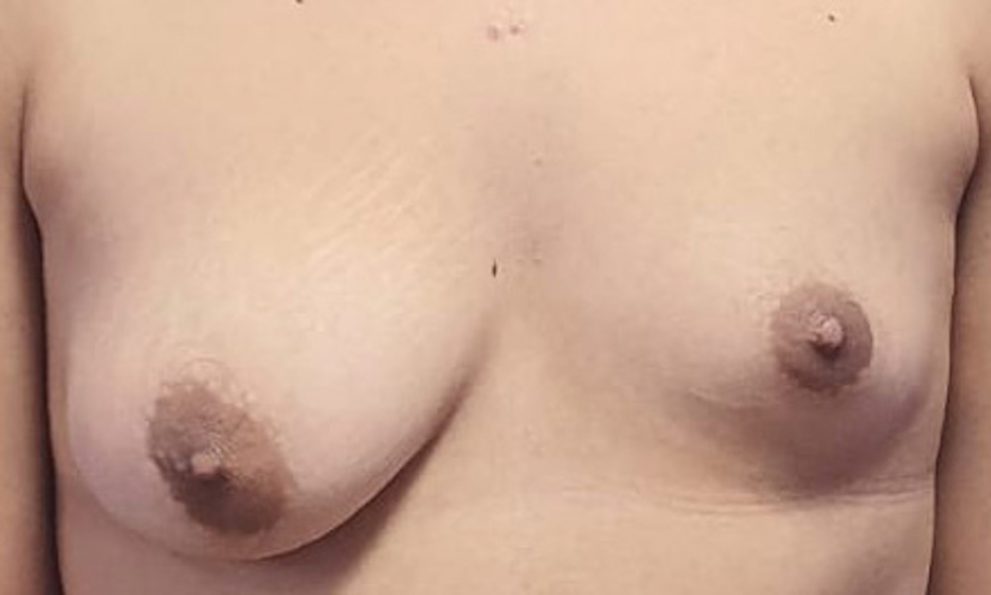
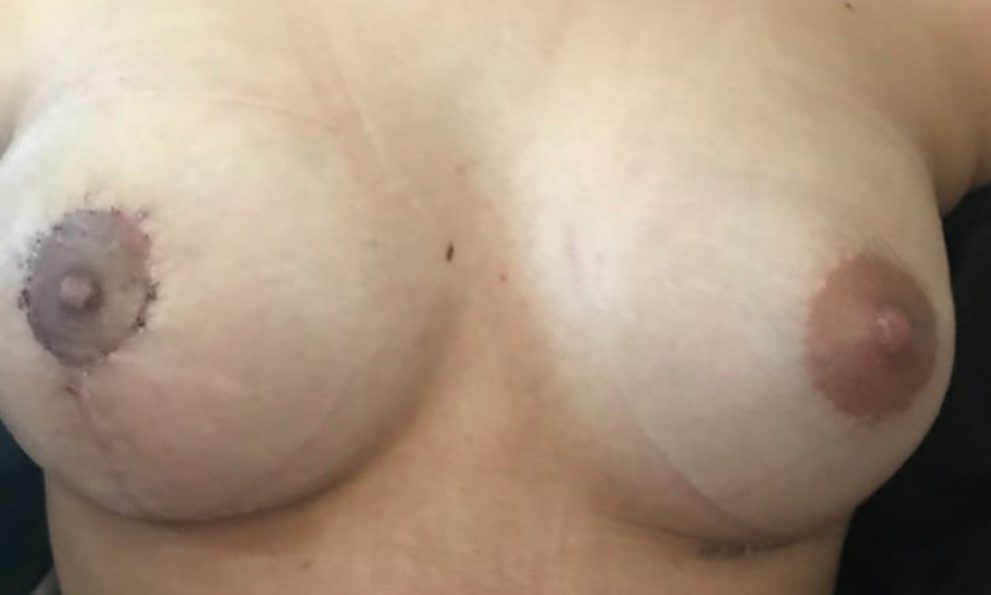

Correction d'une malformation mammaire sévère (avec sein tubéreux)
Your Questions
FREQUENTLY ASKED QUESTIONS ABOUT TUBEROUS BREASTS
Can a single operation correct tuberous breasts?


Yes, it's possible. The number of operations depends on the type of malformation.
In complex cases, multiple surgical procedures may be necessary to restore symmetry. This is particularly true when different procedures are planned: lipofilling, implants, round-block, symmetry restoration through breast lift, breast plastic surgery.
How do you choose the right surgeon for tuberous breast surgery?
Choose a surgeon certified by the’Board of Plastic Surgeons, which has been specifically tested on tuberous breasts, and ask to see cases similar to yours during your consultation.
A consultation allows us to evaluate both the technical expertise and the clarity of the explanations provided.
Is there a treatment for tuberous breasts that doesn't involve surgery?
No, there is no non-surgical solution to permanently correct the structure of tuberous breasts, because the malformation affects the breast base and the glandular tissue themselves.
No cream, exercise, or bra can change this anatomy. Only surgery can produce a stable and harmonious result. A clinical diagnosis remains the only way to determine which options are truly appropriate for the stage of your malformation.
Is it always necessary to use implants, or can lipofilling alone be sufficient?
No, prosthetics are not always implanted.
For mild to moderate malformations and when the patient has enough fat to harvest, the lipofilling A single session may be enough to reshape the breasts, though sometimes it takes several sessions.
For more severe stages or when a significant increase in volume is desired, a prosthesis is often still necessary.
A clinical examination will determine which technique is best suited to your case.
How long does it take to receive a response from the health insurance provider regarding coverage?
After the surgeon submits the request for prior authorization, the health insurance provider generally has a period of approximately 15 days to respond. It is recommended that you plan for this well in advance of the proposed service date to avoid any last-minute financial uncertainty.
What is the double groove?
In tuberous breasts, the inframammary fold is usually located too high or is poorly defined.
It is therefore necessary to create or rebuild a new track slightly further down.
When the shape memory of the old groove is too large, what is known as a " double furrow" when you guess the position of the old furrow.
This can occur with the fitting of prostheses.
This double crease may be minor and acceptable. However, if it is a cosmetic concern, there are surgical solutions available to correct it.
How long does it take to see the final results?
The final shape of the breasts is not permanently established until’after a year approximately, until the tissues have completely healed. Swelling and changes in appearance are normal during the first few months following the procedure.
The scars, however, continue to evolve for even longer. Patience is an integral part of the healing process, and a regular monitoring allows you to verify that everything is proceeding normally.
When can I resume exercising after surgery?
A comeback very light (walking, light cycling) is generally possible after about one month, along with a supportive bra.
The high-impact sports, such as running or team sports, as well as weight training, are generally included after 6 to 8 weeks.
These timeframes are approximate and must be confirmed by your surgeon based on the technique used in your case. Returning to normal activities too soon carries a risk of complications or may compromise the aesthetic outcome.
What is the difference between tuberous breasts and breast hypertrophy or hypotrophy?
- Tuberous Breasts are a malformation of the breast base, characterized by a tubular shape and an often prominent areola, regardless of breast size.
- Breast hypertrophy refers to an excess of volume, which is generally a source of back and neck pain, without any specific structural abnormality.
- Hypotrophy, on the other hand, simply refers to small breasts on a normally developed breast structure.
A tuberous breast can also be associated with hypotrophy, which sometimes explains the confusion between the two concepts.
Can only one breast be tuberous, or is it always both?
Tuberous breasts can affect one breast or both at the same time, with varying degrees of severity from one side to the other. When only one breast is affected, the malformation most often results in a breast asymmetry marked.
In this case, treatment often involves correcting the tuberous breast and improving the symmetry of the opposite breast.
How long will I be on sick leave after the surgery?
A sick leave of’about 10 to 15 days is generally to be expected after surgery for tuberous breasts. The duration of this recovery period may vary depending on the technique used (lipofilling alone, implants, or a combination of both) and the nature of your job, particularly if it involves physical labor.
Dr. Djian will adjust this timeframe to your personal situation during your postoperative follow-up. Returning to work too soon can delay your recovery.

Dr Jérémy Djian is a plastic surgeon based at 5 square Thiers, near the Victor Hugo roundabout, in the 16th arrondissement of Paris.
He trained in Paris and worked on the team of Professor Laurent Lantieri, a leading authority on face transplant surgery.
YOU MAY BE INTERESTED
IN THESE SECTIONS



TO DR. DJIAN
Hello,
I'm writing to you because I'd like to have breast lipofilling, but I've always had this feeling that my breasts are out of line. On your site I read that it could be tuberous breasts. Can I send you a photo so that you can confirm this for me?
Thank you,
Sincerely
Hello, ma'am,
To confirm the diagnosis of tuberous breast, I would have to examine you, or do a video examination,
Kind regards,
Dr DJIAN