



fb Breast Asymmetry: Surgical Solutions and Management
Dr Jérémy Djian, 5 Square Thiers , 75016
Surgery

Breast Asymmetry: Causes, Surgical Solutions, and Treatment

Published and scientifically verified by Dr Djian on 03/09/2026
Breast Asymmetry: Causes, Surgical Solutions, and Treatment
Summary
  • UNDERSTANDING BREAST ASYMMETRY: DEFINITION, PREVALENCE, AND IMPACTS
  • THE CAUSES AND ORIGIN OF BREAST ASYMMETRY
  • WHEN SHOULD YOU SEE A DOCTOR ABOUT BREAST ASYMMETRY?
  • SURGICAL SOLUTIONS AND TECHNIQUES FOR CORRECTING BREAST ASYMMETRY
  • COMPLICATIONS AND EXPECTED OUTCOMES AFTER SURGERY FOR ASYMMETRICAL BREASTS
  • COVERAGE OF BREAST ASYMMETRY BY SOCIAL SECURITY AND FEES
  • BREAST ASYMMETRY SURGERY: TAKE THE PLUNGE TO REGAIN A HARMONIOUS BUST
In short
  • A larger, lower, or differently shaped breast: breast asymmetry affects many women.
  • This difference, which is often both psychological and physical, can really make you feel self-conscious in your day-to-day life.
  • There are several techniques To correct volume or shape: implants, lipofilling, reduction, facelift.
  • Depending on the cause (malformation, cancer, hypertrophy), a Social Security coverage may be considered.

Do you have one breast that’s larger than the other, or one side that’s more saggy? Does this difference in size or shape really make you feel self-conscious in your day-to-day life?

Rest assured: a slight difference between the two breasts is normal and affects the vast majority of women. Perfect symmetry is virtually nonexistent.
We speak ofmarked breast asymmetry While there may be a significant difference between the two breasts, a solution should only be considered when this difference becomes noticeable and causes discomfort in daily life—particularly when choosing a bra that fits properly.

In this guide, you'll learn about the possible causes of this difference, as well as surgical techniques such as the lipofilling, the prosthesis or the reduction, as well as the possibilities for coverage by Social Security. You will also receive clear information about the rates practiced.

Let's start by finding out exactly what this common condition is and how it affects our daily lives.


UNDERSTANDING BREAST ASYMMETRY: DEFINITION, PREVALENCE, AND IMPACTS


Before considering a solution, it is important to understand what this medical term actually means.


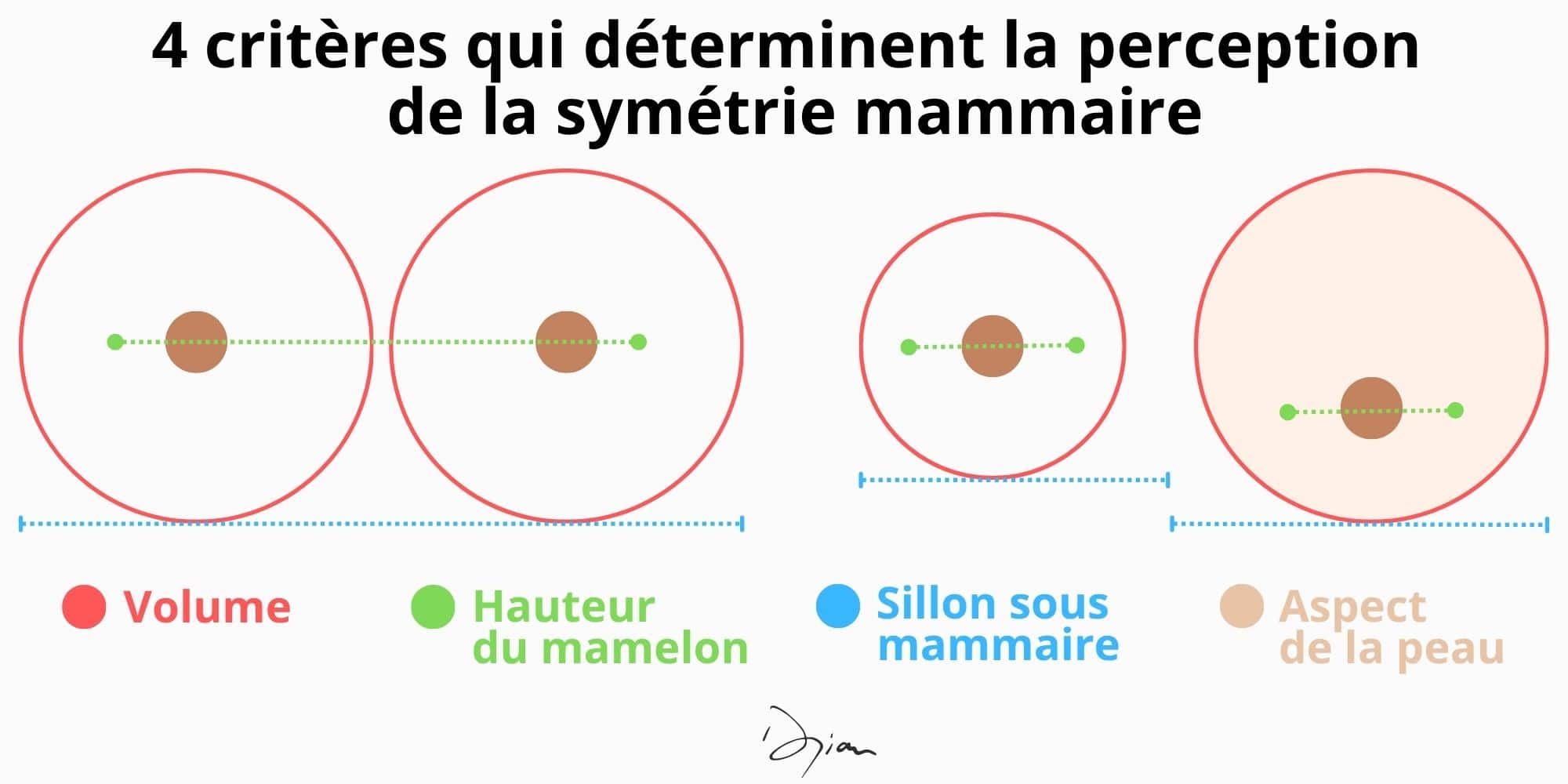
4 Criteria That Determine the Perception of Symmetry


A COMMON AND NORMAL ANATOMICAL VARIATION OF THE CHEST


Breast asymmetry refers to a a difference in size, shape, or position between the right breast and the left breast. In most cases, this variation is slight and is nothing out of the ordinary: No two breasts are exactly alike from one side to the other.

This issue becomes a concern when differences in breast size, nipple height, or areola position create a significant visible discrepancy, even when fully clothed.

The surgeon then evaluates several clinical criteria to determine whether corrective surgery is warranted. These evaluation criteria include, in particular:

  • the difference from volume between the breasts
  • the height of the nipple and the position of the areola
  • the shape and position of the submammary fold
  • the appearance of the skin and its elasticity

None of these criteria, taken alone, is sufficient to establish a surgical indication. It is their combination, as assessed during a clinical examination, that guides the decision.


PSYCHOLOGICAL IMPACTS OF ASYMMETRICAL BREASTS ON DAILY LIFE


Beyond the physical aspect, pronounced asymmetry often takes a toll on the self-confidence. Many patients avoid certain types of clothing, swimsuits, or intimate situations out of fear of how others might view them. Some add a padding in the bra to restore the body's natural contours on a daily basis—a temporary solution that does not address the root cause of the problem.

This complex, which can sometimes date back to adolescence, can become a real obstacle to personal fulfillment and social life. Medical support helps put this discomfort—which is often downplayed by those around the person—into words and allows one to calmly consider a appropriate solution, whether surgical or not, depending on the degree of discomfort experienced.


Here are a few testimonials from patients who underwent surgery for breast asymmetry performed by Dr. Djian:

Google Reviews for Cocoglam

Google Review by Elodie P

THE CAUSES AND ORIGIN OF BREAST ASYMMETRY


Origin of the factor Examples
Genetic and Congenital Tuberous breasts, unilateral breast hypertrophy, Poland syndrome
Hormonal Uneven glandular development during puberty; gynecomastia in boys
Lifestyle and Physical Changes Weight fluctuations, pregnancy, breastfeeding, menopause
Medical Previous breast surgery, breast cancer treatment


CONGENITAL BREAST ASYMMETRY: HORMONAL FACTORS AND MALFORMATIONS


Asymmetry often has its origins as early as the puberty, when the two mammary glands do not develop at the same rate. The hormonal factors play a central role in this sometimes uneven growth, which may correct itself spontaneously or, conversely, persist into adulthood.

Some female patients exhibit a genuine congenital breast malformation, such as the tuberous breasts, a unilateral breast enlargement or, more rarely, Poland syndrome associated with’partial absence of the pectoral muscle.

These situations require expert consultation to make an accurate diagnosis before determining the technique best suited to each patient’s anatomy.


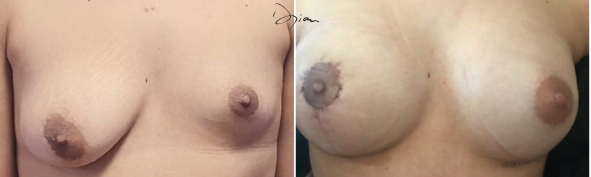
Before and After: Breast Asymmetry

Before and After Breast Asymmetry


THE MALE CASE: ASYMMETRICAL GYNECOMASTIA IN MEN AND ADOLESCENTS


The man and the teenager may also develop a gynecomastia asymmetric, with a glandular volume more pronounced on one side than the other. This uneven development of the male mammary gland is most often due to a transient hormonal imbalance occurring during puberty.

It is important to distinguish true gynecomastia, which is related to glandular tissue, from adipomastia, which corresponds to a simple localized excess of fat. This clinical distinction, established during the examination, directly guides the choice of surgical procedure between liposuction, removal of the gland, or a combination of both techniques, depending on the case.


CHANGES IN THE BREASTS OVER THE COURSE OF A WOMAN'S LIFE: WEIGHT, PREGNANCY, AND ASYMMETRY


A woman’s breasts change throughout her life, in response to fluctuations in weight, pregnancy, breastfeeding, or menopause. Significant weight loss or gain does not always affect both breasts symmetrically, which can cause or exacerbate a volume difference pre-existing.

Theskin elasticity also decreases over time, contributing to the development of a breast ptosis more pronounced on one side than the other. These physical changes, although natural, explain why asymmetry may develop or gradually worsen in adulthood, without any underlying medical condition.


POSTOPERATIVE ASYMMETRY AND BREAST CANCER


Asymmetry can also occur after a previous breast surgery, whether it was a increase, of a reduction or a breast cancer treatment. After a partial or total mastectomy, the breast reconstruction is specifically designed to restore a harmonious and symmetrical silhouette by reconstructing the treated breast.

It is essential to reassure people on this point: gradual, isolated asymmetry does not necessarily indicate a serious medical condition. Any sudden change, a palpable mass or a new deformity should nevertheless lead to get a quick clinical evaluation and, if necessary, a follow-up mammogram.


IMPORTANT NOTE
Any recent or sudden change in your breasts (such as a change in size, shape, or sensation) warrants a simple checkup with your doctor or gynecologist to rule out any medical causes and put your mind at ease.


WHEN SHOULD YOU SEE A DOCTOR ABOUT BREAST ASYMMETRY?


The right person to talk to and the right timing are key to the success of the care process.

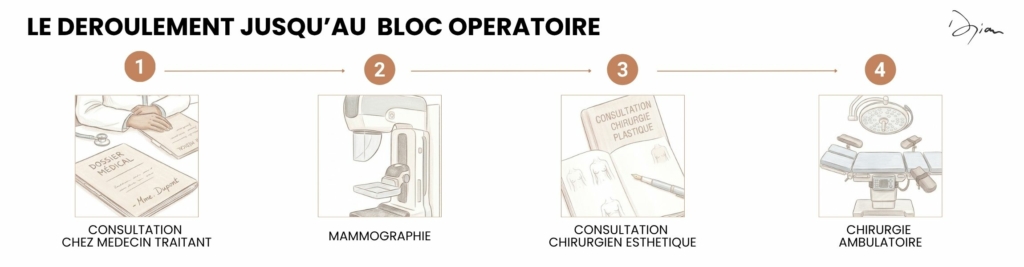
The Process Leading Up to the Operating Room


ASSESSMENT AND CLINICAL EXAMINATION PRIOR TO CORRECTION OF BREAST ASYMMETRY


The initial consultation includes a comprehensive clinical examination of the breast, along with imaging such as a ultrasound or a mammography, in order to rule out any pathological causes before considering surgery. The surgeon evaluates the morphology, skin elasticity and the actual difference between her breasts.

It is recommended that you wait until end of breast development, usually in adulthood, before considering definitive surgery, unless there are specific medical circumstances that warrant earlier treatment. This evaluation phase is essential for proposing a truly tailored solution and avoiding any hasty decisions, particularly in younger patients.


TEMPORARY ASYMMETRY AFTER BREAST AUGMENTATION: WHAT TO EXPECT


After a breast augmentation in Paris, a temporary difference between the breasts is common during the first few weeks. Edema, the implant still being positioned too high, or a difference in muscle contraction on one side account for this temporary appearance, which in no way prejudges the final result.

The final result is generally not apparent until several months have passed, allowing the tissues to relax and the implant to settle into its natural position within the created pocket. If a gap persists beyond this period, a follow-up visit allows you to identify the cause and, if necessary, consider making an adjustment.

If you have any questions about your postoperative condition, Dr. Djian, plastic surgeon in Paris, is here to provide you with personalized advice.


SURGICAL SOLUTIONS AND TECHNIQUES FOR CORRECTING BREAST ASYMMETRY


Each type of asymmetry requires a different technique, chosen based on the patient’s body type and goals.


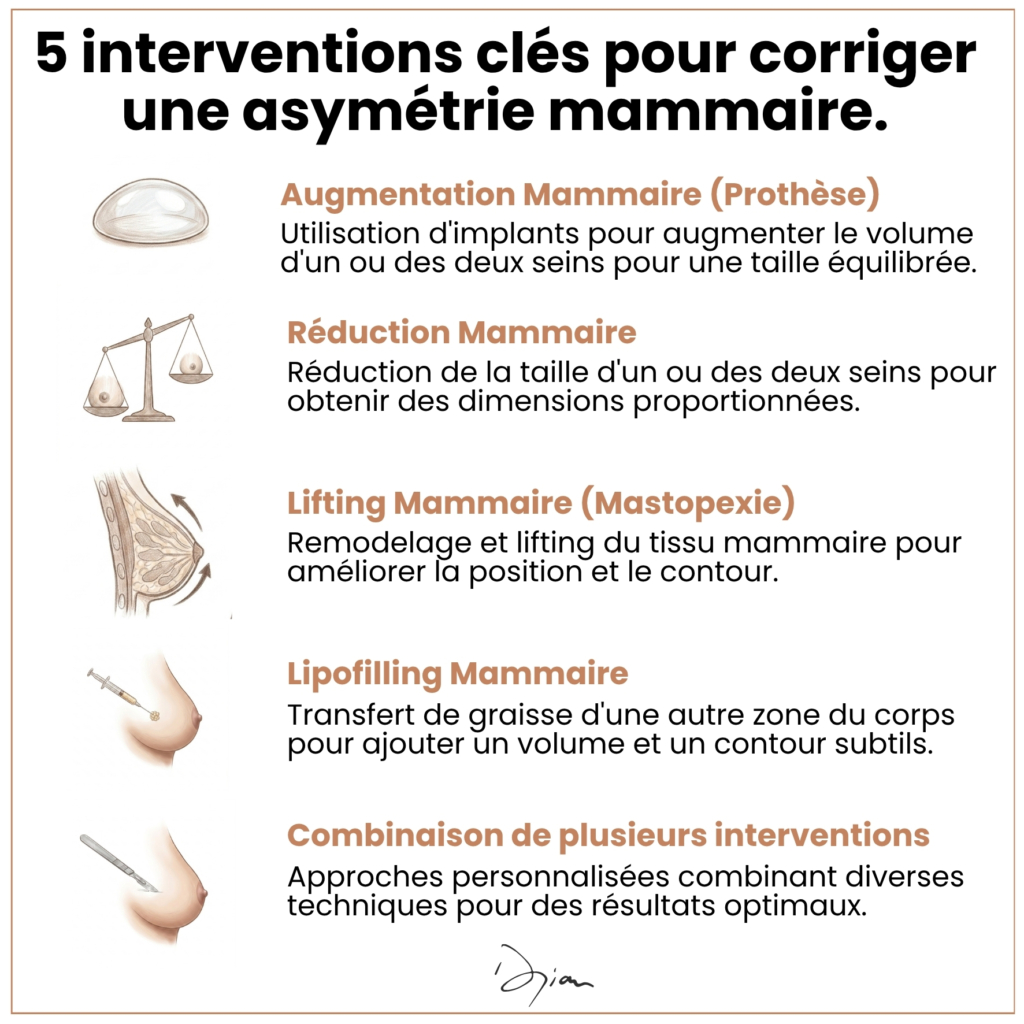
5 Procedures to Correct Breast Asymmetry

5 Procedures to Correct Breast Asymmetry


CHANGING BREAST SIZE: BREAST AUGMENTATION, LIPOFILLING, AND BREAST REDUCTION


When the discrepancy primarily concerns the volume, there are several options available. Placing an implant in the smaller breast can correct the difference; sometimes, implants of different sizes are used on each side to best preserve the patient’s original body shape.

The breast lipofilling, which consists of inject fat harvested through liposuction, provides a more subtle correction and a natural-looking result for minor differences in volume. Conversely, when one breast is significantly larger than the other, a breast reduction allows for the removal of excess glandular and skin tissue to restore balance.

These techniques can also be combined during a single procedure.


CORRECTING SHAPE AND POSITION: BREAST LIFT AND NIPPLE SURGERY


When the asymmetry mainly affects the shape or the position rather than the volume, a breast lift, also known as mastopexy, is often the most appropriate procedure. This technique corrects sagging, lifts the breast tissue, and repositions the areola and nipple to restore a firmer, better-positioned breast.

It is particularly useful in cases of sagging breasts on one side only, a common occurrence after breastfeeding or significant weight loss. The lift can be performed on its own or combined with an augmentation or reduction, depending on the final volume desired by the patient.


 SCARS AND THE POSITION OF BREAST IMPLANTS AFTER CORRECTION OF ASYMMETRICAL BREASTS


The issue of scarring after breast augmentation or reduction is a legitimate concern for many patients before surgery. The scar’s path and length depend on the technique chosen and the extent of the correction needed for each breast.

The position of the prosthesis in front of or behind the muscle, as well as compliance with the submammary fold natural, directly influence the final result and the symmetry achieved. Postoperative care generally requires wearing a support bra tailored treatment, skin care, and sometimes massages to promote healing under optimal conditions.


COMPLICATIONS AND EXPECTED OUTCOMES AFTER SURGERY FOR ASYMMETRICAL BREASTS


Like any surgery, breast asymmetry correction involves normal postoperative effects and rare complications that you should be aware of.

Possible reaction What to Do
Moderate hematoma or edema Routine medical follow-up, gradual resorption
Postoperative pain Pain medication prescribed by the surgeon
Changes in areola sensitivity Monitoring, with gradual recovery in most cases
Periprosthetic shell Specialized consultation for assessment and tailored care
Wound-healing disorder Quickly contact the firm to schedule an examination
Unusual pain, fever, sudden swelling Contact the office immediately or go to the emergency room


MEDICAL FOLLOW-UP AND DISCOMFORT AFTER BREAST SURGERY


A hematoma, swelling, or moderate postoperative pain are common side effects following breast surgery. A temporary change in the areola sensitivity or the nipple may also be affected, before gradually recovering over the course of several weeks.

Less commonly, a periprosthetic shell (capsular contracture) or a wound-healing disorder may require additional treatment. Any unusual pain, fever, or sudden swelling warrants contacting the office immediately or, outside of business hours, going to the emergency room for an immediate examination.


IMPORTANT
Never hesitate to contact Dr. Djian if you have any questions about your postoperative care: it’s better to make an unnecessary call than to leave your concerns unresolved.


FINAL RESULTS AND LONG-TERM OUTCOMES OF BREAST ASYMMETRY CORRECTION


The final result of a revision procedure can be assessed once the swelling has subsided and the tissues have stabilized; the time required for this varies depending on the technique used and the patient herself. A breast implant has a limited lifespan (between 10 to 15 years (but sometimes more) and may need to be replaced later, while some of the fat injected during lipofilling may be naturally absorbed by the body.

The goal is still to achieve a natural and harmonious look, in harmony with the patient’s overall body shape rather than perfect, artificial symmetry. Regular follow-up visits with the surgeon help ensure that the results remain stable over the years and allow for the anticipation of any potential follow-up surgery.


COVERAGE OF BREAST ASYMMETRY BY SOCIAL SECURITY AND FEES

FEES, QUOTES, AND CONSULTATIONS WITH DR. DJIAN IN PARIS


The total cost of a correction of breast asymmetry depends on the combination of techniques used (implant placement, lipofilling, reduction, or facelift) and whether the procedure is cosmetic or reconstructive. As a general guide, the fees charged by Dr. Jérémy Djian at his practice in Paris’s 16th arrondissement are as follows:

  • Initial preoperative consultation: 100 € (Postoperative follow-up visits are included.).
  • Augmentation with implants («Dual Plan»): €6,000 to €7,000 in cosmetic surgery (€4,000 to €5,000 fees in the event of coverage for medical treatment).
  • Breast lipofilling (fat injection): from 6,500 €.
  • Combined augmentation (implants + fat): from 7,500 €.
  • Breast lift (ptosis correction): 6,500 € without implants, and €8,000 to €8,500 including the placement of prostheses.
  • Breast Reduction: from 4 500 €.

Only a consultation with the surgeon can provide a reliable estimate tailored to your situation, your body type, and the technique ultimately chosen.

The total cost of a procedure consists of several components: surgeon's fees, the fees anesthesia and the costs of operating room in Paris.

A personalized quote is provided at the end of the consultation, detailing each expense item precisely so there are no unpleasant surprises later on.


REIMBURSEMENT CRITERIA AND THE REQUEST FOR PRIOR APPROVAL


A reimbursement for cosmetic surgery or restorative Coverage by Health Insurance is possible when the asymmetry is related to a congenital malformation, a hypertrophy marked or a breast reconstruction after breast cancer. The procedure requires a request for prior agreement with the medical consultant before any appointment is scheduled.

Only the medical consultant The Health Insurance Agency makes the final determination on the case.

The application package generally includes:

  • The form Application for prior approval, completed by the surgeon
  • from photographs breast medical conditions
  • a report consultation describing the malformation observed
  • the results of any exams additional projects completed

You should allow time for a response from the health insurance provider before setting the surgery date (up to 15 days).


BREAST ASYMMETRY SURGERY: TAKE THE PLUNGE TO REGAIN A HARMONIOUS BUST


Taking the step to seek counseling doesn’t commit you to anything—except to put into words a discomfort that you may have kept to yourself for years. Dr Djian takes the time to listen to each patient before suggesting a a truly individualized approach, far from any one-size-fits-all solution that would ignore the unique characteristics of your body type.

This discussion about breast symmetry is often part of a broader approach to body harmony, in which other questions about body shape may also come up during the same conversation. There is no reason to limit yourself to a single question during your first appointment with the surgeon.

The office of the Dr Jérémy Djian, plastic surgeon in Paris, is here to discuss your project with you without pressure or judgment, and work at your own pace toward the bust that's right for you.


Make an appointment with Dr Jérémy Djian

Appointment in Paris's 16th arrondissement

Your Questions

FREQUENTLY ASKED QUESTIONS ABOUT BREAST ASYMMETRY

Why is one of my breasts bigger than the other—usually the left one?

more less

A slight difference in volume between the two breasts is very common and normal. Some practitioners have observed that the left breast tends to be slightly larger, although there is no formal clinical study to explain this. The hormonal factors and the uneven development of the glands Changes during puberty remain the most commonly cited causes. If this breast asymmetry bothers you in your daily life, a consultation can help you evaluate the appropriate options.

Does breast asymmetry prevent breastfeeding, either before or after corrective surgery?

more less

Natural breast asymmetry doesn't prevent breastfeeding. After surgery, however, the impact depends on the technique used, particularly if the milk ducts were severed during a significant reduction. Breast lipofilling or implant placement generally better preserve this possibility. Be sure to discuss this during your consultation if you are planning to become pregnant.

Can a new pregnancy or weight gain cause asymmetry to reappear after the procedure?

more less

Yes, pregnancy, breastfeeding, or significant weight fluctuation can change the size of a breast again more than the other, even after successful surgery. This isn’t always the case, but it’s important to discuss this with your surgeon if you’re planning to become pregnant in the near future. In that case, it’s sometimes best to wait until you’ve completed your pregnancy plans before having the surgery. Discuss this openly during your consultation so that the timeline can be adjusted to fit your situation.

Is there a weight or cup size threshold for breast asymmetry to be covered by insurance?

more less

Unlike a standard bilateral reduction (300 g per breast), this threshold does not automatically apply to breast asymmetry. The Health Insurance medical advisor determines whether the difference in volume is significant. Each case of Coverage for breast correction surgery is therefore reviewed on a case-by-case basis. A consultation allows us to assess your chances before you submit an application.

Is it possible to correct one breast without affecting the other?

more less

This is still a possibility if the other breast already has a shape and volume that you find satisfactory. However, to achieve a harmonious result, a minor procedure on both sides is often preferable to fine-tune the symmetry. This decision depends on the’magnitude of the gap and your aesthetic expectations. Discuss these during your consultation to develop a realistic plan.

Is it possible to get an initial assessment of breast asymmetry based on photos, before a consultation?

more less

Some practices will provide an initial remote assessment based on photos, but this assessment is only preliminary. Only a clinical examination can truly assess volume, skin, and anatomical landmarks. However, photos can help prepare for the consultation and save time. Contact Dr. Djian’s office to learn more about the process before your visit.

Is the procedure performed on an outpatient basis, or does it require hospitalization?

more less

Correction of breast asymmetry is most often performed by ambulatory, with discharge home the same day. Depending on the extent of the procedure and the type of anesthesia, an overnight hospital stay may sometimes be recommended as a precaution. This plan is confirmed with the surgeon and the anesthesiologist before the procedure. It will be discussed in detail during the consultation, depending on the technique chosen.

What should you do if the results of a previous procedure to correct asymmetry are unsatisfactory, or if the asymmetry has worsened?

more less

It is recommended that you first consult with the surgeon who performed the initial procedure, as he or she is familiar with your medical history. However, seeking a second opinion from another plastic surgeon is certainly an option. Revision procedures are frequently performed several months or years after the initial surgery, once the tissues have stabilized.

Dr. Djian's practice regularly sees patients seeking a second opinion.

At what age can surgery be considered for a teenage girl with noticeably different-sized breasts?

more less

It is generally recommended to wait until end of breast development, around Ages 16 to 17, prior to definitive surgery. In cases of very pronounced asymmetry and significant psychological impact, an early consultation is still beneficial without rushing into surgery. Psychological counseling may be offered if the complex becomes difficult to cope with. The decision is always made in consultation with the patient, her family, and the surgeon.

What did you think of this article?

Rate it !

Average Rating 3 / 5. Number of Votes 2

No votes yet, be the first to rate this article.

Dr. Jérémy Djian
Dr. Jérémy Djian

Dr Jérémy Djian is a plastic surgeon based at 5 square Thiers, near the Victor Hugo roundabout, in the 16th arrondissement of Paris.

He trained in Paris and worked on the team of Professor Laurent Lantieri, a leading authority on face transplant surgery.


Going further
THESE ITEMS CAN
IN THESE SECTIONS
Your Questions
ASK YOUR QUESTIONS
TO DR. DJIAN