
fb Breast implant: silicone or saline?
Dr Jérémy Djian, 5 Square Thiers , 75016
menu close
Appointment appointment

Surgery

Silicone or saline breast implants: what's the difference?

published on 17.09.2025 by Dr. Djian
Silicone or saline breast forms: what's the difference?
Summary
  • UNDERSTANDING BREAST IMPLANTS
  • SILICONE BREAST PROSTHESES
  • SALINE SOLUTION PROSTHESES
  • COMPARISON OF THE TWO TYPES OF BREAST IMPLANT
  • CONCLUSION
  • HERE ARE SOME OTHER ARTICLES ABOUT BREAST IMPLANTS THAT YOU MIGHT LIKE TO READ
In short
  • The silicone breast implants offer a more natural look, with a soft, long-lasting texture, but are more expensive and require regular checks (MRI or ultrasound).
  • The saline implants are more affordable, with reduced incision and easily detectable rupture, but sometimes appear less natural to the touch.
  • In the event of breakup: the saline solution is absorbed by the body, while the cohesive silicone gel remains localized, limiting risks.
  • The medium durability of implants is approximately 15 years, Regular medical check-ups are recommended.
  • The choice between silicone and saline depends on aesthetic expectations, morphology and the opinion of the Dr Djian, with a focus on safety and naturalness.

The breast prosthesis is a popular solution for increase breast size and harmonize your figure. Silicone or saline solution? Each type has its own particularities. Here's a detailed guide to everything you need to know before starting a breast augmentation surgery in Paris


UNDERSTANDING BREAST IMPLANTS


WHAT IS A BREAST PROSTHESIS?


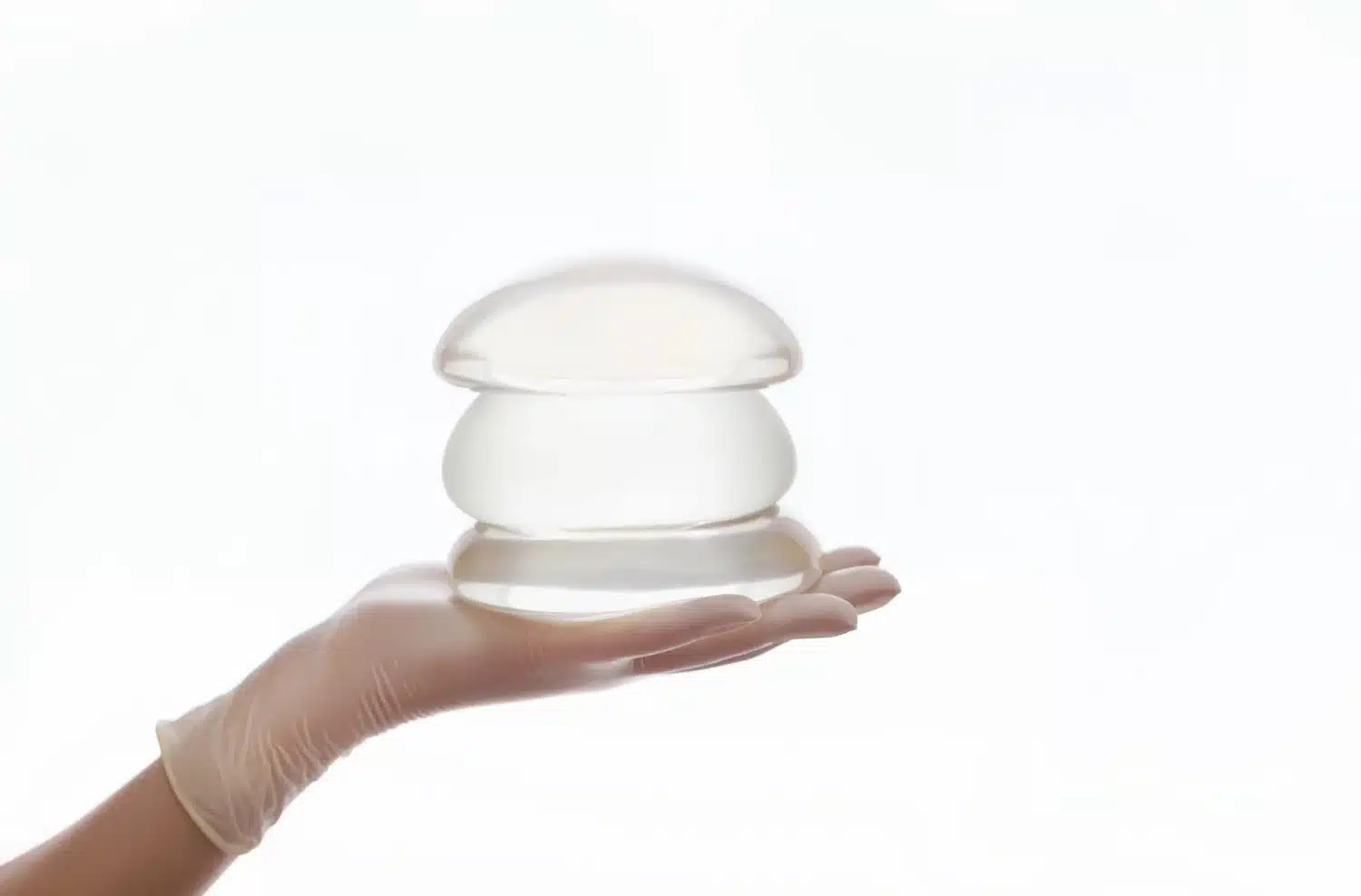
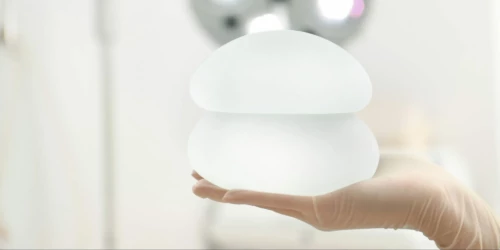
A breast prosthesis, or breast implant, is a medical device inserted under the breast for breast augmentation or reconstruction after mastectomy. It is designed to improve the size, shape and symmetry of the breasts. They consist of a silicone outer shell and an inner filling, which can be either gelatinous silicone or a saline solution.


WHY CHOOSE BETWEEN SILICONE AND SALINE PROSTHESES?


The choice between silicone and saline implants is based on several factors, including appearance, feel, personal preference and your surgeon's recommendations. Each type of prosthesis has advantages and disadvantages that it's essential to understand before making an informed decision.


SILICONE BREAST PROSTHESES


WHAT IS A SILICONE PROSTHESIS?


Silicone implants contain a thick, cohesive gel that mimics the consistency of natural breast tissue. The outer silicone shell is strong yet flexible, offering a natural result in terms of texture and appearance. Today, most patients choose cohesive silicone gel breast forms, offering a natural, pleasant feel. These prostheses are also favored by plastic surgeons, notably Dr. Djian, who considers them more suitable than saline prostheses for breast augmentation.


THE ADVANTAGES OF SILICONE PROSTHESES


  • Natural look: Silicone implants look and feel very similar to natural breasts.
  • Durability Cohesive silicone gel reduces the risk of leakage in the event of rupture.
  • Suitable for a wide variety of profiles : Silicone prostheses are available in different shapes (round or anatomical) to suit individual needs.


THE DISADVANTAGES OF SILICONE PROSTHESES


  • Higher costs Silicone implants are generally more expensive than saline implants.
  • Longer incisions : Because they are pre-filled, they require a larger incision for insertion. Maximum incisions are 4cm.
  • Need for regular checks : An MRI or ultrasound scan may be recommended every few years to ensure that there is no rupture.


FOR WHOM ARE SILICONE PROSTHESES RECOMMENDED?


Silicone implants are suitable for women seeking a natural look, especially those with little breast tissue to cover the implant. They are also ideal for patients looking for a long-lasting, aesthetically pleasing solution.


SALINE SOLUTION PROSTHESES


COMPOSITION OF SALINE IMPLANTS


Saline stents consist of a silicone shell filled with a sterile saline solution (salt water). They are inserted empty, then filled once in place.

ADVANTAGES OF SALINE SOLUTION PROSTHESES


  • Flexible insertion : Since they are filled after insertion, the incisions are smaller.
  • Easy detection of breakage Rupture causes immediate, easily detectable deflation.
  • Lower cost On average, saline implants are less expensive than silicone implants.


DISADVANTAGES OF SALINE IMPLANTS


  • Less natural to the touch Saline solution may feel less gentle, especially for women with little breast tissue.
  • Risk of visible folds : In very thin women, the folds or ripples of the prosthesis may be perceptible.


FOR WHOM ARE SALINE SOLUTION PROSTHESES RECOMMENDED?


Saline implants are often preferred by women seeking a more economical option or concerned about the risks associated with difficult-to-detect internal rupture.


COMPARISON OF THE TWO TYPES OF BREAST IMPLANT


DIFFERENCES IN TEXTURE AND FEEL


Silicone dentures are renowned for their soft, natural texture, while saline dentures may feel firmer and less realistic to the touch.


SAFETY: WHAT HAPPENS IN THE EVENT OF A RUPTURE?


  • Silicone A rupture is often silent and causes no visible change. However, the gel remains in or close to the envelope, minimizing the risk of dispersion.
  • Saline solution A rupture causes immediate deflation, and the saline solution is absorbed naturally by the body.


DURABILITY AND LONGEVITY OF PROSTHESES


Modern breast prostheses do not have no more fixed lifetime and do not require systematic replacement every 10 or 15 years. Re-operation may be considered for aesthetic reasons (change in volume, sagging breasts with age or after pregnancy) or in the event of rare complications (shell or rupture). In general, implants are replaced every 15 years. However, in the context of prevention, regular follow-up by a doctor is essential, including systematic controls, with a mammography every two years to check their condition.


WHICH IS THE MOST AFFORDABLE?


In general, saline implants are less expensive than silicone implants. However, the choice should not be based solely on price, but also on the desired results and the recommendations of the Dr Djian.


CONCLUSION


The silicone prostheses offer a more natural look and feel, but are more expensive and require more rigorous controls. The saline solution prostheses, Although more affordable and easier to detect in the event of breakage, they may feel less natural to the touch.

The choice between silicone and saline should therefore be made in consultation with a qualified plastic surgeon. A personalized consultation with the Doctor Djian will enable you to take into account your aesthetic needs, your morphology and your expectations for an optimal and safe result.


Your Questions

FREQUENTLY ASKED QUESTIONS ABOUT SILICONE AND SALINE IMPLANTS

ARE SILICONE PROSTHESES SAFE?

more less

Yes, modern silicone implants are subject to strict safety standards. Although monitoring for rupture is recommended, the cohesive gel minimizes the risk of complications.

DO SALINE PROSTHESES LOOK NATURAL?

more less

This depends on the thickness of the pre-existing breast tissue. In some women, saline implants may look less natural, especially if the breast tissue is thin.

WHICH TYPE OF PREOTHESIS IS THE MOST POPULAR?

more less

Silicone prostheses are the most popular because of their low weight. natural appearance and comfort. However, preferences vary according to patients' needs and expectations.

HOW MUCH DO BREAST PROSTHESES COST?

more less

The price of the prosthesis varies on average between 500 and 700 euros per implant. This price fluctuates according to the brand, type (round or anatomical) and specific characteristics of the prostheses chosen. Please note that this amount represents only part of the price of a breast augmentation, which also includes the surgeon's fees, anesthesia costs, hospitalization costs and pre- and post-operative consultations.

What did you think of this article?

Rate it !

Average Rating 5 / 5. Number of Votes 1

No votes yet, be the first to rate this article.

Dr. Jérémy Djian
Dr. Jérémy Djian

Dr. Jérémy Djian is a plastic surgeon based at 5 Square Thiers, near the Victor Hugo roundabout in Paris's 16th arrondissement.
He trained in Paris and remains affiliated with the hospital in the prestigious department headed by Prof. Laurent Lantieri.

Going further
THESE ITEMS CAN
IN THESE SECTIONS
Your Questions
ASK YOUR QUESTIONS
TO DR. DJIAN