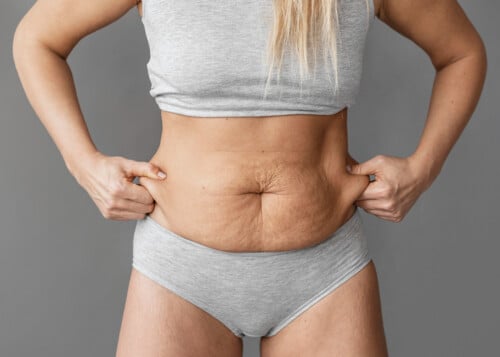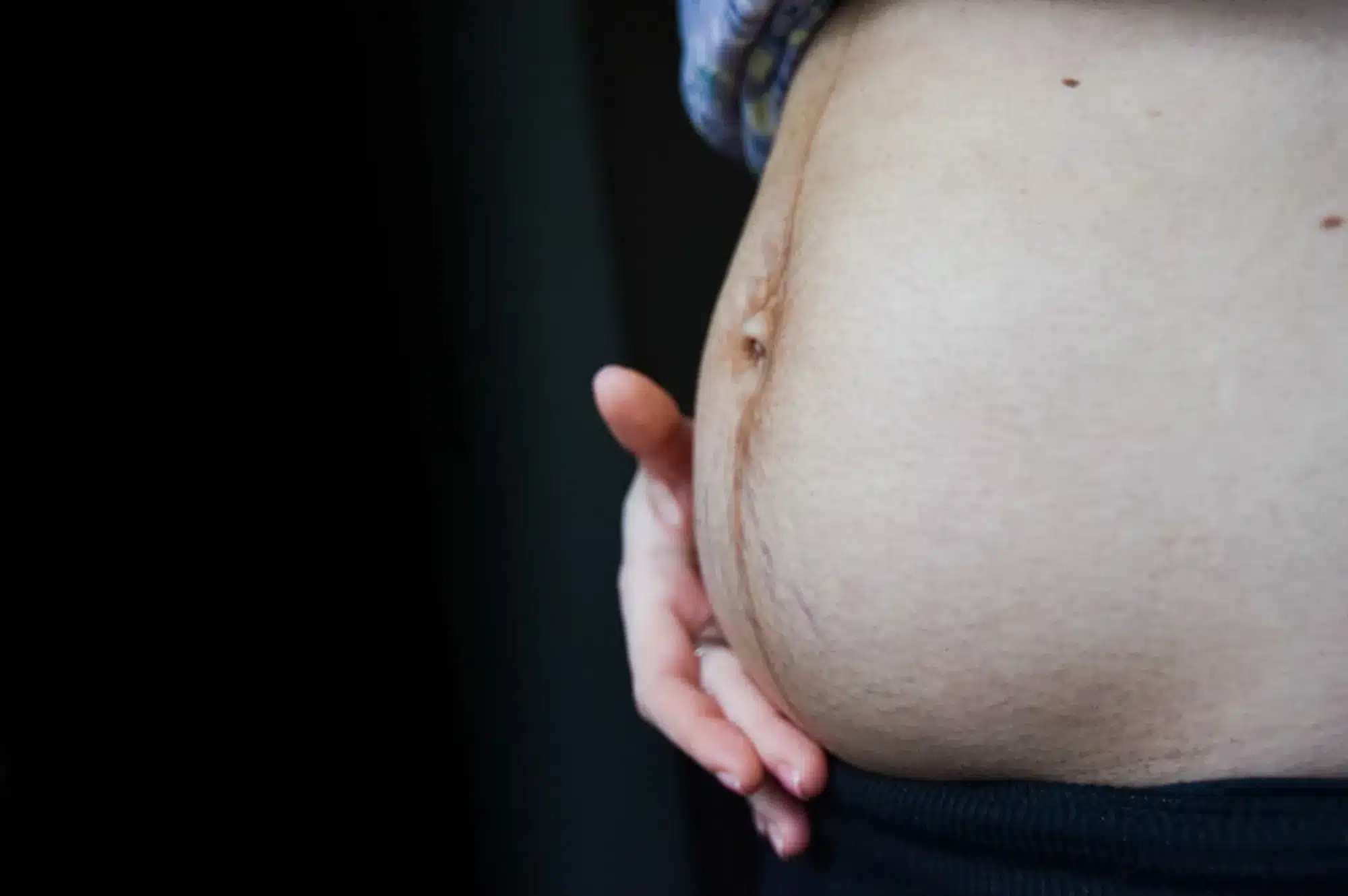
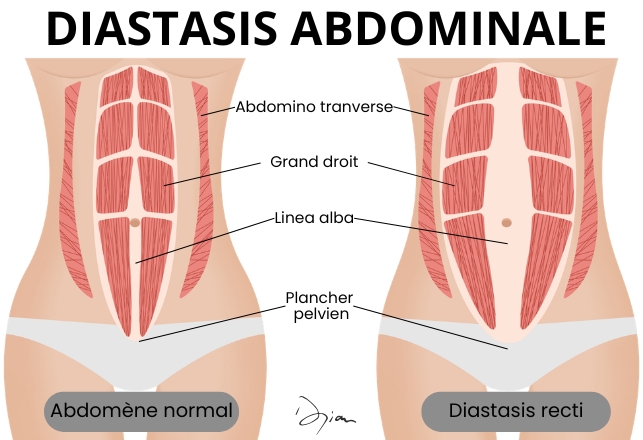
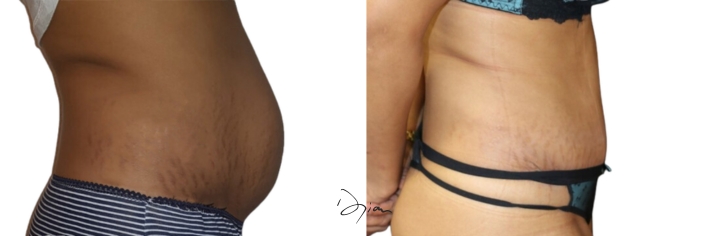

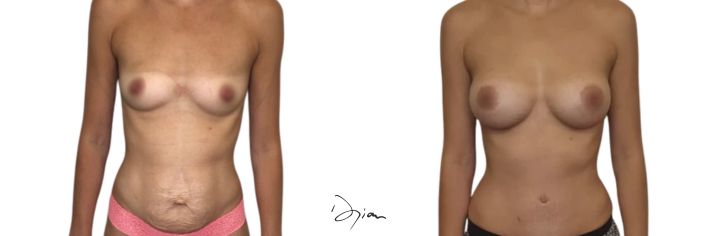


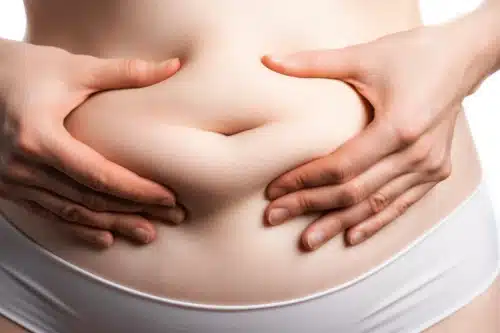
- The diastasis corresponds to the separation of the abdominal muscles, often after a pregnancy or a significant weight loss, The result is a slack stomach and postural discomfort.
- The reconstructive surgery (abdominoplasty) is the only effective solution for bringing muscles together and tightening the abdominal wall.
- The procedure, performed under general anaesthetic, lasts approximately 2 hours with a 2-day hospitalization and a convalescence period of around 6 weeks.
- A covered by Social Security is possible in case of "abdominal apron covering the pubis or associated hernia.
- The Dr Jérémy Djian restores a firm, functional abdominal strap, offering a lasting result and a better posture.
Your Questions
FREQUENTLY ASKED QUESTIONS ABOUT DIASTASIS
Can a diastasis be detected without ultrasound?
Yes, abdominal diastasis can often be identified on clinical examination, In particular, the midline bulges when the patient is lying down. However, a ultrasound of the abdominal wall is recommended to accurately measure muscle spacing and assess the need for reconstructive surgery. This examination is often requested prior to abdominoplasty with diastasis cure.
Can diastasis worsen with sport?
Yes, diastasis can be aggravated by certain types of poorly adapted exercise, These include the classic abdominals and push-ups. Over time, the gap can widen, causing back pain, digestive problems or a feeling of a swollen belly. Surgery is the only effective solution to restore a functional abdominal wall and prevent aggravation.
What are the functional signs of diastasis?
A diastasis can cause troublesome symptoms, These may include a belly that remains bloated despite weight loss, lower back pain, digestive problems or a feeling of instability in the trunk. It can also be responsible for a “permanent pregnancy belly”. Reconstructive surgery makes it possible to restore the abdominal muscles and improve posture.
Can Caesarean section cause diastasis?
Caesarean section’is not the direct cause of muscle spacing. This phenomenon is linked to abdominal distension during pregnancy and to the quality of your connective tissue. However, the surgical procedure can weaken the wall or accentuate an existing gap, making natural recovery more complex.
How do you distinguish a diastasis from a hernia?
During exercise, the diastasis creates an elongated vertical bulge (loaf or dome-shaped) along the entire centerline. Conversely, a hernia manifests itself as a localized, round and precise protuberance, like a small marble protruding at or above the navel. If the lump is reducible (returns under pressure) or painful, surgical advice is essential.
The specialist's examination, accompanied by an ultrasound scan, will help determine the diagnosis.
Dr. Jérémy Djian
Dr Jérémy Djian is a plastic surgeon based at 5 square Thiers, near the Victor Hugo roundabout, in the 16th arrondissement of Paris.
He trained in Paris and remains attached to the hospital in the prestigious department of Pr Laurent Lantieri.
Going further
THESE ITEMS CAN
IN THESE SECTIONS
IN THESE SECTIONS
Your Questions
ASK YOUR QUESTIONS
TO DR. DJIAN
TO DR. DJIAN


Hello, I had a sleeve operation in 2021 and having lost 54KG I find myself with skin that falls off (stomach, arms, slightly thighs), I would like to know if I could benefit from an abdominoplasty to remove my complex.
info: 25 years old, Female, 1m62, 58kg
Thank you for your reply,
sincerely
Hello, ma'am,
I think that you can benefit from an abdominoplasty covered by social security,
But you need to be examined,
Yours sincerely,
Dr Djian
After abdominoplasty and diastasis
How long afterwards can you feel
Tightness (discomfort) in the abdominal muscles?
Thank you
Hello, ma'am,
We recommend a 6-week rest period to allow for healing,
Yours sincerely,
Dr Djian